Preparing dancers for upper body demands in ballet and contemporary dance
Claire Farmer is a dance science educator, strength and conditioning coach, and researcher. Her main research focus is upper body strength in dance, female dancer health and dance for health. She works with dance training organizations and companies across the UK, advocating for greater integration of strength and conditioning into dance schools and companies. Claire has published work in international dance medicine and science journals and recently published a book on the female dancer. She is also Chair of the International Association for Dance Medicine and Science Strength and Conditioning Special Interest Group.
James Brouner is the course leader for Sport and Exercise Science programs at Kingston University, London. James also delivers biomechanical curriculum on the MSc Dance Science at Trinity Laban Conservatoire of Music and Dance. James’ research interests span Sport and Dance, with a focus on fundamental mechanical mechanisms and how they impact movement quality, and how fatigue can impact movement efficiency. James also researches performance analysis to explore the global understanding of in-event metrics and locomotive actions taken by performers, with the aim to enhance training and overall performance.
Context and Rationale
Dance choreography can include many impressive and demanding movements that require upper body strength and endurance, including lifts and inversions such as handstands. 1 The ability to perform these movements safely and with the required aesthetic components relies on both sufficient levels of muscular strength (the muscles’ ability to overcome an opposing force, often including external resistance such as another dancer or a weight), and endurance (the muscles’ ability to resist fatigue and maintain contraction over time). Technical understanding of the biomechanics of those movements is also necessary.
Recent studies have suggested that injury risk for dancers during lifts lies not only in insufficient strength but also in a misunderstanding of the mechanics of the lift. 2 Additionally, choreography also now requires more athletic and acrobatic components including inversions such as handstands or movements that require the dancer to support their bodyweight through their upper body. 3 Therefore, in order to prepare both male and female dancers to carry out these kinds of demands, dance teachers, dancers and strength and conditioning coaches can work together to develop the requisite strength, alignment and technical understanding.
It can be beneficial for training to include specific coaching in lifts and inversions to break down the movement into smaller chunks, developing the dancer’s confidence so that they build the necessary strength required and become more familiar with the movement pattern itself. Sufficient time to practice these skills to develop movement memory should also be built into training to avoid what Lafortune 2 describes as “trial and error” in learning to lift a dancer. Together, these two components can address the concerns around injury risk. 2
Research Summary
In order to begin understanding the demands placed on dancers’ upper body strength and endurance during ballet and contemporary dance performance, we carried out a performance analysis of 12 ballet and 12 contemporary digitally-recorded performances. 1 Where possible, two male and two female dancers were analyzed per performance, totaling 46 individual ballet and 44 individual contemporary dance performances. To help us understand the requirements more specifically, we recorded the frequency of all lifts and upper body weight-bearing movements such as handstands in each performance.
Our findings showed that male ballet dancers carried out more lifts than their female counterparts and a greater frequency of above shoulder assisted lifts (assisted by the dancer jumping into the lift or by another dancer supporting the lift) than male contemporary dancers. The findings also highlighted that the majority of lifts took place at the eye-level of the dancer carrying out the lift, rather than directly overhead. Contemporary dancers demonstrated a greater frequency of movements that required hand contact with the ground including holding their own weight in movements such as a plank than ballet dancers.
These findings encourage teachers and coaches to question to what extent dancers’ current training sufficiently prepares them to execute these movements in relation to technical proficiency, and their muscular strength and endurance. Lifts that require movement of the dancer to between hip and eye level of the dancer carrying out the lift require the use of different muscles than an overhead lift. This includes developing strength of the muscles around the shoulders and upper arms, such as the anterior deltoids and biceps brachii to maintain these lifts (Figure 1).
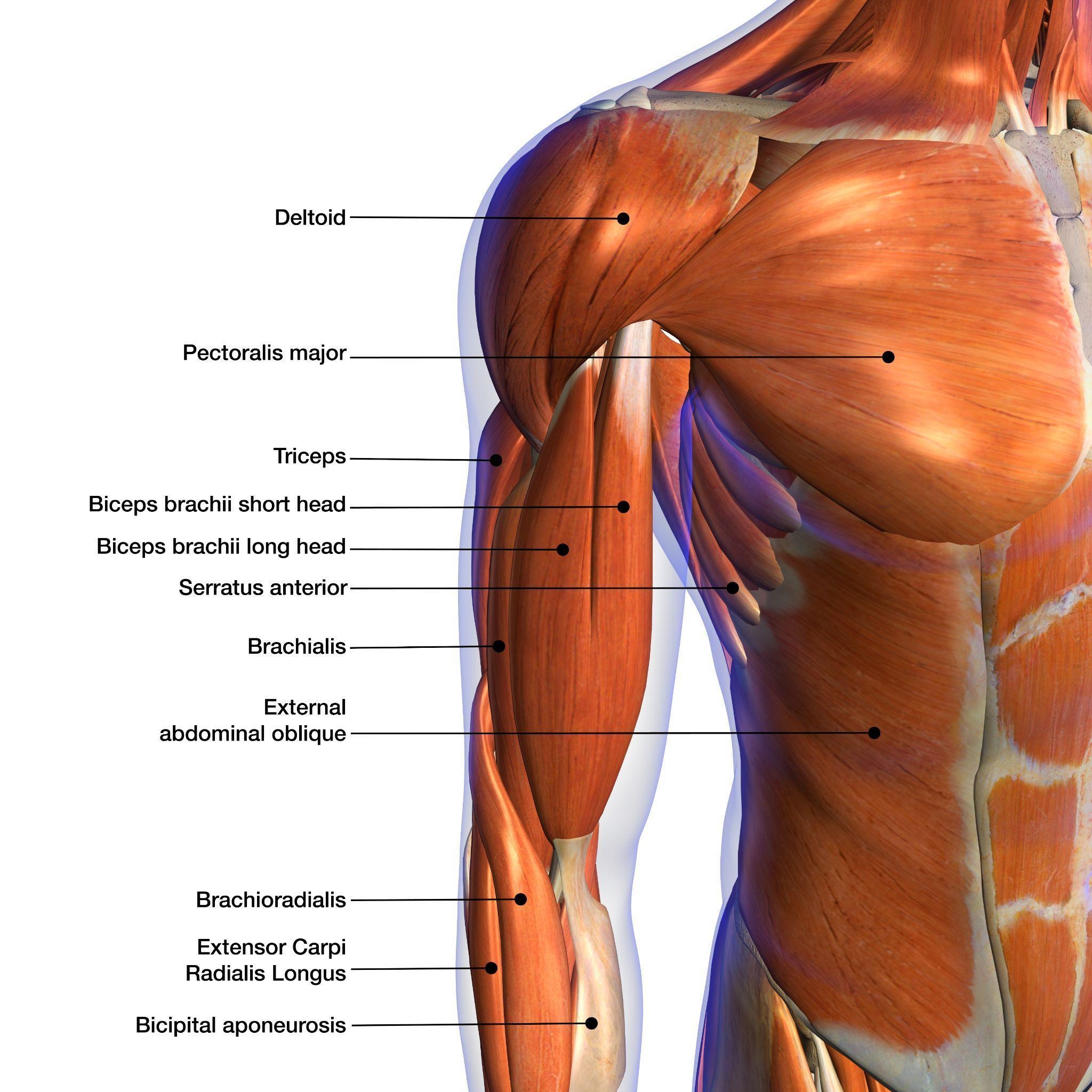
Figure 1: Male shoulder anatomy (anterior view)
Image credit: Hank Grebe
Strength training as part of a dancers’ training regime should therefore include specific exercises to address this requirement (see tools and resources below). Likewise, the greater number of movements in contemporary dance where the hands are in contact with the ground such as a plank or handstand also suggests that strength and technical training for these movements should be incorporated into both male and female dancers’ training.
Understanding the demands of current choreography can help dance teachers and coaches ensure they are supporting dancers to sufficiently prepare for these movements in terms of physical capacity and technical knowledge. Likewise, an understanding of the upcoming choreography can help dancers mentally and physically prepare for their role, whether that is in new choreography or with a new dance contract.
Application of Research Findings to Practice for Dancers and Dance Educators
When considering lifts or inverted movement during class, rehearsal or performance, it is important for the dancer and their teacher to reflect upon whether efficiency and accurate performance of the movement could be improved with increased muscular strength and endurance alongside technical awareness. We know from previous research that dance class alone does not increase physical fitness, 4 but that increased fitness during training can allow room for greater focus on artistry and reduced injury risk. For example, if a dancer is not strong enough, their focus may be on worrying that they will not be able to lift the dancer, rather than the specific technical requirements of the lift in order to make it aesthetically pleasing. If they know they are strong enough, they are able to focus on the artistry of the movement.
It is perhaps useful to reflect on the following prompts:
- Do you or your dancers have access to strength training, not as supplementary fitness, but as an integral aspect of dance training, preparing them for the specific movements to be carried out?
- If a piece of choreography has lifts in it, do the dancers carrying out these lifts have sufficient strength to perform them?
For lifts between hip level and eye level, this will require strength in the biceps brachii and anterior deltoids as well as the ability to stabilize the core to protect the spine. Likewise, if the choreography asks dancers to perform an inversion, including but not limited to handstands, cartwheels and walk-overs, a lack of sufficient strength may also lead to nervousness around inverting. Again, dancers having confidence in their ability to hold their own bodyweight when upside down, understand their alignment when inverted, and control the movement through core stabilization can allow them to think about the choreography and perform the movements with confidence.
Tools and Resources
The resources below constitute a list of suggested exercises, cues and movements to aid in neuromuscular development of upper body movements. These can be integrated as part of or after a thorough warm-up and overseen by a qualified professional. If you are at all unsure about any of these movements or their suitability for the dancer(s) you are working with, please seek advice from a qualified strength and conditioning coach, physiotherapist/physical therapist or athletic trainer.
- Include the upper body and ground contact with the hands during warm-up. Sufficiently mobilizing shoulder girdle and the wrists is important for preparation for upper body movements.
- Understand and encourage good hand placement on the floor for better control and protection of the wrist. Spread fingers out wide and dig the fingertips into the floor (Figure 2). Images such as trying to dig your fingertips into sand , or to pull the floor towards you are useful cues. This helps to spread the weight through the fingertips, knuckles and heel of the hand, reducing pain in the wrist.
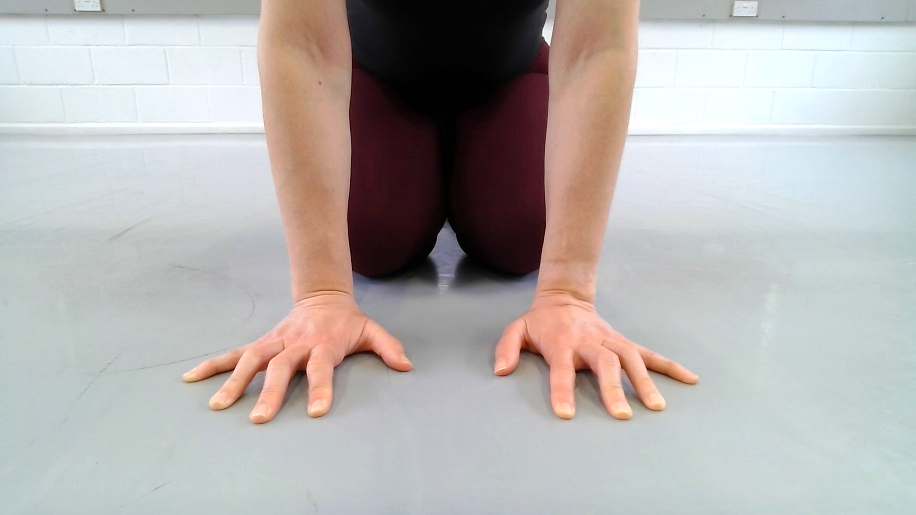
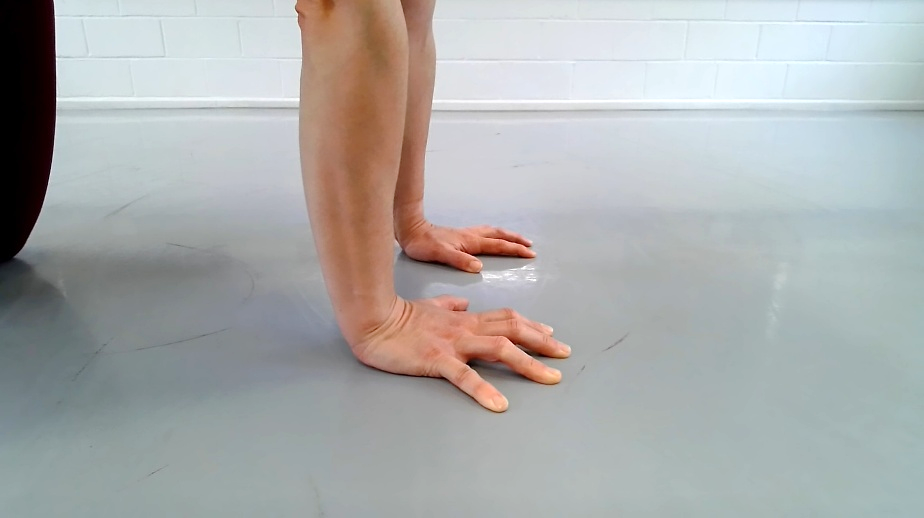
Figure 2: Hand placement for greater control and even distribution of weight
- Encourage development of upper body strength. This can be integrated into class including push-ups (Figures 3, 4 and 5), banded overhead presses and bicep curls, alongside resistance training with free weights.
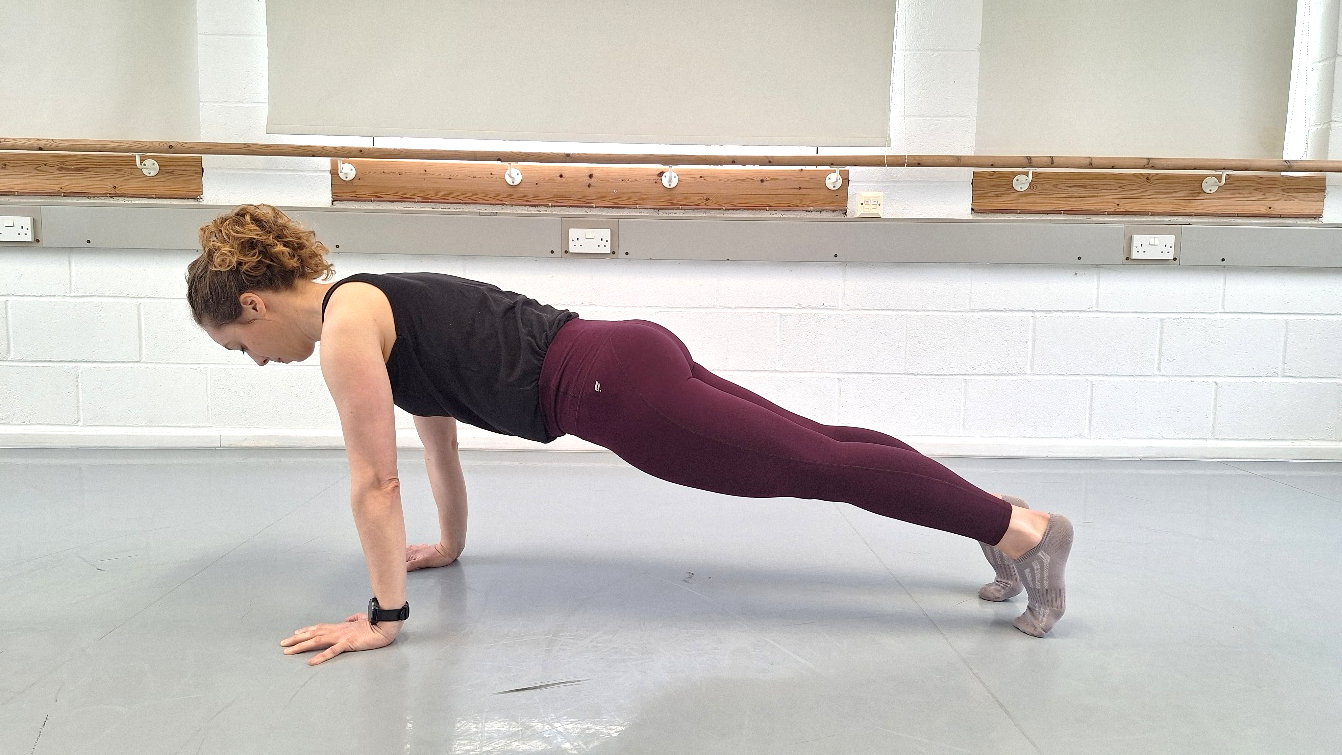
Figure 3: Pull push up or plank position – ensure that the shoulders are stacked over the wrists and that hypermobile dancers do not lock into their elbows. The body should be in a straight line from head to heels with the core engaged to prevent arching of the lower back (lumbar spine).
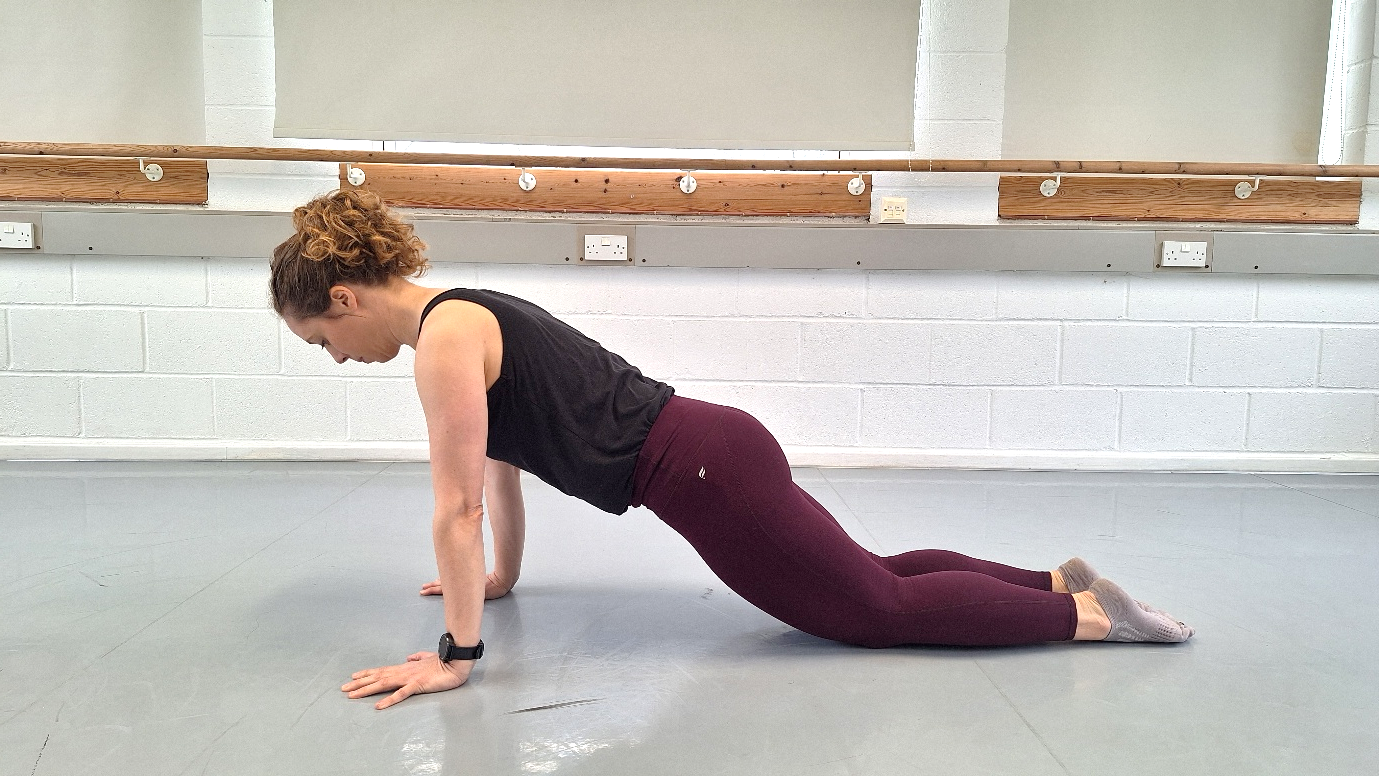
Figure 4: Modified push-up position. The body should be in a straight line from the head to the knees with the core engaged to prevent arching of the lower back (lumbar spine).
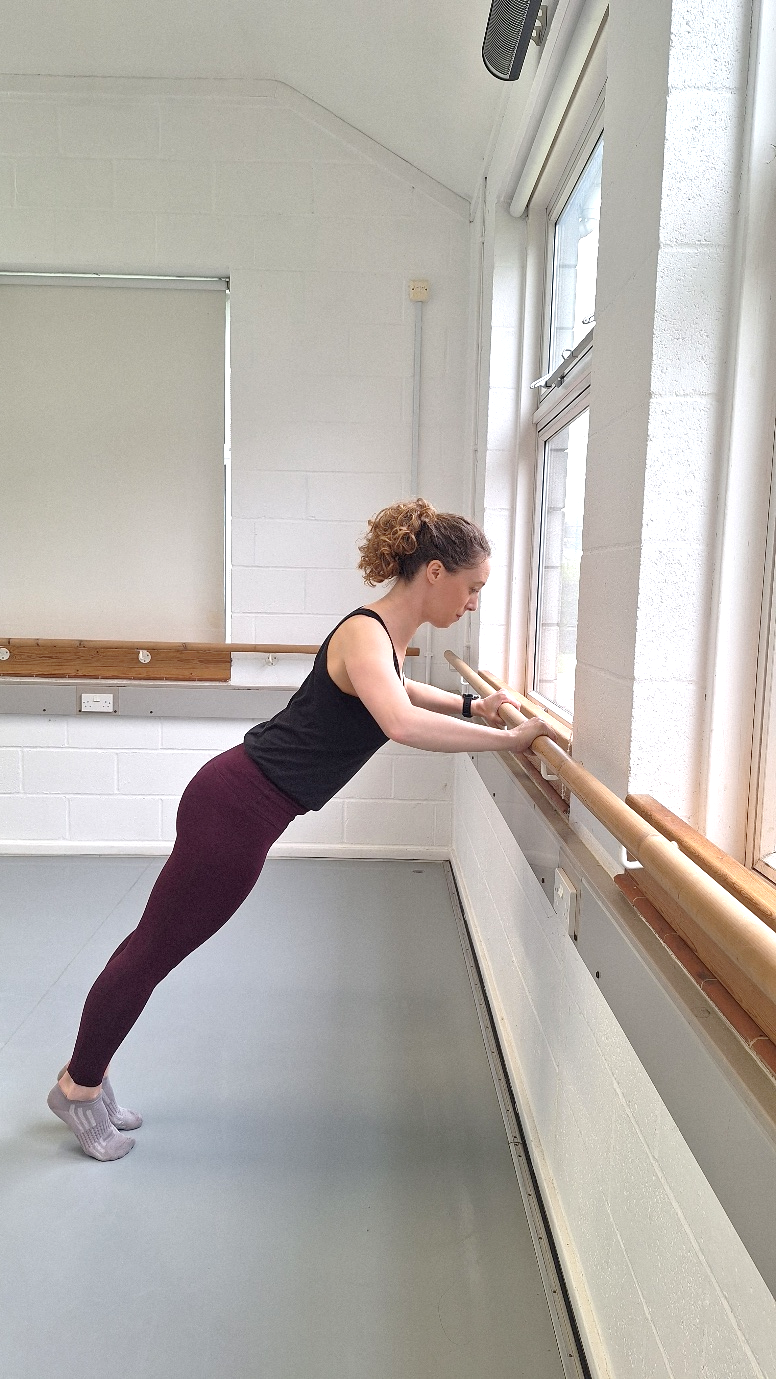
Figure 5: Push-up variation. By raising the height of the upper body, the push up becomes easier. As the dancer becomes stronger the surface can be lowered until they are able to complete the push up on the floor. Maintain a straight line from head to heels.
- Particularly important for hypermobile dancers is stabilization of the shoulder girdle. Therefore, consider including exercises to strengthen the rotator cuff muscles which stabilize the shoulder joint. Useful exercises include banded shoulder external rotation and scapular push-ups. These can be incorporated into a warm-up to activate the muscles.
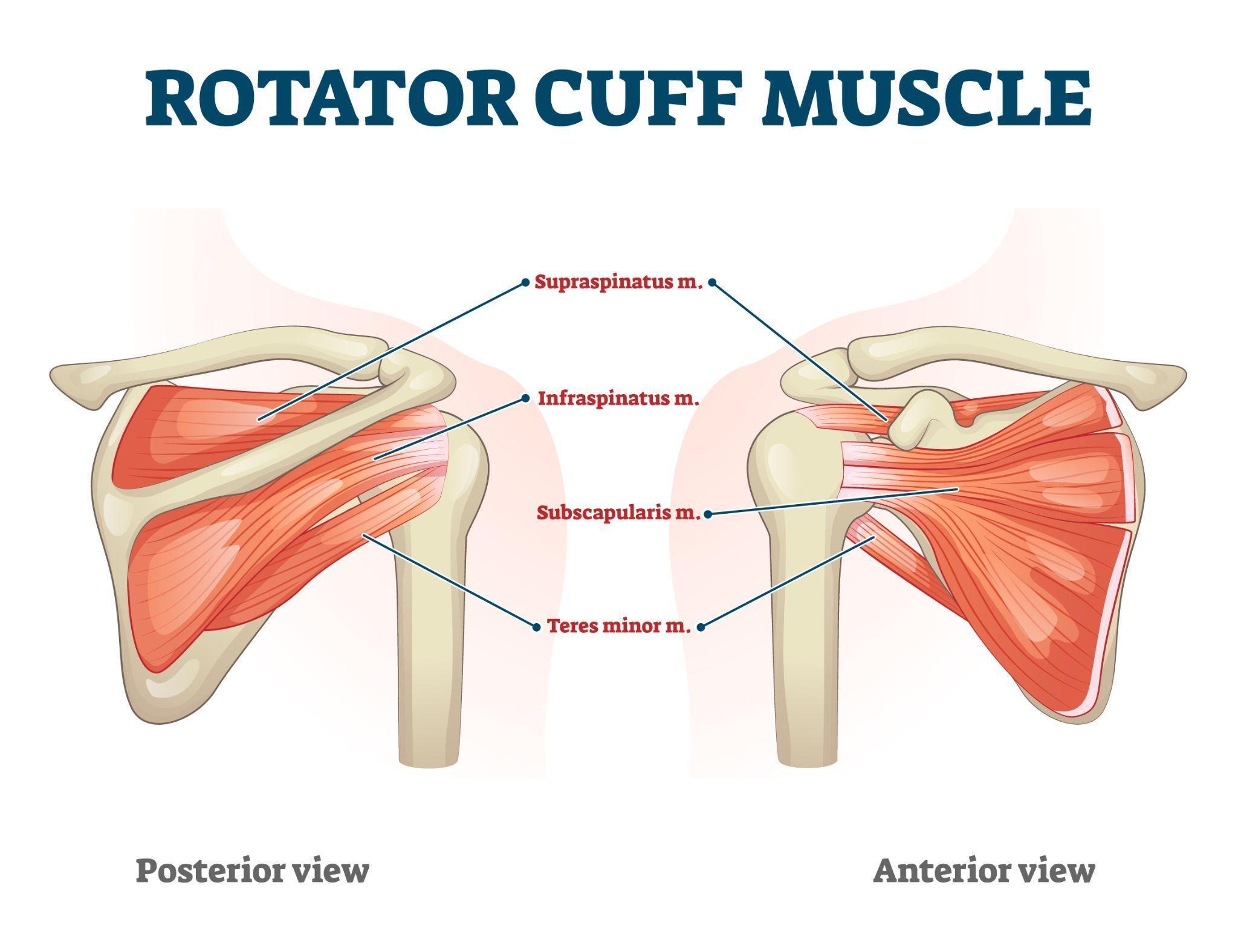
Figure 6: Muscles of the rotator cuff (stabilizing muscles of the shoulder)
Image credit: VectorMine
- Where possible, source expertise from a qualified strength and conditioning coach to design specific training programs for dancers.
Conclusion
It can be challenging for dancers to find sufficient time within training, rehearsal and performance schedules to include strength and conditioning training. However, a combination of focus on the technical skills required for lifts and inversions, as well as developing the requisite strength can potentially mitigate injury risk, and help dancers to feel more confident in these movements. Where possible, dancers, dance teachers and coaches working together can develop these skills in relation to the choreographic upper body demands. You can find a strength and conditioning provider here . Where resources do not allow for a strength and conditioning coach, the above tools will provide a stepping-off point to begin considering the demands placed upon the upper body in ballet and contemporary choreography.
Providing dancers with the tools to develop both their technical ability and the required strength to perform these movements safely and correctly can help them to reduce the risk of injury, perform with more confidence and focus on the artistry of their dancing.
Reflections and Invitations
What ways can we invite equity in discussions around strength training and who has access to it?
Consider: Is muscular strength in your dance class or rehearsals gendered? Do all dancers have equal access to strength and conditioning (S&C) or conditioning classes? If you have access to free weights such as barbells, are these only used by the male dancers? Is the space available for strength and conditioning training friendly, accessible and supportive?
Strength and technical proficiency go hand in hand for safe execution of upper body movements. How can we give equal precedence in training these to fully optimize performance? Is strength and conditioning currently an integral part of your/your dancers’ training? What steps can you take to integrate it into your/their schedule?
Consider: If there is strength and conditioning, is it compulsory or viewed as “supplementary” or “optional”? Is there something in their schedule that can be removed to ensure strength and conditioning can be accommodated?
Try adding the upper body warm up to the final stages of your normal warm up routine.
Were there any movements that felt particularly challenging? Why do you think this is?
Did your dance class feel any different afterwards, particularly during upper body movements such as a port de bras or any floorwork that includes planks or downdogs?
Hand placement – Next time you have your hands on the floor during something like a plank, try using the imagery of sand, or pulling the floor towards you to spread the weight through your hands.
Do you notice any difference in your wrist compared to your normal hand placement? Is it more or less comfortable?
Does this placement make your movements or static stance in a plank feel more or less stable?
Did you try any of the exercises? If so, which one(s)?
Were the movements challenging or easy?
Could you pay attention to which muscles were working?
Can you set yourself a goal? For example if you can currently complete 5 modified push ups can you set a goal of 10 modified push ups, or maybe 2 full push ups? What time-scale do you want to add to your goal?
Original Article:
Farmer C, Brouner J. Frequency of upper body muscular demands in contemporary and ballet dance performance: a cross sectional performance analysis. Journal of Dance Medicine and Science . 2025;29(4):237-245. https://doi.org/10.1177/1089313X251313664
Further Reading
Wyon M, Clarke S. Strength and Conditioning for Dancers . Crowood; 2021.
Strength and Conditioning for Dancers is an accessible guide for dancers and teachers to consider how they might design and implement an effective program including strength and conditioning exercises. When initially implementing strength and conditioning, it can be difficult for dancers to know where to begin; this book provides the doorway to this information in an accessible and engaging format. The authors provide a theoretical overview of fundamental anatomy, key athletic components including cardiorespiratory training, strength, flexibility and plyometric training, with examples of how this might be implemented in dance training. Chapters 5 to 9 provide crucial step-by-step guidance to help dancers and teachers carry out a self-screening to establish current levels of physical fitness and ability, and then design and implement their own training program. This includes basic Pilates and specific exercises for the core, upper and lower body including photographs and exercise protocols, and training programs to get you started. This book demystifies strength and conditioning exercise selection for dancers and teachers, offering an access point to incorporating this into dance training and education.
References
- Farmer C, Brouner J. Frequency of Upper Body Muscular Demands in Contemporary and Ballet Dance Performance: A Cross Sectional Performance Analysis. Journal of Dance Medicine and Science . Published online 2025. https://doi.org/10.1177/1089313X251313664
- Lafortune S. A Classification of Lifts in Dance: Terminology and Biomechanical Principles. Journal of Dance Education . 2008;8(1):13-22. https://doi.org/10.1080/15290824.2008.10387354
- Farmer C, De’Ath S, Brouner J. Strength Training Perceptions Amongst Vocational Circus and Dance Students. Journal of Dance Medicine and Science. Published online October 11, 2023. https://doi.org/10.1177/1089313X231204164
- Koutedakis Y, Jamurtas A. The dancer as a performing athlete: Physiological considerations. Sports Medicine . Springer . 2004;34(10):651-661. https://doi.org/10.2165/00007256-200434100-00003
Acknowledgements
Thanks to University of Roehampton and Kingston University London for the use of studio space to record the videos in this article.
Photo and video credit: Claire Farmer
Disclaimer
The IADMS Bulletin for Dancers & Teachers is suitable for dancers, teachers and educators. This content is not intended to be a substitute for professional medical advice, diagnosis or treatment. Always seek the advice of your physician or other qualified health providers with any questions you may have regarding a medical condition.
IADMS owns the copyright to this Bulletin and the articles contained therein. The PDF files may be distributed or reproduced in hard (paper) copy in their entirety for educational purposes. The content may not be reproduced in any other form without the written permission of IADMS. Please contact IADMS for additional assistance.
The International Association for Dance Medicine & Science, Inc. is a tax-exempt public charity under IRS Section 501(c)(3) in the United States.