Teaching for well-being: A dance teacher's guide to managing dancers' stress
Born in Switzerland, Michelle Dwarika is currently a PhD candidate at the University of Birmingham. She has a background in performing arts and a MAS in dance science. Her research interests are geared towards dancers’ mental health, mental skills training in dance, and systemic approaches in dance research.
Introduction
Mental health is central to optimising how dancers learn, grow, and sustain their careers. A scoping review of 115 studies on mental health in dance highlighted that dancers’ well-being is shaped by individual personalities and the environments in which they train. Stressors such as cultural ideals, power dynamics, emotional suppression, and unsupportive learning environments consistently emerge as major contributors to distress, particularly among young dancers.1,2
The review identifies powerful protective factors that teachers can directly influence: autonomy, competence, relatedness, emotional support, and a facilitative environment that balances challenge with care.3 Despite the growing body of research, there are few resources that offer practical tools for the teachers who interact with dancers most consistently and shape their daily experience.
Drawing on the scoping review and on evidence-based practices from dance psychology and education, this article offers a focused toolbox for teachers to use that can support dancers’ mental well-being. Each tool is mapped directly to a specific stressor identified in the research, offering concrete strategies that can be integrated into everyday teaching. The aim is to help teachers create environments where dancers can thrive both artistically and mentally. The scoping review identified several core stressors that shape dancers’ mental health. Each tool below is designed to reduce one specific stressor through everyday teaching practices.
Stressor 1: Lack of Psychological Support During Distress
Teachers can support dancers in managing distress. Here are some ideas on how to start conversations about mental well-being with your dancers. Be sure to stay within your own expertise: signpost dancers to mental health professionals when needed and ensure you are supported too.
Tool: Start a conversation about mental health
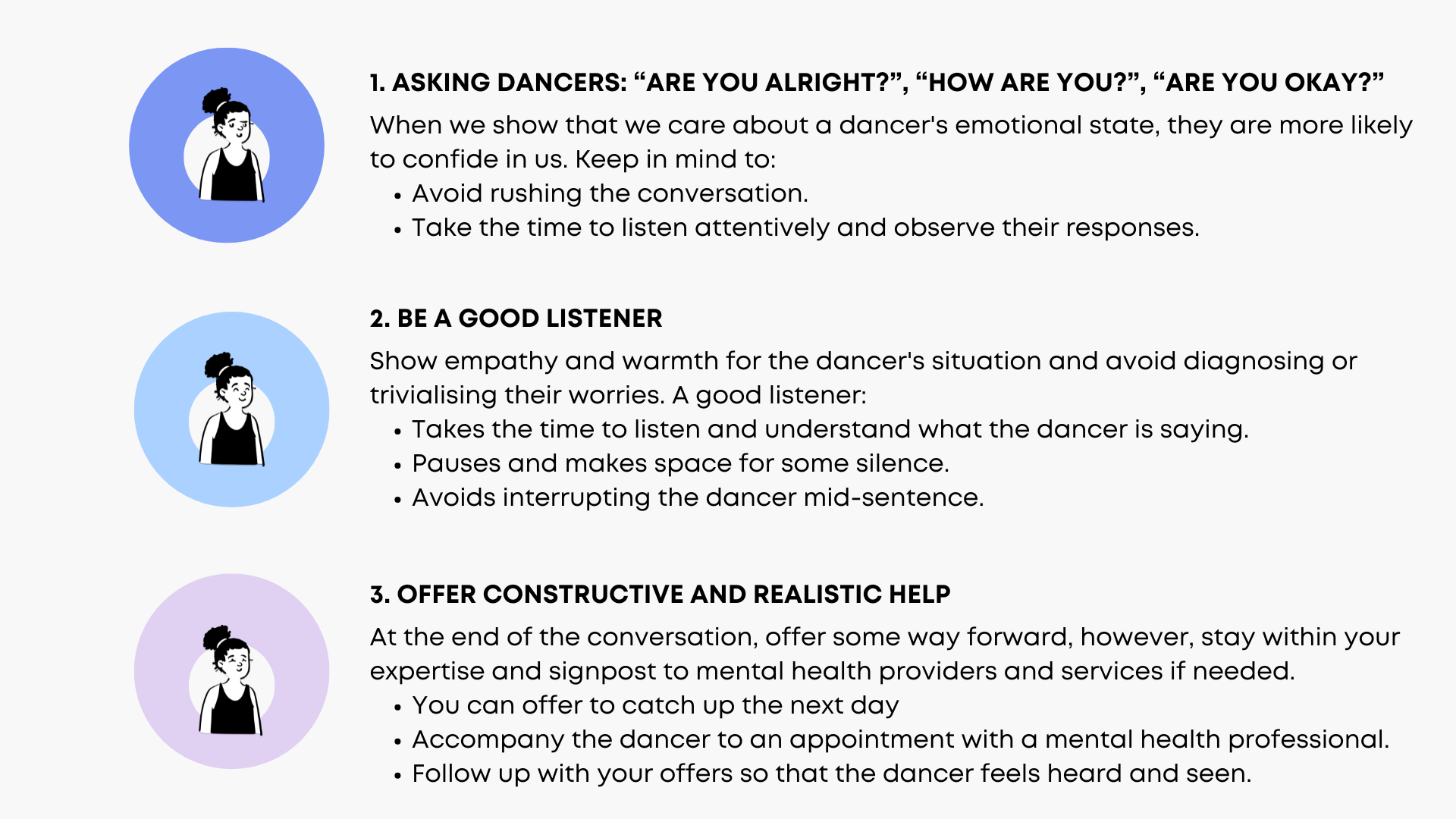
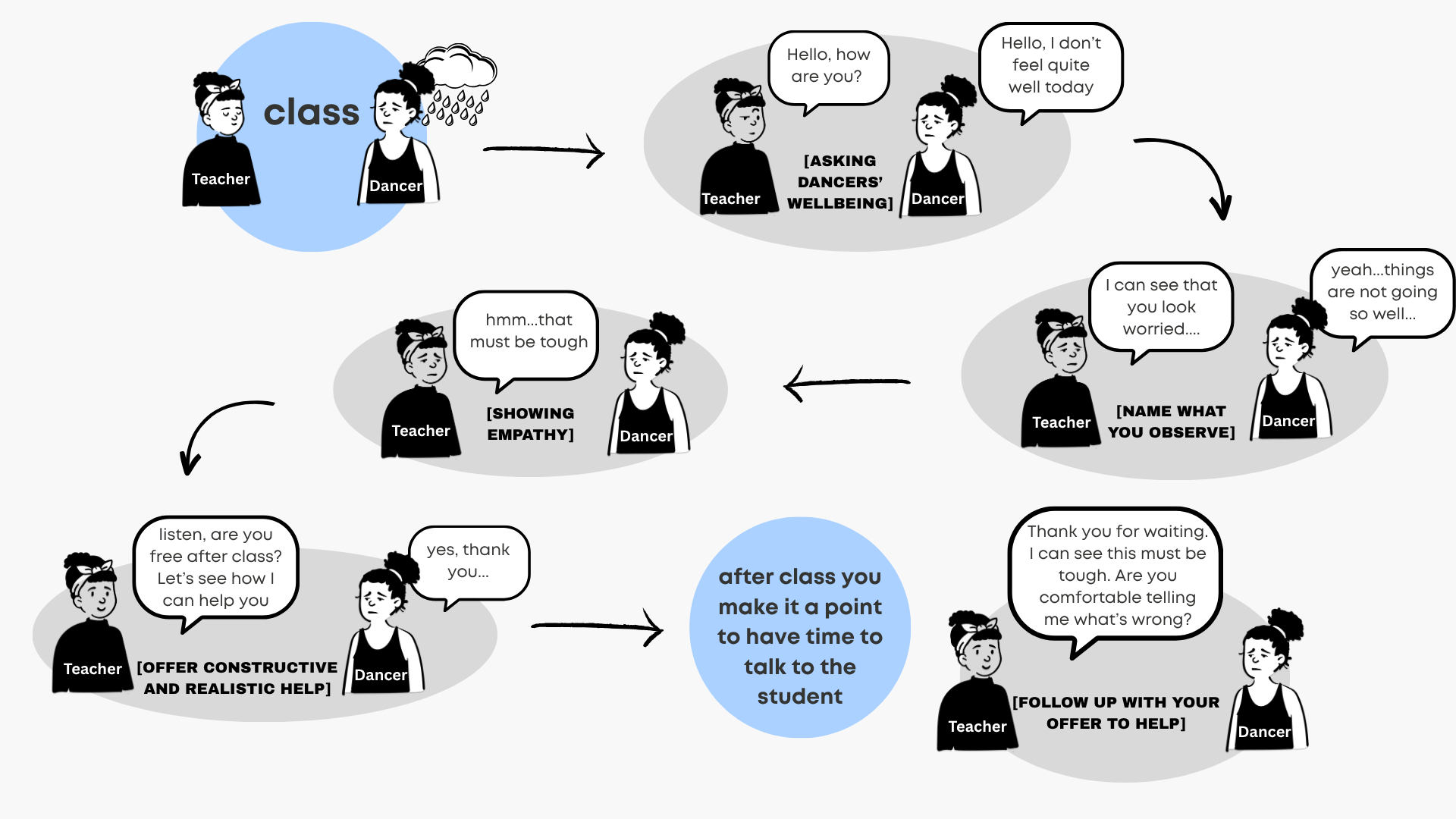
How this reduces the stressor: It provides a starting point to have ongoing conversations, reduces stigma about mental health, and offers support to dancers, reducing isolation and fear.
Stressor 2: Body Ideals, Appearance Pressure, and Cultural Norms of Silent Conformity
Tool: Emotionally Attuned Conversations (Notice → Name → Validate → Explore)
Cultural ideals like body aesthetics can concern dancers. While these can be delicate conversations to have, they help teachers emotionally attune to dancers and what concerns them. Here are some key points that can help you hold a warm and gentle dialogue that guides the dancer emotionally.
Key practices:
- Notice emotional cues (“You seem unsettled today”)
- Name the feeling (“It sounds like this was very upsetting to you”)
- Validate the experience (“It is ok to feel that way”)
- Explore gently (“What would help you right now?”)
How this reduces the stressor: It breaks the culture of silence, reduces shame, and creates a safe space for dancers to express concerns and emotional distress.
Stressor 3: Power Dynamics and Lack of Autonomy
Tool: Support the Three Basic Psychological Needs (Competence, Autonomy, Relatedness)
When teachers assume hierarchical relationships in which they hold power over dancers through their teaching approach, dancers can feel voiceless and dependent on approval. Being aware of the teaching approaches teachers use, making informed choices about who holds power, and incorporating the three basic needs of competence, autonomy, and relatedness can support dancers’ mental well-being.
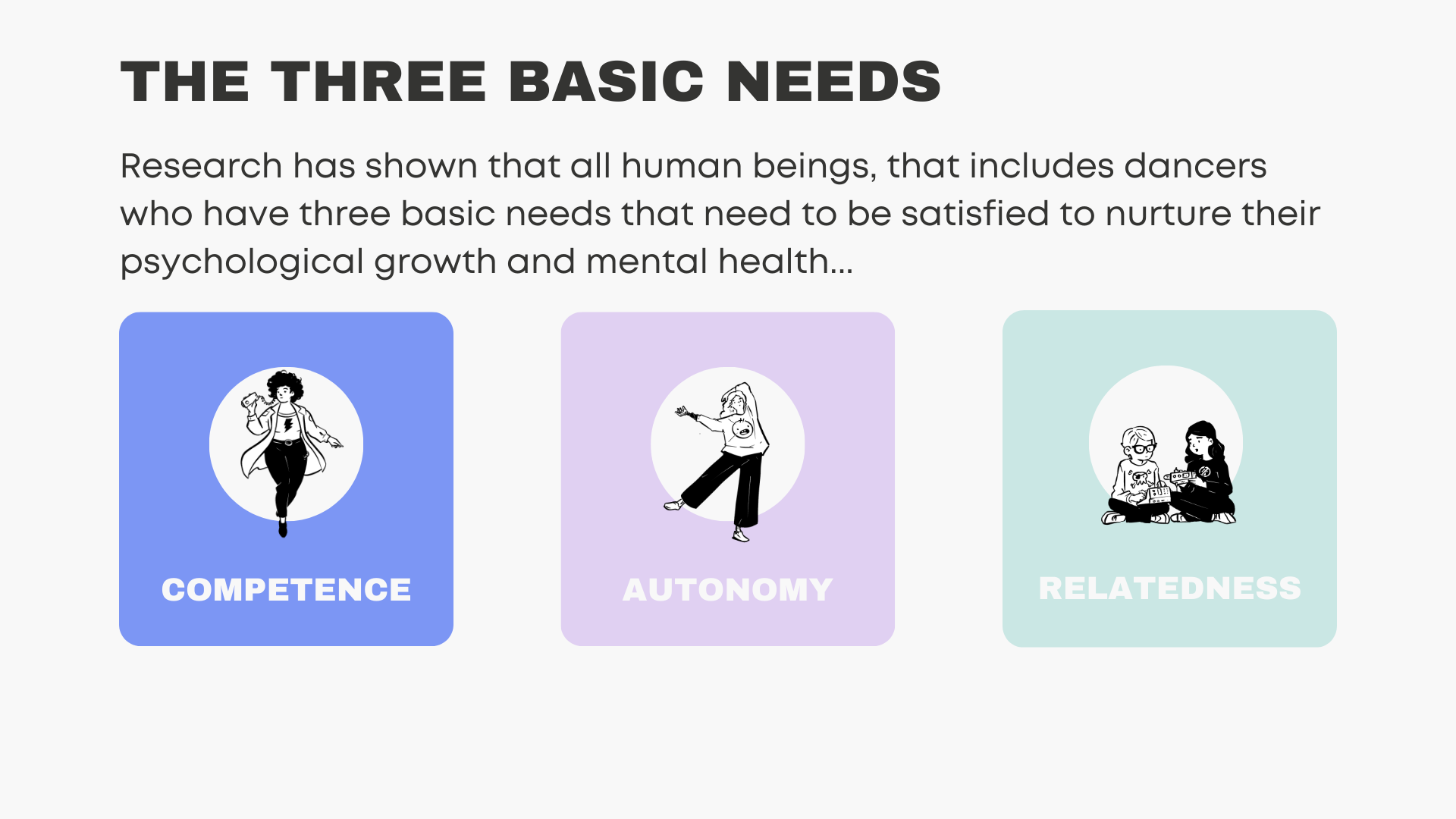
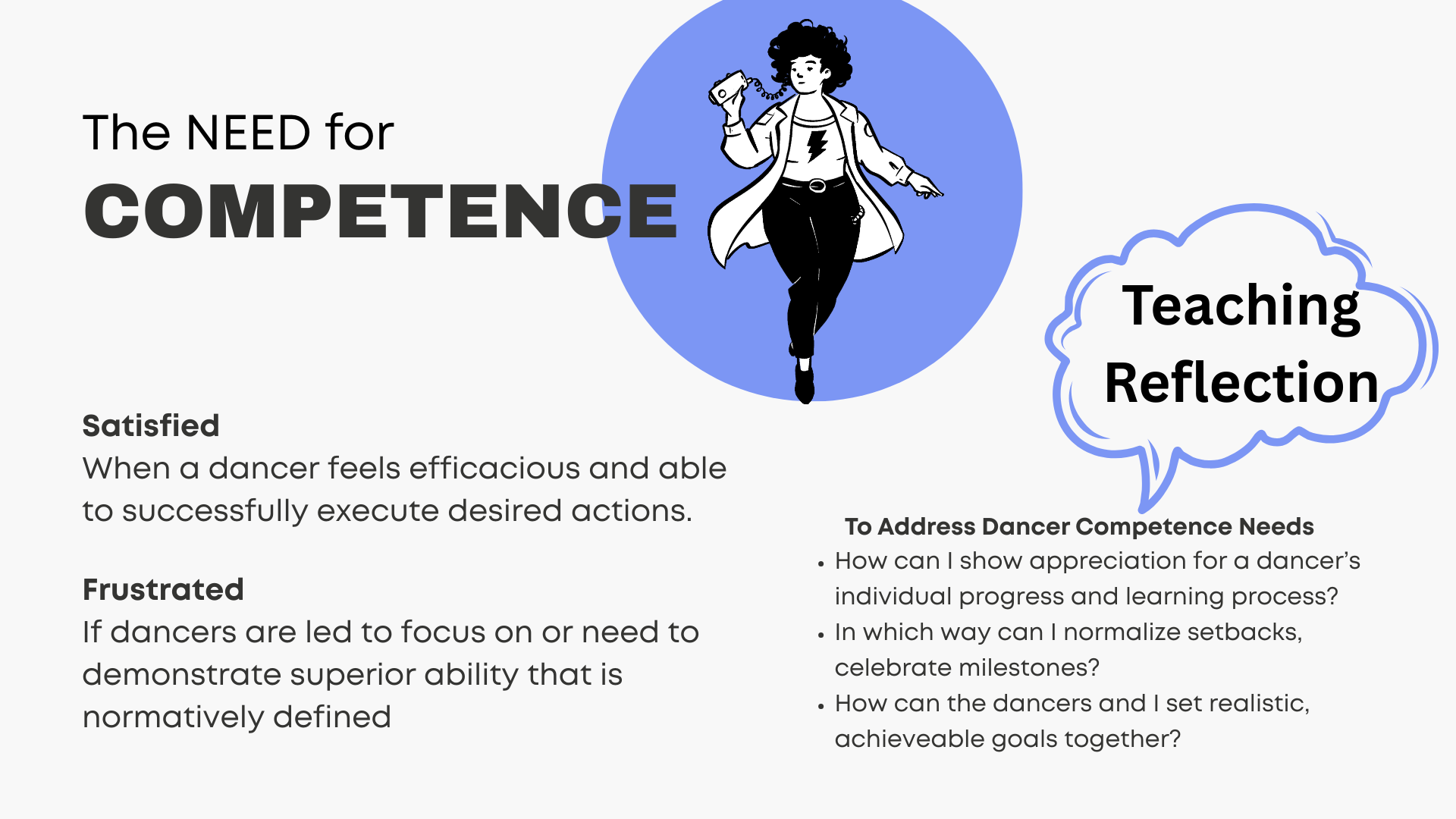
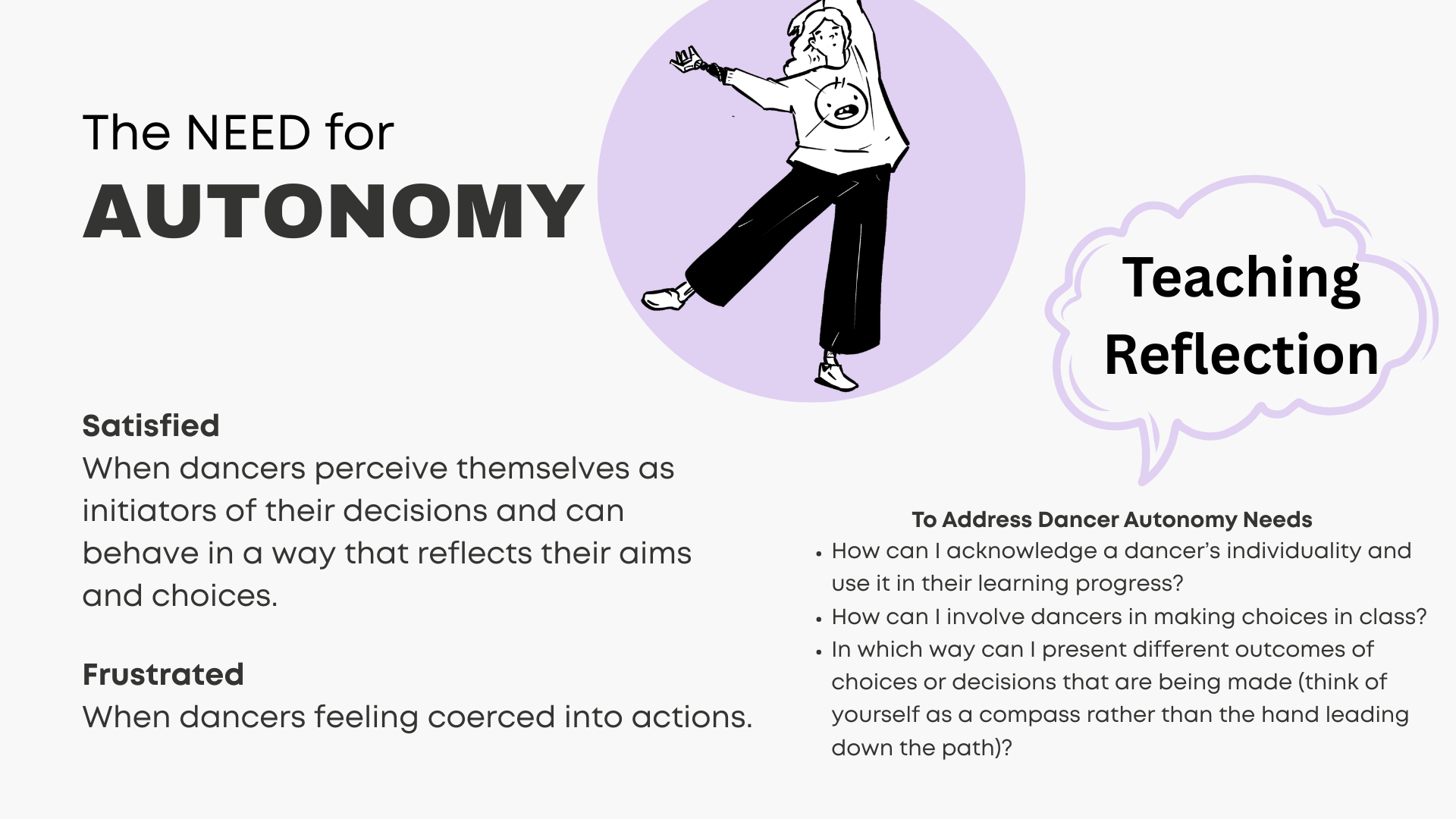
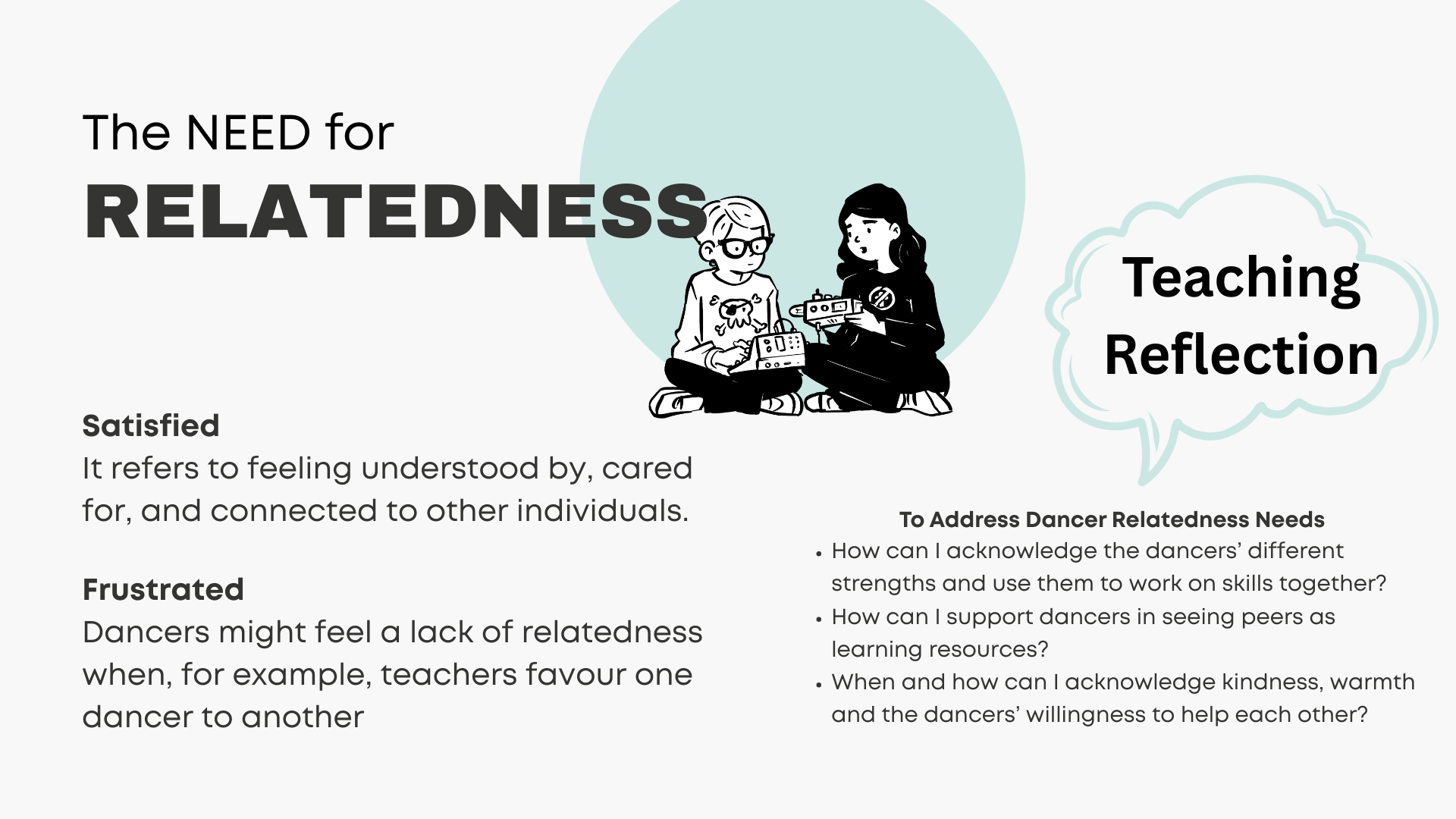
How this reduces the stressor: It shifts the studio environment from compliance to collaboration, reducing fear of authority and increasing agency.
Stressor 4: Lack of a Facilitative Environment (High Pressure, Low Support)
Tool: Build a Facilitative Environment (High Challenge + High Support)
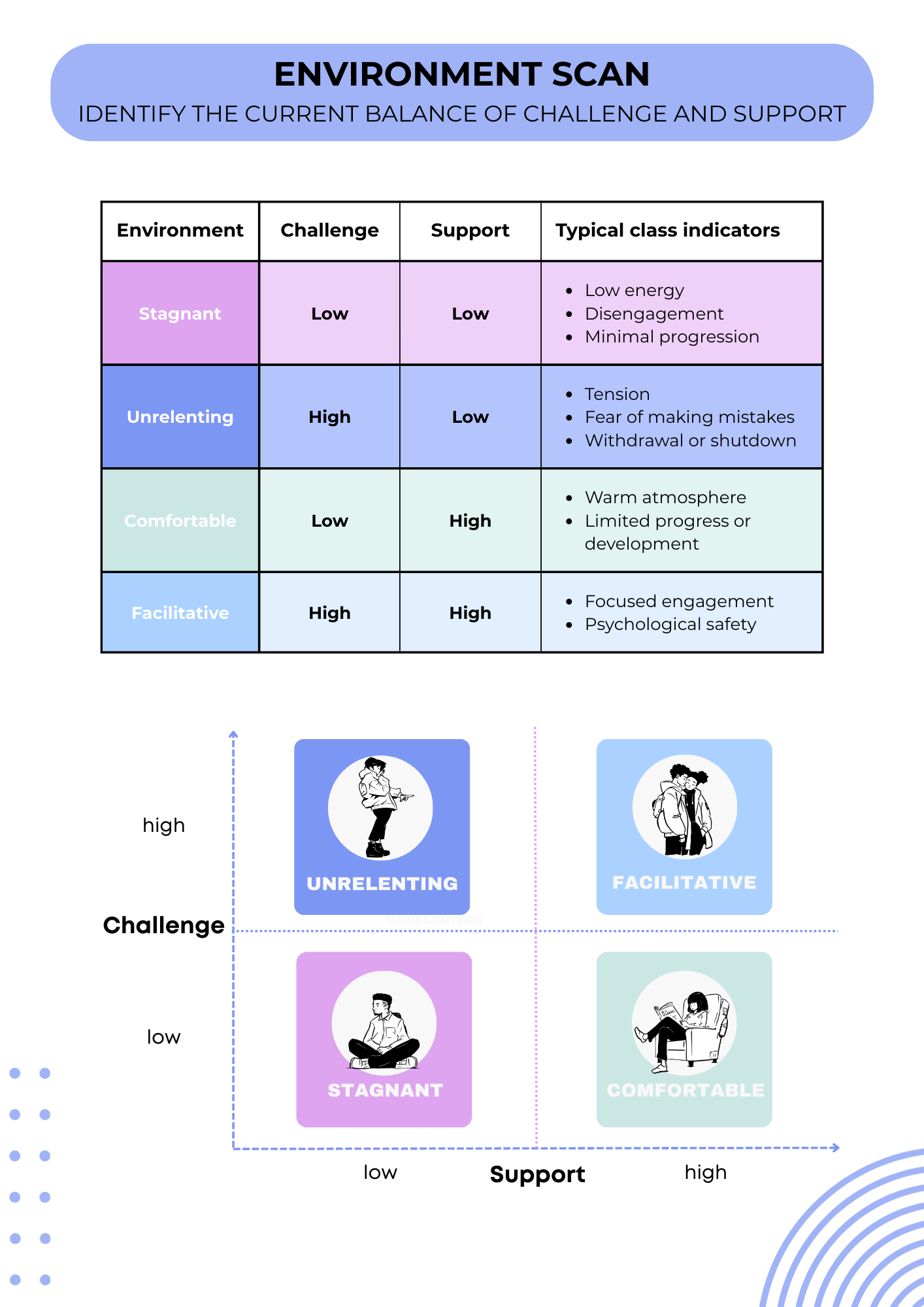
Creating a facilitative environment has been identified as a protective factor in supporting dancers' mental health. A facilitative learning environment offers a high level of support and an equally high level of challenge for dancers to develop their dance skills. Based on Sanford’s theory of balancing support and challenge in learning contexts3, there are four distinct environments that teachers can cultivate, distinguished by two factors of challenge and support. This theory provides valuable guidance for building a facilitative setting in which dancers can thrive.
As illustrated in the matrix, Sanford suggests that too many challenges and insufficient support are part of an unrelenting environment, which, as the review shows, compromises dancers’ mental health and well-being. Yet, if dancers perceive that they are not challenged and receive low support, their progress can become stagnant. If too much support is provided with insufficient challenge, the environment becomes too comfortable and might not enhance dancers’ growth and performance. Therefore, we can aim to create a facilitative learning environment with the following characteristics:
High challenge:
- Learning from mistakes and failures
- Giving dancers agency and responsibility for their learning
- Recognition and celebration of success
- Constructive feedback
- Opportunities to grow
High support:
- Warmth and empathy
- Relationships built on learning from each other’s strengths
- Psychological safety (daring to speak up and ask for rationale)
- “We’re in this together” mindset
- Scaffolding and check-ins when needed
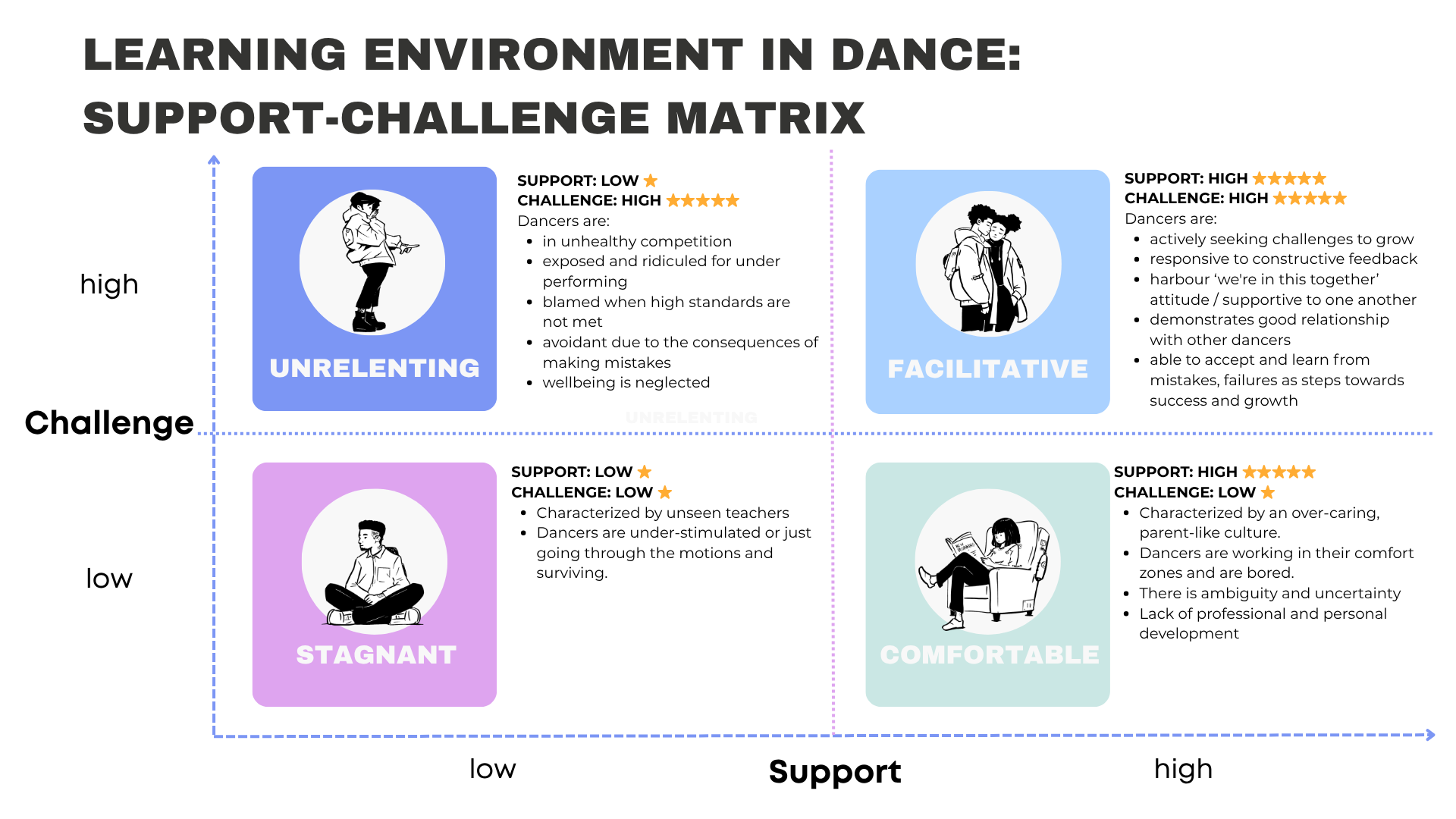
Learning environment in dance: Support-Challenge Matrix
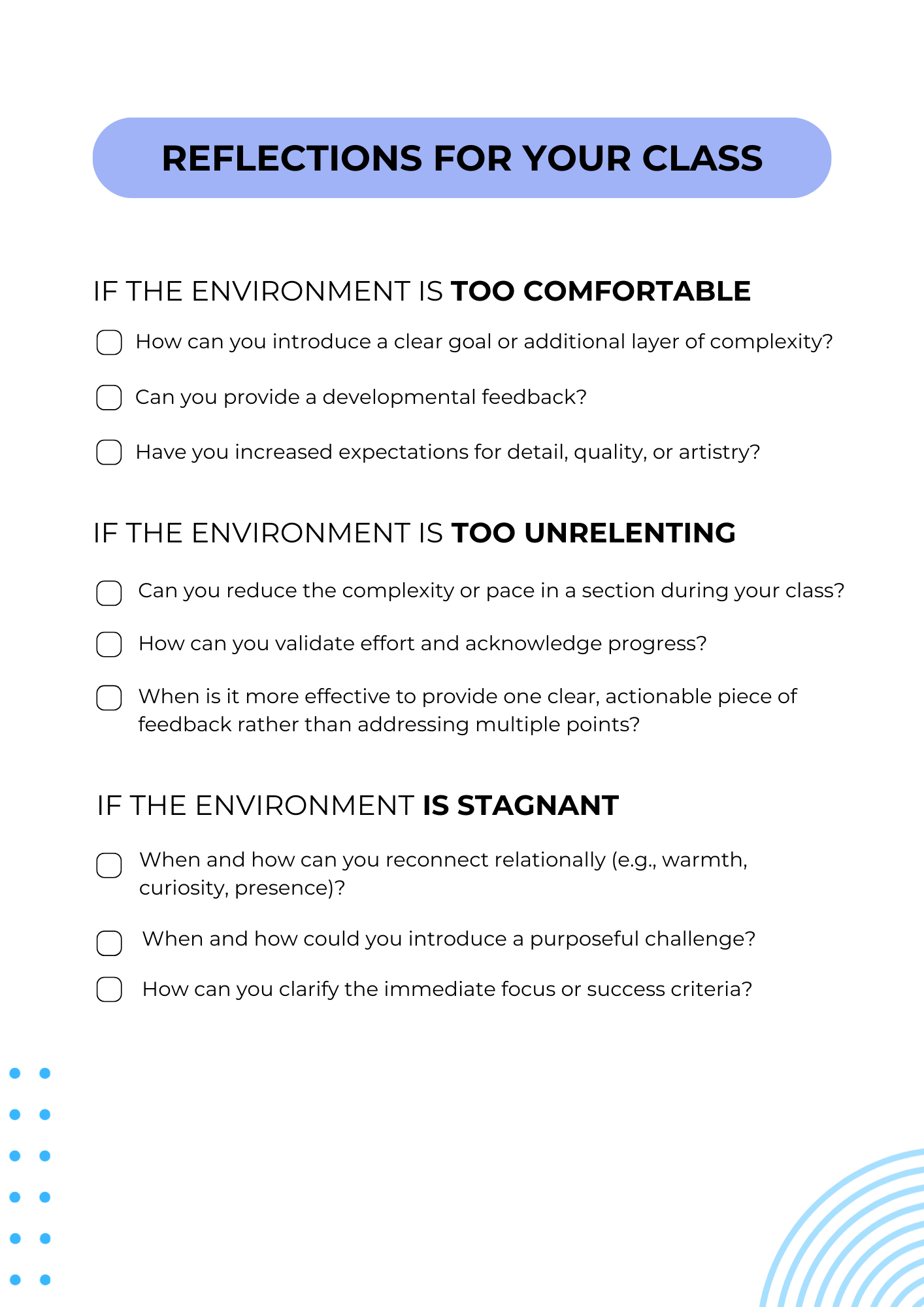
To start creating a facilitative learning environment, the following checklists might be useful to print out and reflect upon. Feel free to adjust the list as you go along.
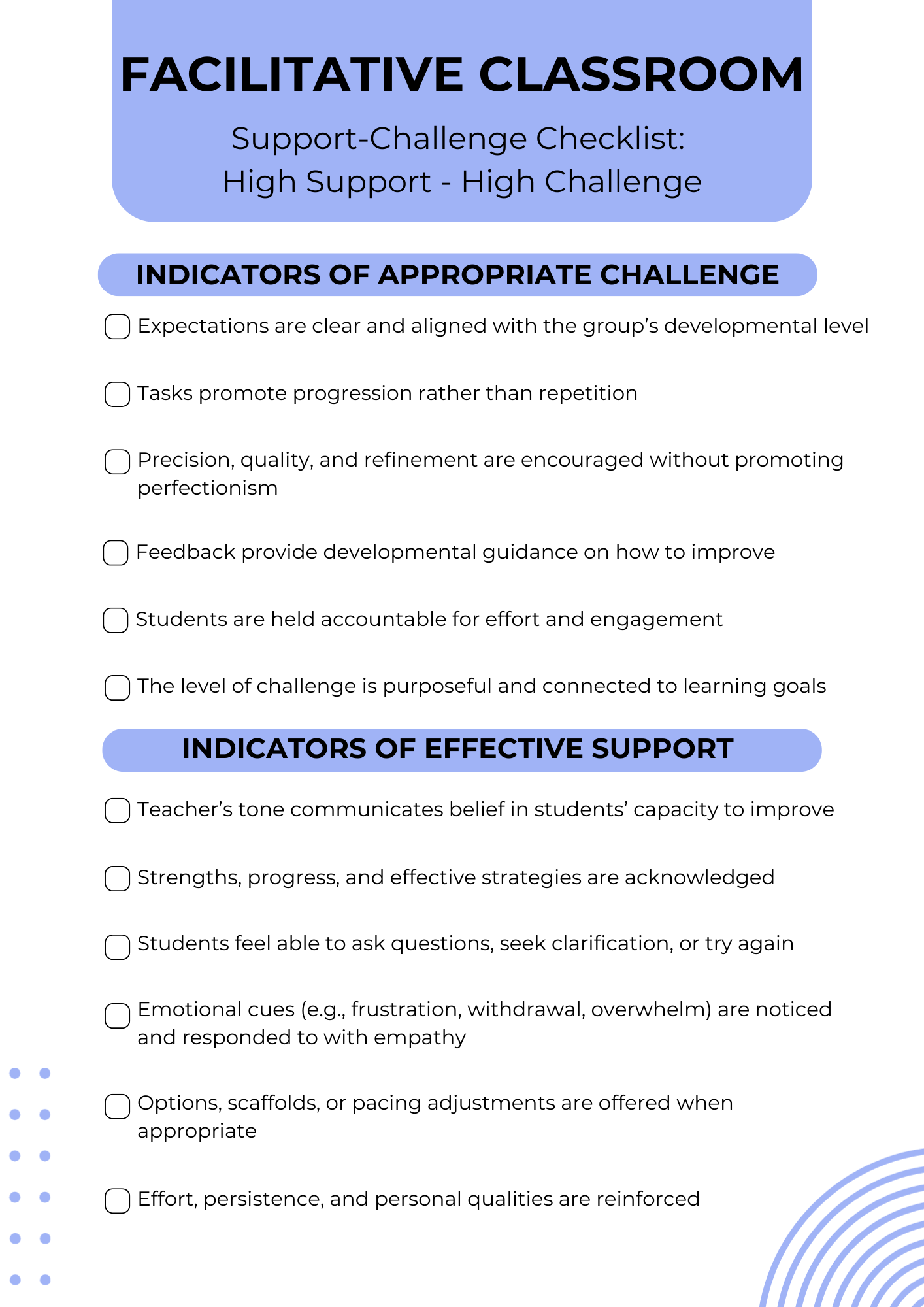
How this reduces the stressor: It replaces harsh or stagnant learning environments with a facilitative environment that supports both performance and well-being.
Conclusion
The scoping review highlights that dance teachers are central to the mental health landscape of dance. While dancers face a range of stressors, from injury and body ideals to power dynamics and emotional suppression, the studio environment can either amplify these pressures or actively buffer against them. Teachers shape that environment every day through their language, feedback, expectations, and cultural leadership.
The tools presented in this article are designed to help teachers reduce common stressors, strengthen dancers’ internal resources, and cultivate a learning environment where well-being and artistry develop side by side. The toolbox offers teachers strategies which can enhance dancers’ well-being for you to trial, adjust, and modify as needed.
Hopefully, you will be able to integrate these tools into daily practice and create training environments where dancers feel safe, motivated, and able to thrive across the full arc of their careers.
Original Article
Dwarika MS, Haraldsen HM. Mental health in dance: a scoping review. Frontiers in Psychology. 2023;14:1090645. https://doi.org/10.3389/fpsyg.2023.1090645
Further Reading and Resources
Lundqvist C, Andersson G. Let's talk about mental health and mental disorders in elite sports: a narrative review of theoretical perspectives. Frontiers in Psychology. 2021;12:700829. https://doi.org/10.3389/fpsyg.2021.700829
Let’s Talk About Mental Health and Mental Disorders in Elite Sports: A Narrative Review of Theoretical Perspectives by Lundqvist and Andersson offers valuable ways of understanding well-being in sport psychology, serving as a useful reflective tool for dancers and dance teachers to consider mental health in dance. The article outlines how various organizations and individuals interpret, define, and discuss mental health. It also explains the strengths and limitations of each perspective, offering insights that can serve as a useful reference for dance training and practice.
The authors conclude that mental health is a highly complex construct and that consensus on a uniform definition is unlikely. Yet, they suggest that diverse perspectives and experiences can foster a more holistic understanding of how mental health can be promoted and incorporated. By opening up more platforms for conversation, varied viewpoints can be accommodated, helping to establish a shared understanding of mental health within the dance community. Ultimately, the article provides dancers and dance teachers with a valuable framework for approaching mental health.
References
- Benn T, Walters D. Between Scylla and Charybdis. Nutritional education versus body culture and the ballet aesthetic: The effects on the lives of female dancers. Research in Dance Education. 2001;2(2):139-154. https://doi.org/10.1080/14647890120100773
- Haraldsen HM, Nordin-Bates SM, Abrahamsen FE, Halvari H. Thriving, striving, or just surviving? TD learning conditions, motivational processes, and well-being among Norwegian elite performers in music, ballet, and sport. Roeper Review. 2020;42(2):109-125. https://doi.org/10.1080/02783193.2020.1728796
- Sanford, N. Where colleges fail: a study of the student as a person. 1967.
- Quested E, Bosch JA, Burns VE, Cumming J, Ntoumanis N, Duda JL. Basic psychological need satisfaction, stress-related appraisals, and dancers’ cortisol and anxiety responses. Journal of Sport and Exercise Psychology. 2011;33(6):828-846. https://doi.org/10.1123/jsep.33.6.828
Disclaimer
The IADMS Bulletin for Dancers & Teachers is suitable for dancers, teachers and educators. This content is not intended to be a substitute for professional medical advice, diagnosis or treatment. Always seek the advice of your physician or other qualified health providers with any questions you may have regarding a medical condition.
IADMS owns the copyright to this Bulletin and the articles contained therein. The PDF files may be distributed or reproduced in hard (paper) copy in their entirety for educational purposes. The content may not be reproduced in any other form without the written permission of IADMS. Please contact IADMS for additional assistance.
The International Association for Dance Medicine & Science, Inc. is a tax-exempt public charity under IRS Section 501(c)(3) in the United States.