When do injuries occur across dance training and career development?
Melanie Fuller is a Lecturer (Physiotherapy) at the University of Southern Queensland, and Touring Physiotherapist with The Australian Ballet. She has 18+ years experience as a physiotherapist, with Masters qualifications in Sports and Musculoskeletal Physiotherapy. Melanie’s research investigates reducing injury in dance, and optimizing health and well-being for dancers.
Introduction
Dance training involves high training hours, and a high level of skill to produce a desired level of dance performance. Most dancers get injured during their training or career, and it is important to understand when and why dancers experience re-injury or multiple injuries that can impact their training and performances and even lead to long-term pain.
Rate of Injury
Injury may be related to a dancer’s training hours, and the number of injuries sustained relative to the number of training hours is referred to as the rate of injury.1 We can further consider what happens within these training hours; the intensity, or the level of exertion of these training sessions is as important as the number of hours, or volume of training.
Training Load
The product of training volume and intensity (volume x intensity) is known as training load.2, 3 There is very little research on training load and injury in dance.4 Training load monitoring collects this data over a period of time, but there is no long-term training monitoring data in dance due to the challenges of collecting this data in dance contexts. We can, however, see patterns of increased training hours, or training intensity across a dancer’s training and career development. It is possible to infer changes in training load at these times, and these changes in training load may explain the increased rate of injury reported in dance injury surveillance research.
Research Summary
Our research synthesized existing injury surveillance research that reported on injuries occurring at different time points across a dancer’s training and career development.5 We considered two time points when a dancer could be ‘transitioning’, or experiencing a change in their training load across their training and career development:
- When a dancer transitions to full-time training, with a likely increase in training hours and intensity; and
- When a dancer transitions to work in a professional dance company, likely involving more rehearsal in their day and performances across the year.
Student ‘Transitioning Dancers’
Along with the likely increase in training loads during a transition to full-time training, dance students often move away from home to commence full-time training, and this and other lifestyle changes can also contribute to an increased rate of injury once they commence full-time training.5
When evaluating the available research, we compared injuries in student ‘transitioning dancers’ who were in lower year levels of training to those in higher year levels and found mixed results.5
One study6 showed that first-year pre-professional ballet and contemporary dance students experienced an increased rate of injuries compared to second- and third-year dance students. This could be related to an increase in training hours when transitioning from part-time training to full-time training, or related to other potential factors outside of training that a young dance student may face when commencing full-time training. Of note, there was a greater frequency of upper limb injuries in first-year students compared to the students in higher year levels. We proposed that:
- The increase in upper limb injuries in first-year students could be related to an increase in contemporary dance technique loads relative to the students’ prior training, where contemporary dance technique tends to involve higher upper limb loads compared to classical ballet training.5
There were conflicting results in other studies on student ‘transitioning dancers’.5 In another study7 with pre-professional ballet students, there was an increased rate of injury in the second- and third-year students compared to the first-year students, with a greater rate of injuries seen in the third-year students.
- Ekegren and colleagues7 proposed that this may be related to a change in training from more technique classes in earlier year levels, to an increase in rehearsal and, in turn, performance schedules. Dance performance training loads have been shown to be at a higher intensity than class work and rehearsal.8
- Another potential factor related to the increase in injuries in the third-year students in this study, is that previous injury is a risk factor for future injury,9 and the majority of students in this study had experienced an injury in their first-year of full-time training, potentially leaving them more susceptible to future injury. This highlights the need for appropriate rehabilitation of any injury to reduce the risk of future injury.5
Professional ‘Transitioning Dancers’
We also compared injuries in professional ‘transitioning dancers’ at a lower rank in a company or a junior company, and those who were younger or had fewer years of experience compared to more senior professional dancers.5
Some research showed that professional ‘transitioning dancers’ had a higher rate of injuries in ballet,10 when compared to more established professional dancers, but, in other contexts, dancers new to the profession had less injuries in modern dance.11 We felt that the lower injury rates seen in professional modern ‘transitioning dancers’ may relate to the comprehensive healthcare available at the company’s pre-professional training school that offered continuation of care into the professional company.5,12 Of interest, the injury rates in the modern dance company’s pre-professional training school was higher12 compared to those in the professional company.11
- This potentially highlights the success of the comprehensive healthcare available to the dancers in these settings, that may allow full rehabilitation from injury, and potentially reduce the risk of future injury.5
- The increase in injury rates seen in professional ballet ‘transitioning dancers’ could be related to an increase in performance demands that requires higher work intensities than the technique classes that student dancers are typically more often exposed to, but also, that there is likely an increase in the number of performances they undertake.5
Application of Research Findings to Practice for Dancers and Dance Educators
Dance specific training and conditioning can complement each other to support a student’s transition to full-time dance training. The commencement of a dance training program, or training year can be optimal times to focus on conditioning training, but conditioning and dance-specific training must be balanced to avoid overloading dance students. The infographic (figure 1) below highlights key considerations when supporting dancers during these transition periods, and an example of how to guide the implementation of balanced dance-specific training and conditioning has been provided (table 1).
Tools and Resources
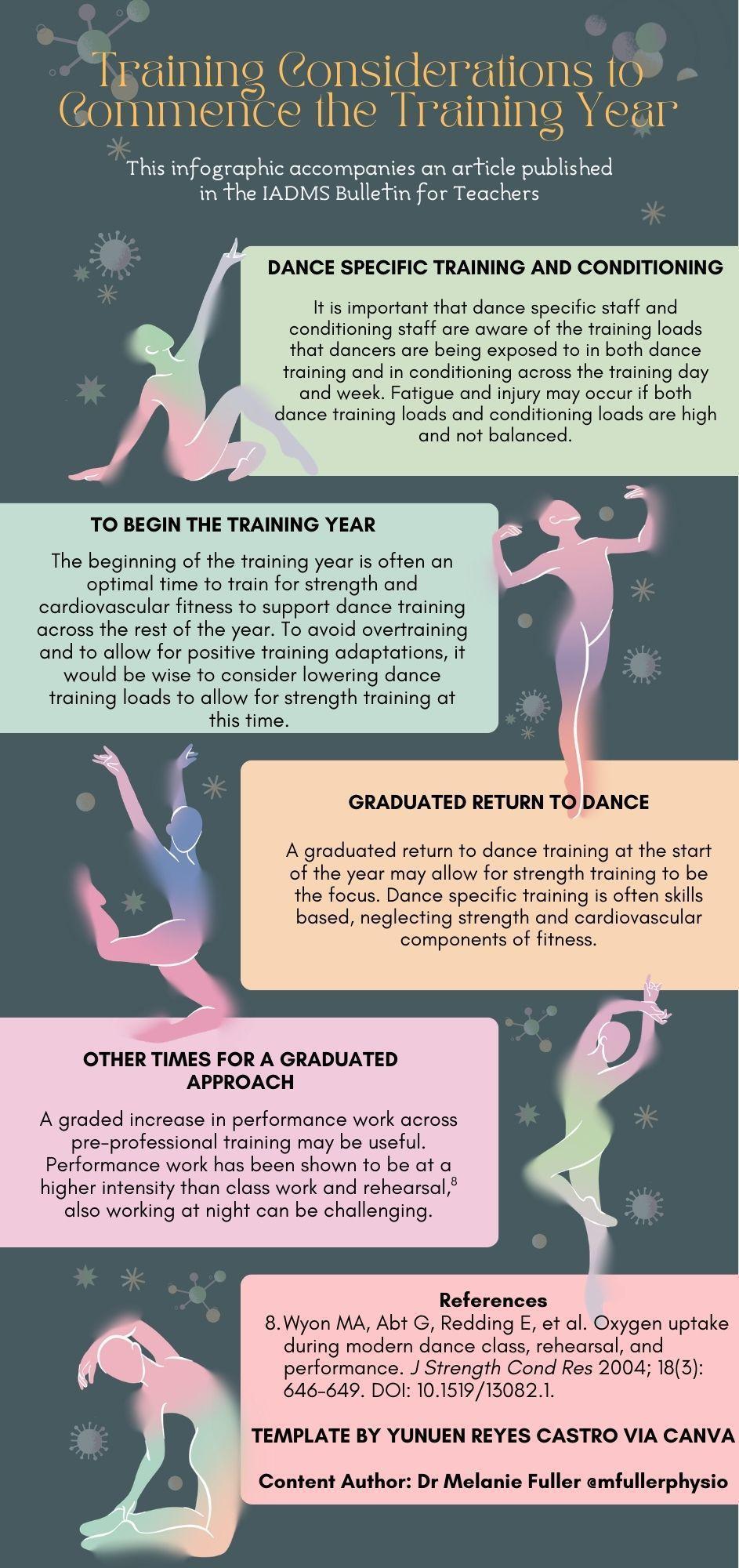
Figure 1: Key considerations when supporting dancers during transition period
Table 1: An example of a graded return to dance with volume and intensity of dance specific training and conditioning to commence full-time dance training
| Week | Volume of dance specific training | Intensity of dance specific training | Volume of conditioning to support dance training Nb. This is the skills domain of appropriately qualified strength and conditioning coaches or other exercise training professionals |
Intensity of conditioning to support dance training |
|---|---|---|---|---|
| 1 | 50% of full ongoing training hours | No jumping, easier skills of pointe work. No upper limb loading for contemporary and other dance techniques. En l’air work that does not involve holds e.g. a grande battement or kick versus a held developpé. | 3 x 1-1.5-hour sessions of appropriate strength training per week 3 x 30-minute cardiovascular training sessions per week Nb – ensure to include conditioning to support dance loads – calves, quads, glutes, trunk, foot intrinsic muscles, upper limb strength. |
Use time to build strength-based work to support dance training, then maintain it. If no training history in strength-based work, focus on technique to start with, and body weight work. |
| 2 | 60% of full ongoing training hours | Commence 2 feet jumps. Build pointe work loads, build upper limb loading, and commence a low number of short hold developpés. | 3 x 1-1.5-hour sessions of strength training per week 3 x 30-minute cardiovascular training sessions per week |
If technique is strong, and accustomed to body weight strength-based training, increase loads, monitoring for mild delayed onset muscle soreness as an indication of positive adaptation, rather than extreme delayed onset muscle soreness. |
| 3 | 70% of full ongoing training hours | Commence small single leg jumps, build the amount of upper limb based contemporary and other dance work, include more high skill pointe work, and a gradual increase in the number and length of holds of developpés. | 3 x 1-1.5-hour sessions of strength training per week 3 x 30-minute cardiovascular training sessions per week |
Build consistency in strength-based training for further incremental strength gains. |
| 4 | 80% of ongoing full training hours | Build to grande allegro or big travelling jumps, increase upper limb loading, and the amount of pointe work. | 3 x 1-1.5-hour sessions of strength training per week 3 x 30-minute cardiovascular training sessions per week |
Maintain consistency. |
| 5 | Full dance training hours | Aim for consistency in loading from 5-6 weeks post-holiday period or transitioning in load. Avoid big changes in loads, and plan for upcoming changes in load with new choreography for example. | Continue 2 x 1-1.5-hour strength training sessions per week 1-2 x cardiovascular training sessions. |
Maintenance is the aim here, rather than further strength gains. Consider the need for future recovery weeks in conditioning, to reduce the volume of conditioning work, whilst maintaining intensity, to avoid overtraining, particularly when dance loads increase e.g. performance periods, to ensure conditioning and dance specific loads don’t add up to too much. Look for other times in the year to focus more on strength-based training for further strength gains. But consider a decrease in dance training loads to ensure increased strength training is matched with appropriate dance training loads. |
Conclusion
There are times across a dancer’s training and career development when they may be more susceptible to injury, when training can change in intensity and volume, particularly when commencing full-time training, or beginning a professional career. Dance teachers and artistic staff can communicate and work with strength and conditioning staff, these teams can better understand the training loads that dancers are being exposed to. Dance-specific training and strength and conditioning training can complement each other during the start of a training year to set dancers up for success.
Reflections and Invitations
Am I seeing more injuries at certain times of training development? Can I vary load to reduce injury risk?
Is this week’s planned training too much of a spike in training load from last week’s training?
What’s the individual’s training history? Are they returning post injury, or post holidays? What pointe work, pas de deux or contemporary work are they used to?
Are this week’s dance specific training loads matched with what is planned for conditioning?
Original Article
Fuller, M., Moyle, G., Hunt, A., & Minett, G. (2019). Ballet and contemporary dance injuries when transitioning to full-time training or professional level dance: a systematic review. Journal of Dance Medicine & Science, 23(3), 112-125. https://doi.org/10.12678/1089-313X.23.3.112
Further Reading and Resources
Armando C, Kurapati SS, Voulo MA, et al. Influence of training load on the risk of injuries in preprofessional contemporary dancers: a scoping review. Orthop J Sports Med 2025; 13(10): https://doi.org/10.1177/2325967125136
This scoping review is a valuable resource for dance educators, as it examines how training intensity and scheduling directly impact the physical health of pre-professional contemporary dancers. By analysing nine studies, the researchers identified critical patterns that can potentially help teachers reduce injury rates and improve student longevity.
A primary concern for teachers is the high prevalence of overuse injuries. The authors point out that many students continue to train through pain, meaning standard "time-loss" tracking, where a student only reports an injury if they miss class, underestimates the true physical toll on the body. For a more accurate picture of student health, the study suggests adopting an "all complaints" approach, encouraging dancers to report any pain or hindrance to their normal movement.
The research highlights the risk of erratic training schedules, specifically "spikes" in hours during the final weeks leading up to a performance or when returning from a break. These sudden increases in workload have been linked to higher injury rates because the body does not have time to make the necessary physiological adaptations. While technique classes are usually balanced (bilateral), rehearsals often favor a dominant side, leading to asymmetric loading and muscular imbalances that may increase the risk of injury.
To mitigate these risks, the article recommends that dance programs:
- Implement graduated progression of programs to slowly build technique, strength and stamina rather than allowing sudden spikes in rehearsal hours.
- Introduce supplemental training, such as strength, mobility, and plyometric work, outside of technique class to counterbalance the repetitive stresses of choreography.
- Prioritise adequate nutrition and sleep, especially during intense pre-performance periods.
- Focus on functional measurements (like pain levels and range of motion) rather than just "days lost" to assess the severity of a student's injury.
References
- Knowles SB, Marshall SW and Guskiewicz KM. Issues in estimating risks and rates in sports injury research. J Athl Train 2006; 41(2): 207-215. https://pubmed.ncbi.nlm.nih.gov/16791309/
- Foster C. Monitoring training in athletes with reference to overtraining syndrome. Med Sci Sports Exerc 1998; 30(7): 1164-1168. https://doi.org/10.1097/00005768-199807000-00023
- Foster C, Florhaug JA, Franklin J, et al. A new approach to monitoring exercise training. J Strength Cond Res 2001; 15(1): 109-115. https://pubmed.ncbi.nlm.nih.gov/11708692/
- Volkova VG, Räisänen A, Benson LC, et al. Systematic review of methods used to measure training load in dance. BMJ Open Sport Exerc Med 2023; 9(3). https://doi.org/10.1136/bmjsem-2022-001484
- Fuller M, Moyle G, Hunt A, et al. Ballet and contemporary dance injuries when transitioning to full-time training or professional level dance: a systematic review. J Dance Med Sci 2019; 23(3): 112-125. https://doi.org/10.12678/1089-313X.23.3.112
- Lee L, Reid D, Cadwell J, et al. Injury incidence, dance exposure and the use of the Movement Competency Screen (MCS) to identify variables associated with injury in full-time pre-professional dancers. Int J Sport Phys Ther 2017; 12(3): 352-370. https://pubmed.ncbi.nlm.nih.gov/28593089/
- Ekegren CL, Quested R and Brodrick A. Injuries in pre-professional ballet dancers: Incidence, characteristics and consequences. J Sci Med Sport 2014; 17(3): 271-275. https://doi.org/10.1016/j.jsams.2013.07.013
- Wyon MA, Abt G, Redding E, et al. Oxygen uptake during modern dance class, rehearsal, and performance. J Strength Cond Res 2004; 18(3): 646-649. https://doi.org/10.1519/13082.1
- Kenny SJ, Whittaker JL and Emery CA. Risk factors for musculoskeletal injury in preprofessional dancers: a systematic review. Br J Sports Med 2016; 50(16): 997-1003. https://doi.org/10.1136/bjsports-2015-095121
- Allen N, Nevill A, Brooks J, et al. Ballet injuries: injury incidence and severity over 1 year. J Orthop Sports Phys Ther 2012; 42(9): 781-790. https://doi.org/10.2519/jospt.2012.3893
- Bronner S, McBride C and Gill A. Musculoskeletal injuries in professional modern dancers: a prospective cohort study of 15 years. J Sports Sci 2018; 36(16): 1880-1888. https://doi.org/10.1080/02640414.2018.1423860
- Bronner S and Bauer NG. Risk factors for musculoskeletal injury in elite pre-professional modern dancers: a prospective cohort prognostic study. Phys Ther Sport 2018; 31:42-51. https://doi.org/10.1016/j.ptsp.2018.01.008
Disclaimer
The IADMS Bulletin for Dancers & Teachers is suitable for dancers, teachers and educators. This content is not intended to be a substitute for professional medical advice, diagnosis or treatment. Always seek the advice of your physician or other qualified health providers with any questions you may have regarding a medical condition.
IADMS owns the copyright to this Bulletin and the articles contained therein. The PDF files may be distributed or reproduced in hard (paper) copy in their entirety for educational purposes. The content may not be reproduced in any other form without the written permission of IADMS. Please contact IADMS for additional assistance.
The International Association for Dance Medicine & Science, Inc. is a tax-exempt public charity under IRS Section 501(c)(3) in the United States.