The Representation and Equity in Dance (RED) project: Enhancing racial equity in dance education
Imogen Aujla is a freelance dance psychology specialist from Dance in Mind. She works across three main areas: research, psychological coaching for individuals and groups, and education. Imogen’s main focus with her work is mental health promotion, helping dancers develop the skills they need to flourish on and off stage.
Stacey Green is the founder of the TIRED Movement (Trying to Improve Racial Equality in Dance). She has dedicated her career to empowering people through education, dance, and meaningful conversations that inspire change. Stacey is a member of the Equality, Diversity and Inclusion Advisory Board of the Imperial Society for Teachers of Dance (ISTD).
Context and Rationale
Equity, diversity, and inclusion have gained increasing attention in many areas of society, including dance, in recent years. Many discussions about representation and racial equity have taken place in the dance industry, but action for real change has been limited. This issue is worsened by a lack of specific research evidence about racial discrimination in dance.
Anecdotal evidence highlights the unique challenges that Global Majority dancers face, such as perceptions about ideal body shapes and stereotypes that influence casting. For example, Global Majority dancers have described being cast in “exotic” roles rather than as the “princess.”1 These views stem from ballet’s dominance as the “high art” of dance, which implies that Whiteness is standard2, universal, and neutral. The roles of Global Majority dancers in shaping different dance genres are often overlooked.3
Individual accounts of racist experiences reveal that Western dance training can negatively affect the self-esteem, motivation, and ambitions of Global Majority dancers.4 However, research on these effects has been limited until recently.
Stacey Green founded the TIRED Movement specifically to address the above challenges. She was tired of having the same conversations over and over again, with few real actions being taken. Stacey discussed her ideas with Imogen, an independent researcher with a commitment to inclusion in dance. To tackle the inaction in the dance world, the TIRED Movement launched the Representation and Equity in Dance (RED) research project to provide data that can lead to positive change by exploring two main objectives:
- The effects of the lack of equity and representation in dance education on Global Majority dance students.
- Create and test a framework to improve equity and inclusion in dance training.
The project supports TIRED’s goal to enhance access and inclusion in dance and improve representation in the industry.
This article summarizes the main findings from the project and offers some practical tools for dancers and teachers to use in the studio. Racism can appear at both individual and organizational levels, and we hope that readers will feel inspired to take steps to make positive changes in their own settings. White dancers and teachers can become active allies by exploring the tools and resources presented in this article to support and advocate for Global Majority dancers across the industry.
Research Summary
TIRED teamed up with nine dance colleges in the UK for the RED project. While the focus was on Global Majority dancers, White dancers were also included to highlight how tackling racism is a shared responsibility. With 150 dancers (Global Majority 26%; White 74%) completing a survey about dancers’ experiences of racial discrimination and their mental health, we found that discrimination, particularly exclusion and rejection, is strongly related to lower wellbeing among Global Majority dancers. Feeling ignored (e.g., views being ignored in a group), being excluded (e.g., not being chosen for pair or group activities), and being treated unfairly or made to feel different (e.g., being criticized more often than White dancers) were strongly related to lower wellbeing amongst Global Majority dancers. Even with the same ambitions as White dancers, Global Majority dancers expected to encounter more barriers when entering the profession due to systemic biases and discrimination. The negative impacts of discrimination include experiencing poorer life satisfaction, lower body appreciation, negative self-perceptions of ability, and poorer relationships with others.
Nineteen dancers (Global Majority 8; White 11) took part in a series of focus groups, discussing experiences of discrimination as well as how they coped with discrimination in dance and suggestions for change. The focus groups confirmed and supported the survey results. We found that:
- Teachers and peers exclude Global Majority dancers and treat them differently from White dancers:
“I just feel like they’re picking on me, everyone else will make a mistake, but then when I make a mistake it’s like, “Oh, why didn’t you practice?... There were other people around me going wrong, but [teacher] didn’t say anything about them.”
- White peers suggested that casting decisions were based on skin color rather than talent:
“I felt really invalidated, that I’d worked so hard this whole year, and then went through a really difficult audition process, and made it through, to be told it’s only because you look different, like, it’s nothing to do with your dance abilities.”
- Teachers making learning activities and casting decisions based on stereotypes:
“[the script] was very stereotypical ghetto… I don’t feel comfortable doing it.”
From these findings, we learned that experiencing discrimination leads to self-doubt, isolation, and lower confidence. Dancers often hesitated to report incidents, as they were unsure if action would be taken.
Overall, the RED findings show that racism exists in dance training and affects Global Majority dancers’ psychological wellbeing and mental health. During the final phase of the project, we aimed to create a framework to improve racial equity in dance training. Although data from pilot testing of the framework is not yet published, the framework is available through TIRED Connect, a platform that connects people and organizations, shares knowledge, and supports the TIRED Movement.
Application of Research Findings to Practice for Dancers and Teachers
Western dance training often treats White practices as normal and universal4. This appears in course content, syllabi, and teaching and assessment methods. The first step towards racial equity in the dance training environment is to be aware that Whiteness may be perceived as more important or superior to other cultures.5 For instance, when discussing the “ideal body” in dance, it usually means a White balletic body, which can exclude Global Majority dancers.5 Understanding the multiple ways in which Whiteness pervades dance training provides an important context for the other suggestions and tools in this article.
Before you explore the tools and resources in this article, we invite you to pause and reflect:
- Whose histories, bodies, and artistry are reflected in your curriculum or syllabus?
- Which aesthetic lens sets the standard for technique, feedback, and assessment in your setting?
- Does that lens give every dancer an equal starting point?
- Are Global Majority dancers included within that standard, or measured against it from the outside?
These questions are not easy, nor are they meant to be answered in a single sitting. They are offered as a starting point for the practical tools that follow, and we hope they help you read the rest of this article not as a checklist but as an invitation to notice, question, and perhaps begin to shift what happens in your dance setting. Your reflections can lead to open discussions with colleagues, dancers, and students about stereotyping, microaggressions, gaslighting, and allyship, and conversations about what terms like equity and inclusion mean can be equally productive and eye-opening. A glossary is provided at the end of this article.
The supplementary material, courtesy of The IADMS Bulletin Editorial Team, may be printed as posters for your studio or workspace, and we also invite you to listen to the ResDance podcast episode hosted by Dr Gemma Harman which offers further insights from the authors around racial equity in dance. While those facilitating these discussions may need further training to hold these spaces sensitively, such conversations can help White teachers and dancers better understand the practical recommendations highlighted in this article.
Tools and Resources
Tackling racism can feel overwhelming and may leave us feeling powerless, but the following tools offer a starting point for dance teachers and dancers to begin embedding racial equity into training environments. These strategies include rethinking how dancers are grouped for tasks and assignments, ensuring uniform inclusivity, understanding or establishing zero-tolerance policies against racism, and facilitating access to mental health support.
Grouping Dancers for Tasks
| Dancers | Teachers |
|---|---|
|
|
Uniform Inclusivity
| Dancers | Teachers |
|---|---|
|
|
Zero Tolerance Policy
| Dancers & Teachers, A Shared Responsibility |
|---|
|
Signpost Dancers to Mental Health Support
| Dancers | Teachers |
|---|---|
|
|
Reflections and Invitations
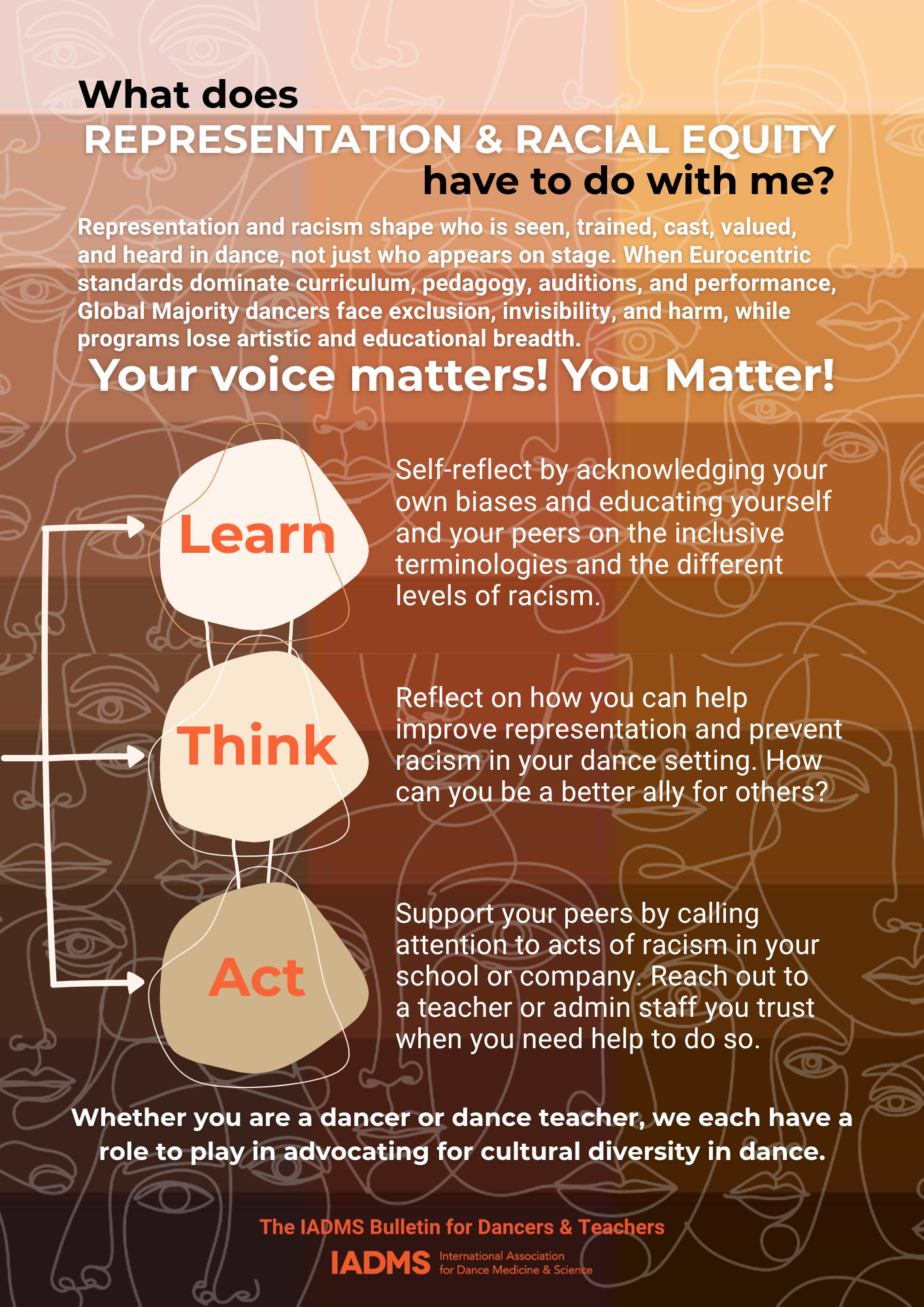
Figure 1: What does “Representation and Racial Equity” have to do with you? Learn, Think, Act.
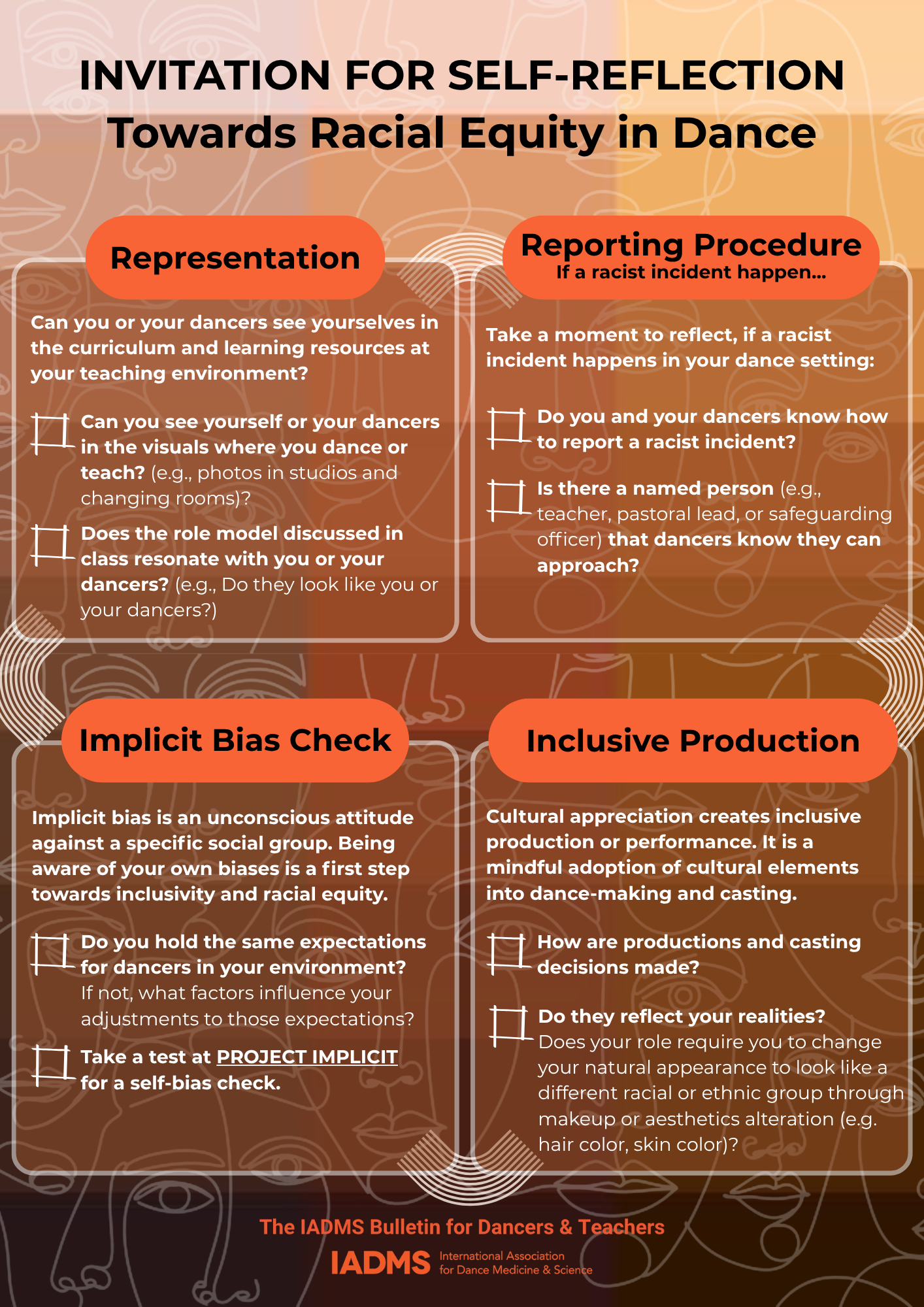
Figure 2: Invitation for self-reflection towards racial equity in dance.
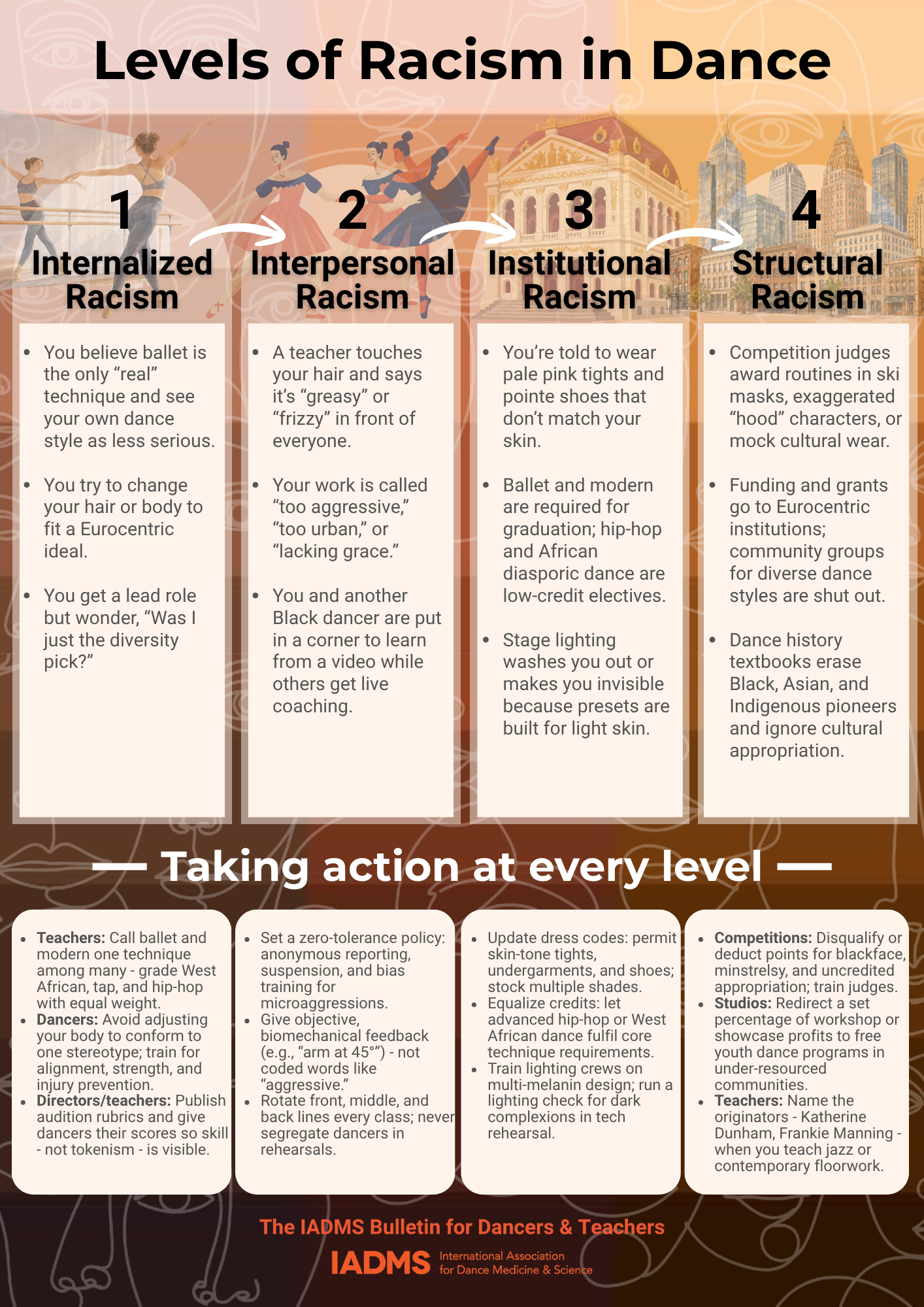
Figure 3: Levels of racism in dance.
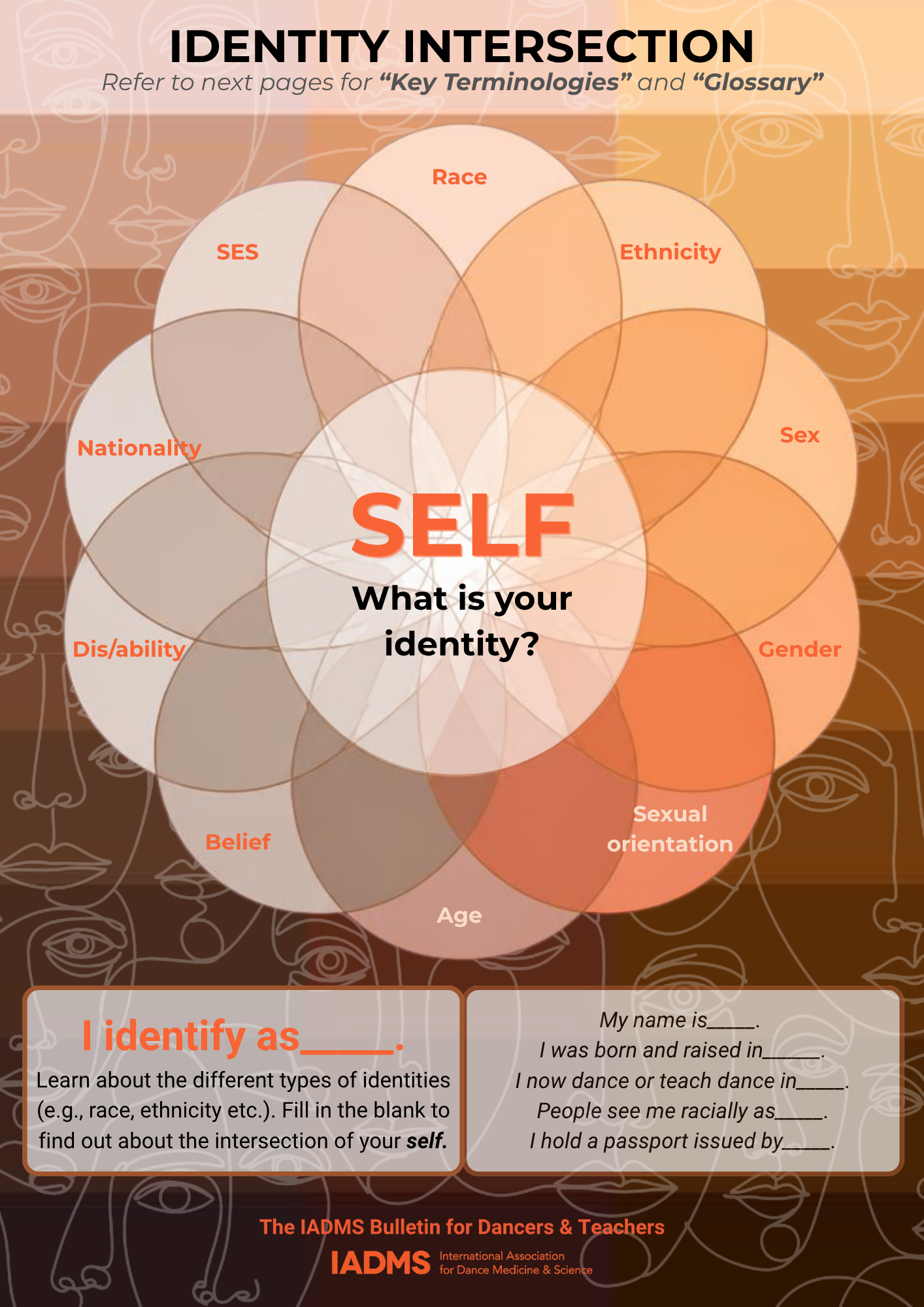
Figure 4: Identity Intersection: What is your self-identity?
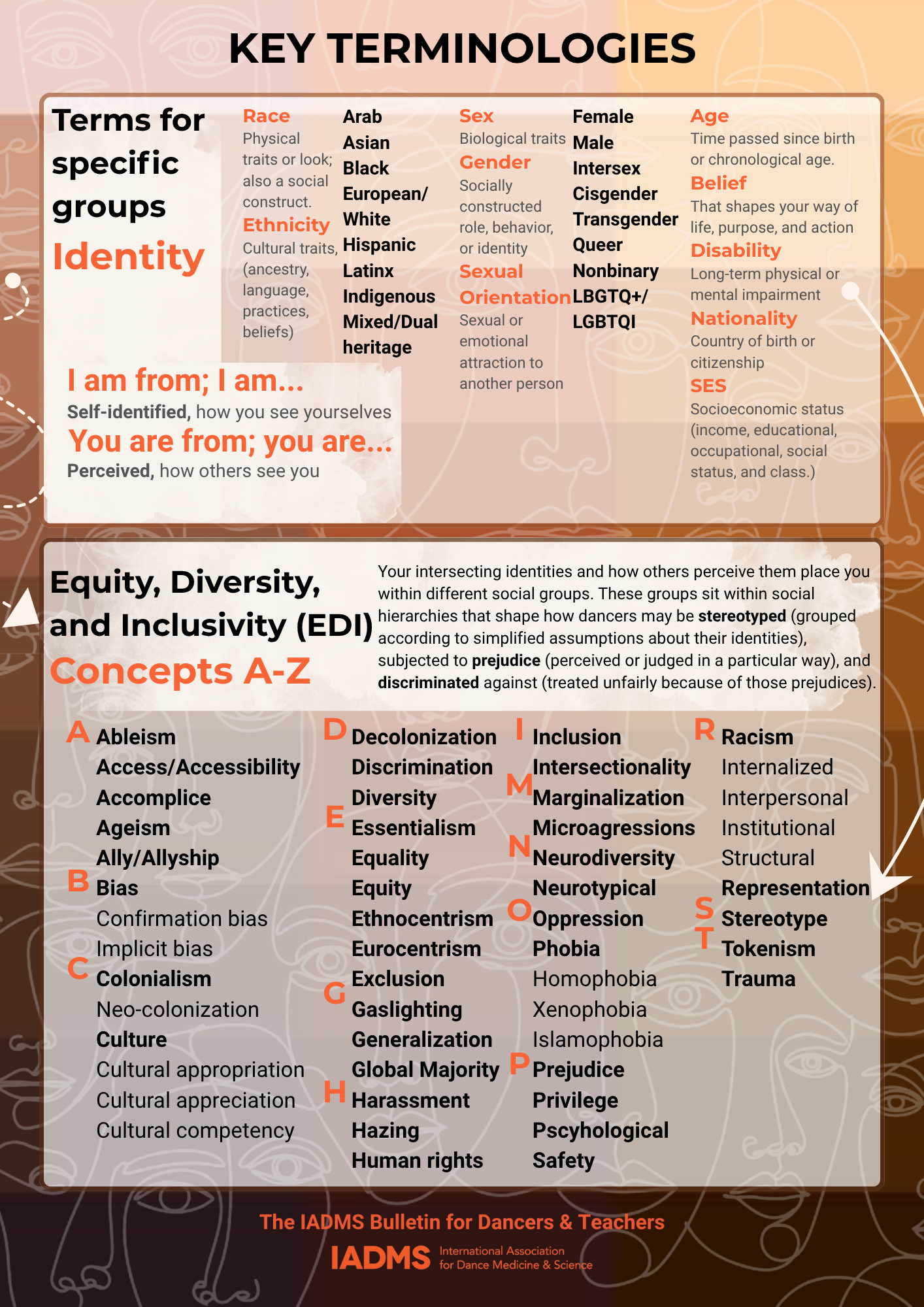
Figure 5: Learn: Key Terminologies.
Conclusion
Dismantling longstanding biases, such as the privileging or favoring of White practices in dance education, is neither easy nor quick, but is essential in creating a better environment for Global Majority dancers. It is an ongoing effort, and it is everybody’s responsibility. The tools and resources in this article invite teachers and dancers to reflect on racial equity inside your respective dance studios while suggesting some feasible actions you can take to influence a positive shift in the dance education environment where no one is left behind and everyone is included.
To help us create this change, the authors invite you to join both the TIRED Movement and TIRED Connect - a brand-new, global creative networking platform designed to help Global Majority artists, designers, musicians, makeup artists, filmmakers, dance photographers, creative organizations (and more!) connect, collaborate, and grow. TIRED Connect provides a dedicated space to showcase creative work, build professional relationships, and discover new opportunities within the creative industry. By joining TIRED Connect, you will also be able to access the RED Framework and be a part of the effort to ensure that Global Majority dancers feel safe and supported in their dance training.
Original Articles
- Aujla IJ, Green S, Grant L. The impact of racial discrimination on the well-being of dance students. Arts Commun. 2024;3(1). doi:10.36922/ac.3165
- Aujla IJ, Green S, Grant L. Lived experiences of discrimination among Global Majority dance students: A qualitative exploration of racial inequity. Arts Commun. 2025;3(4). doi:10.36922/ac.8530
Further Resource
Harman G. ResDance. Series 6: Episode 11: Racial Equity in Dance with Stacey Green and Imogen Aujla. Published June 7, 2024. Accessed October 23, 2026. https://open.spotify.com/episode/5WUlH2tuyfZu0Ncr1Zmbxe
Further Reading
Prichard R. From Color-Blind to Color-Conscious: Advancing Racial Discourse in Dance Education. J Dance Educ. 2019;19(4). doi:10.1080/15290824.2018.1532570
In this article, Prichard examines how approaches to race can shape teaching and learning in dance education. Drawing on social science, education, and legal scholarship, Prichard critiques color-blind racial ideology, which treats race as irrelevant or seeks to avoid discussing racial differences. The article argues that this approach can obscure racial inequities and contribute to harmful experiences for teachers and students. In contrast, Prichard advocates for color-consciousness, an approach that explicitly recognizes the significance of race and racialized experiences. The author identifies four strategies for developing color-conscious dance education: recognizing the role of race, openly identifying racist practices, questioning the perceived neutrality of Whiteness, and ensuring that Global Majority dancers are able to fully express their perspectives. Applying these strategies to dance education, Prichard highlights existing shortcomings and proposes ways educators can engage more directly with race, challenge inequities, and create more inclusive educational environments.
References
- Johnson O. The black sheep is the Black dancer. Dance Major J. 2017;5(1). doi:10.5070/d551036259
- Evans L. 21st century ballet, 20th century racism. Dance Major J. 2022;10(1). doi:10.5070/d510158899
- Oliver W. Race and racism: A call to action. J Dance Educ. 2020;20(3). doi:10.1080/15290824.2020.1793620
- Wilson L. Dancing under the weight of racism. International Journal of Education and the Arts. 2022;23(Special Issue 1). doi:10.26209/ijea23si1.4
- McCarthy-Brown N. Navigating anti-racism in an anti-black landscape: a dance educator’s reflection. Int J Educ Arts. 2022;23(1). doi:10.26209/ijea23n1
Acknowledgements
Thank you to the colleges and students who took part, without whom this project would not have been possible. We also thank Jia Xi Lee and The IADMS Bulletin Editorial Team for contributing to the supplementary materials and graphics that enrich this article.
Glossary
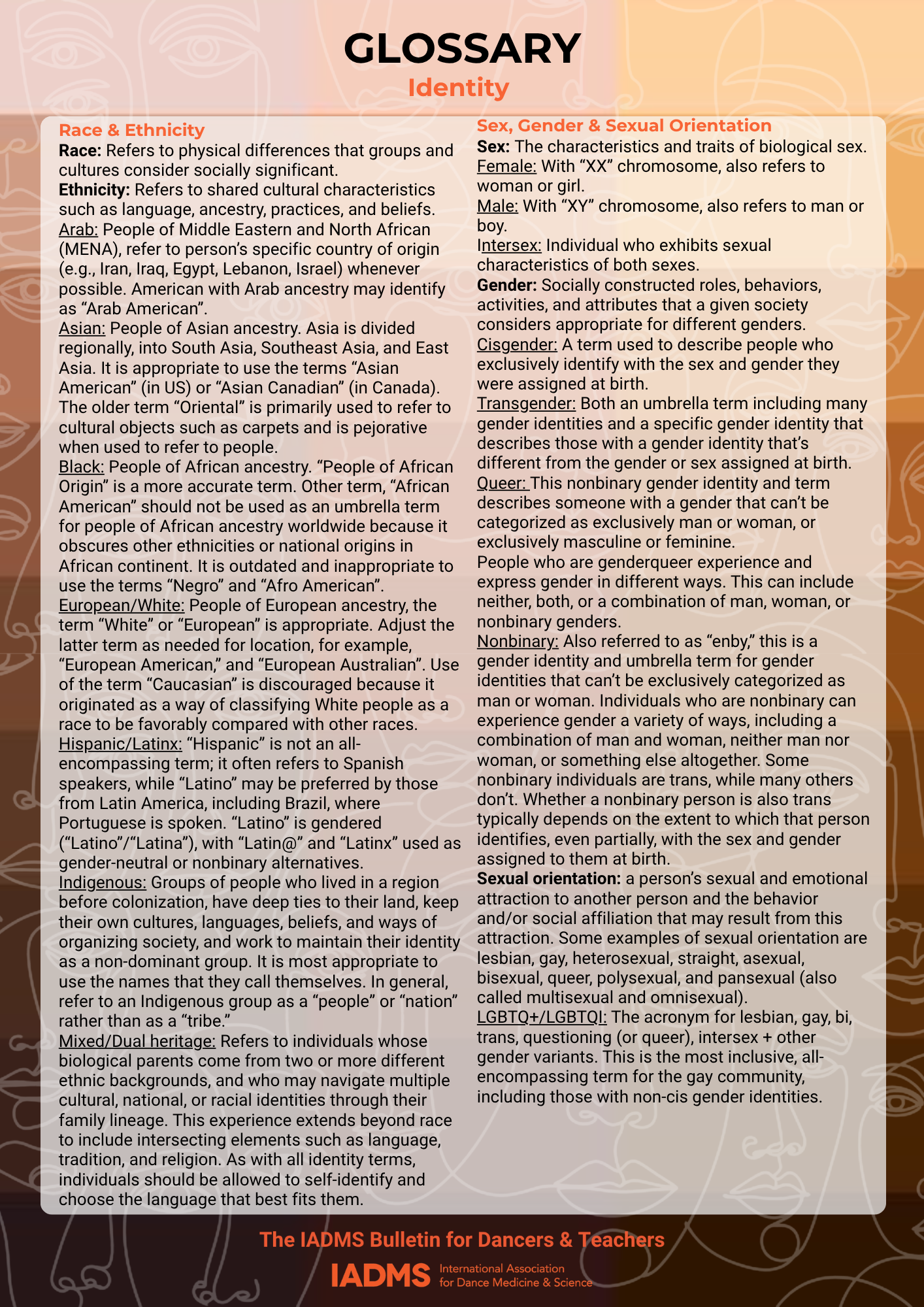
Glossary: Identity. Race and ethnicity; sex, gender and sexual orientation.
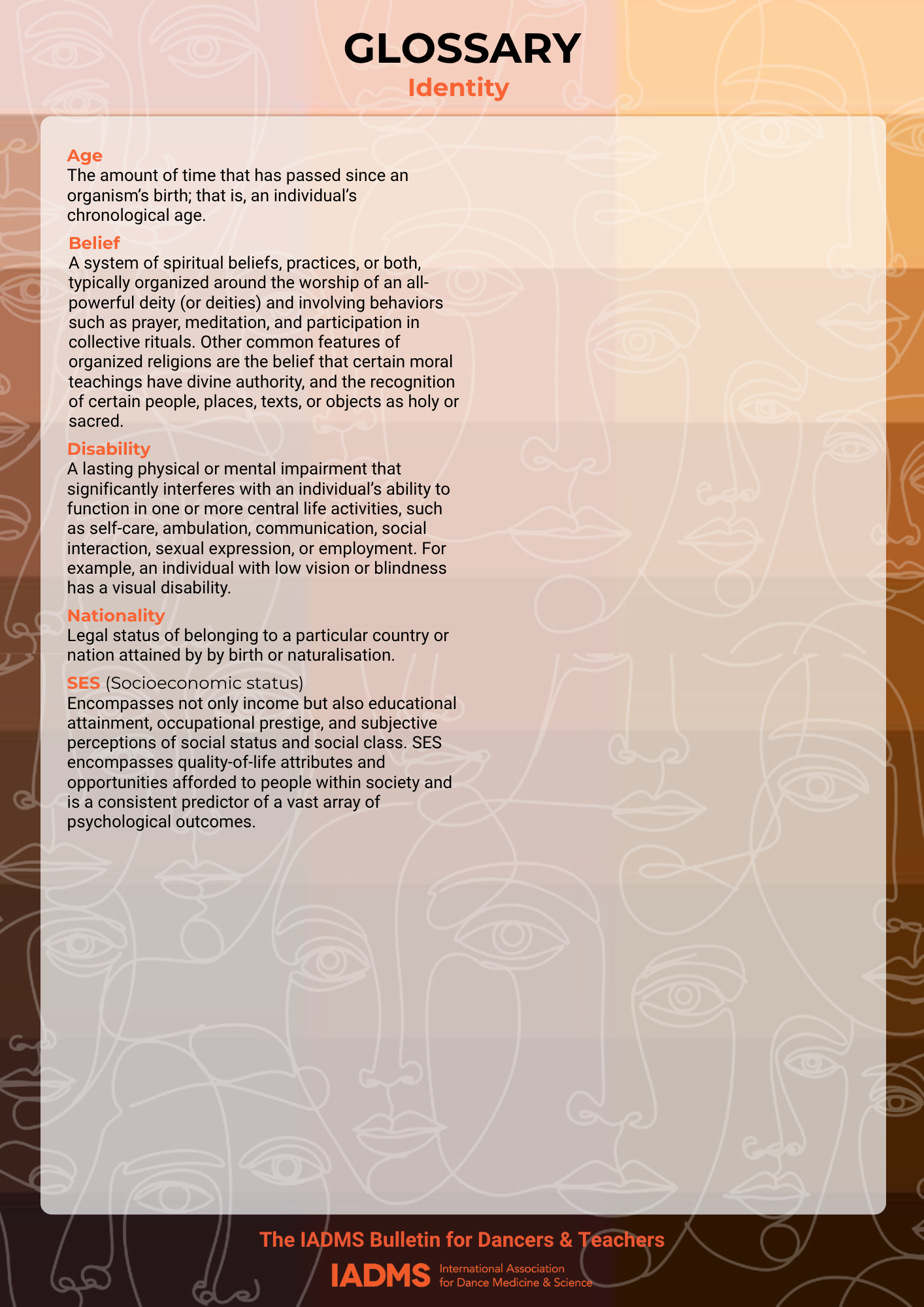
Glossary: Identity. Age, belief, disability, nationality, and socioeconomic status.
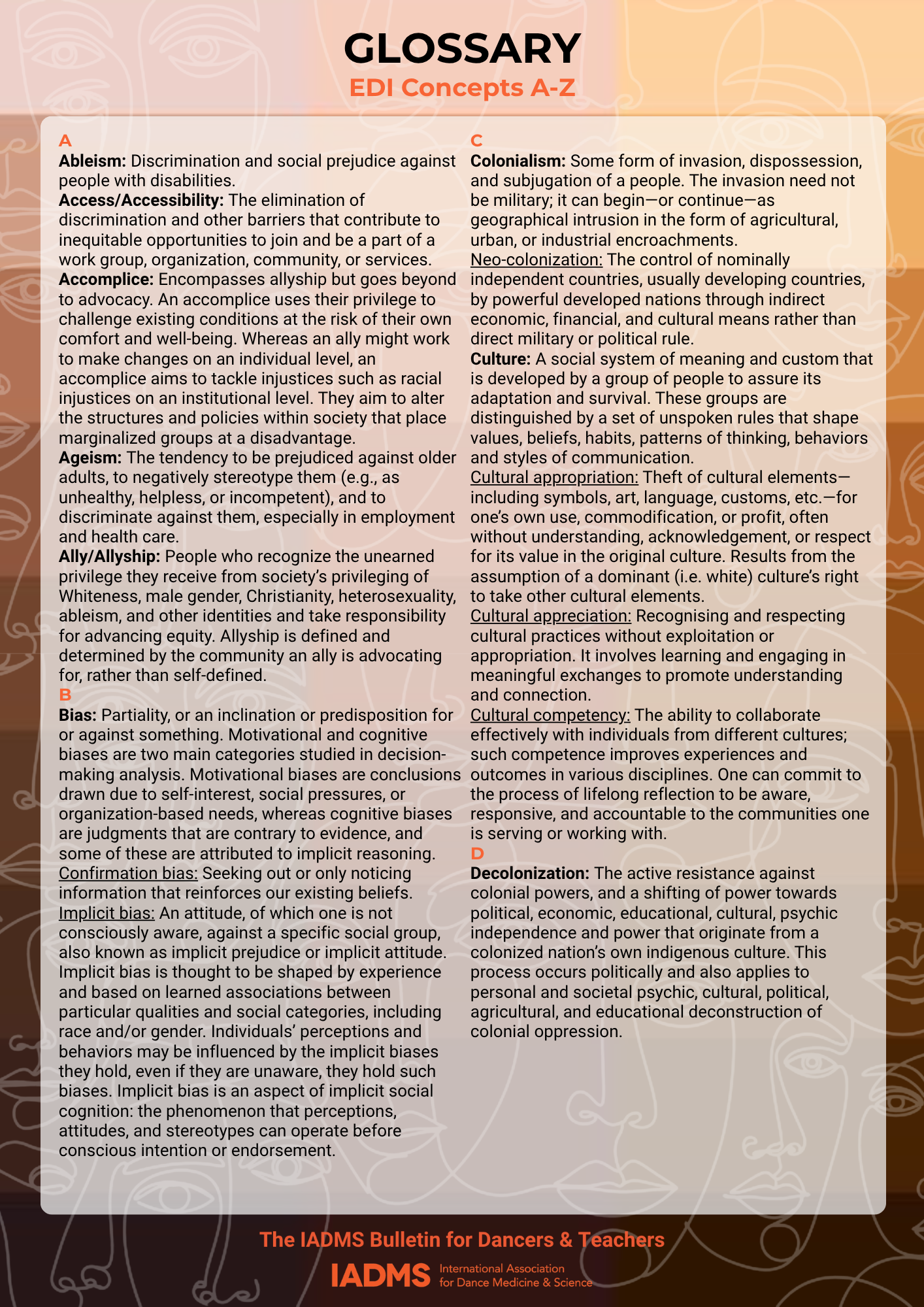
Glossary: EDI Concepts A–C.
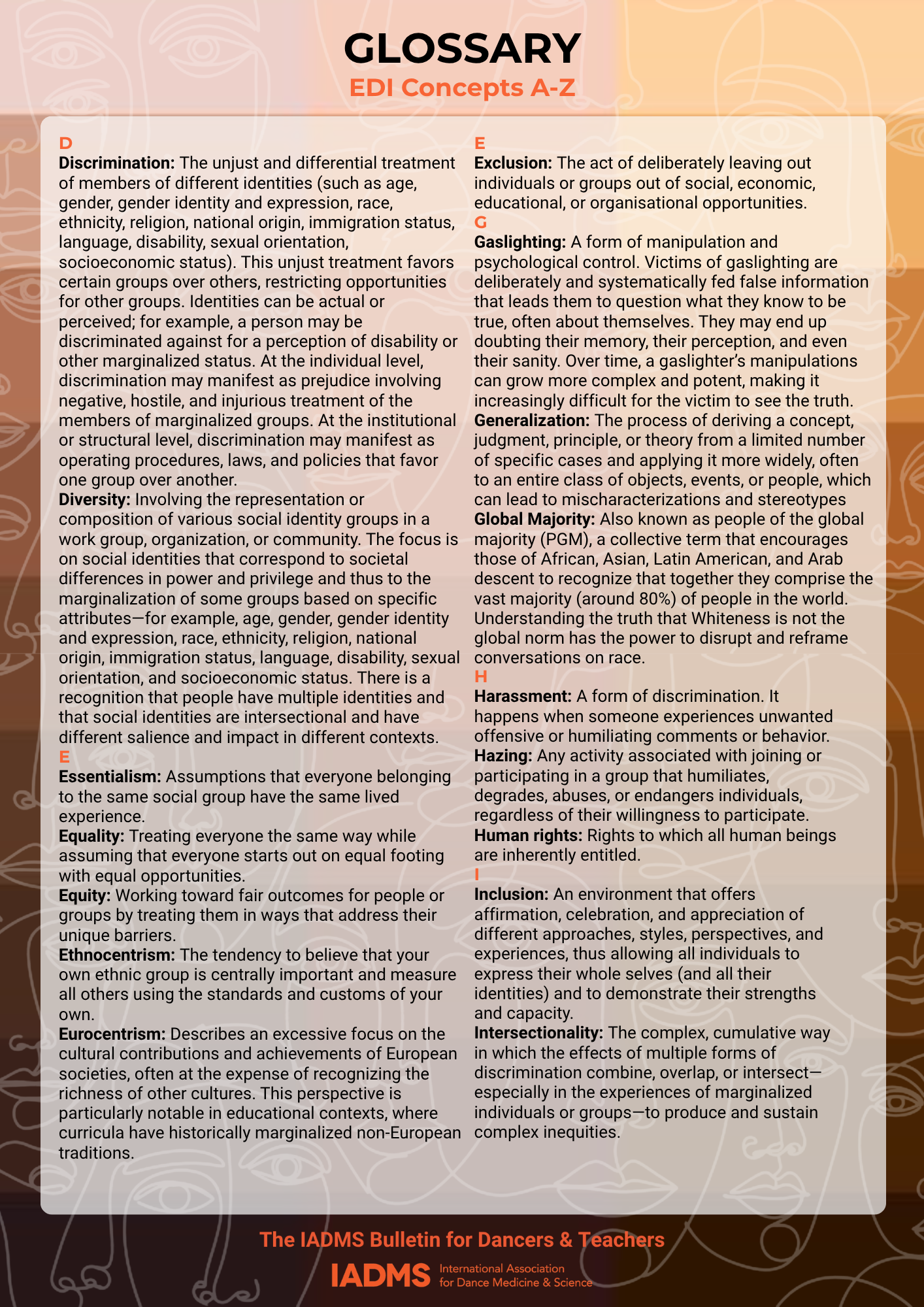
Glossary: EDI Concepts D–I.
Glossary: EDI Concepts M–T.
Glossary: disclaimer, references, and additional open access resources.