Do calf rises every day really keep the doctor away? A practical guide to chronic ankle injury prevention
Peta Baillie is a Lecturer (Physiotherapy) at Charles Darwin University, and previous physiotherapist at The Australian Ballet. She has 15+ years of experience as a physiotherapist, and her current clinical practice involves rehabilitating dancers and non-dancers with complex injuries and pain presentations. Her research investigates magnetic resonance imaging findings in elite dancers and athletes, and posterior ankle impingement syndrome.
Context and Rationale
We’ve all been there. The final run of a rehearsal: a dancer misplaces their foot and rolls their ankle. Perhaps the dreaded “crack” is heard over the music. It hurts to walk, let alone dance. It starts to swell and a dark purple bruise begins to bloom, shortly followed by the questions: Can they still perform next week? How can we modify the solo? Should they get a scan?
Why Investing in that First Ankle Sprain is Key
The foot and ankle complex remains the most frequently injured region in dancers, and ankle sprain injuries are one of the most common injuries.1-3 Lack of early expert assessment and care may alter the recovery process and lead to further, more significant injury and lost performance.4 For example, in a university dance population, 75.9% of dancers with a previous lateral ankle sprain developed chronic ankle instability.5 Investing time in adequate recovery and comprehensive rehabilitation following an initial ankle sprain may be the difference between complete recovery, and significant long-term consequences that may impact dance participation.
Chronic ankle instability (CAI) is particularly common in the dance population, with one study finding that it impacted 73% of dancers in a single ballet company.6 Chances are you have it and you may not even know it. If not, you will almost certainly know/dance with/teach someone who does.
Dancers with chronic ankle instability feel that their ankle is unstable, as it may repeatedly ‘give way’ or feel as though it is about to, and is frequently sprained.6 Dancers with unstable ankles tend to have less control over their ankles and take longer to recover when they do sprain.6 This chronic instability not only impairs physical function and performance but impacts a dancer’s quality of life and psychological state.7-8
What is Posterior Ankle Impingement Syndrome (PAIS)?
Beyond its direct effects, chronic ankle instability is associated with a range of secondary problems that can further impact function and quality of life, including PAIS, one of the most common injuries in dance.9 The first signs of PAIS start off as a mild ‘niggle’ in the back of the ankle in positions of plantarflexion (where the foot is pointed, as exemplified in Figure 1), that usually ‘warms up’. If not addressed, this ‘niggle’ can quickly develop into a pain that limits the dancer’s ability to meet their required training, performance or competition demands, leading to sub-optimal performance.
Our research has shown that dancers with PAIS were also more likely to report symptoms of chronic ankle instability. This means that if you have CAI, you may also be more likely to experience posterior ankle pain/PAIS.10 Posterior ankle impingement syndrome presents as pain in the back of the ankle, in positions of ankle plantar flexion, especially in weightbearing (Figure 1). Tendus, demi-pointe, and jumping can also be painful.
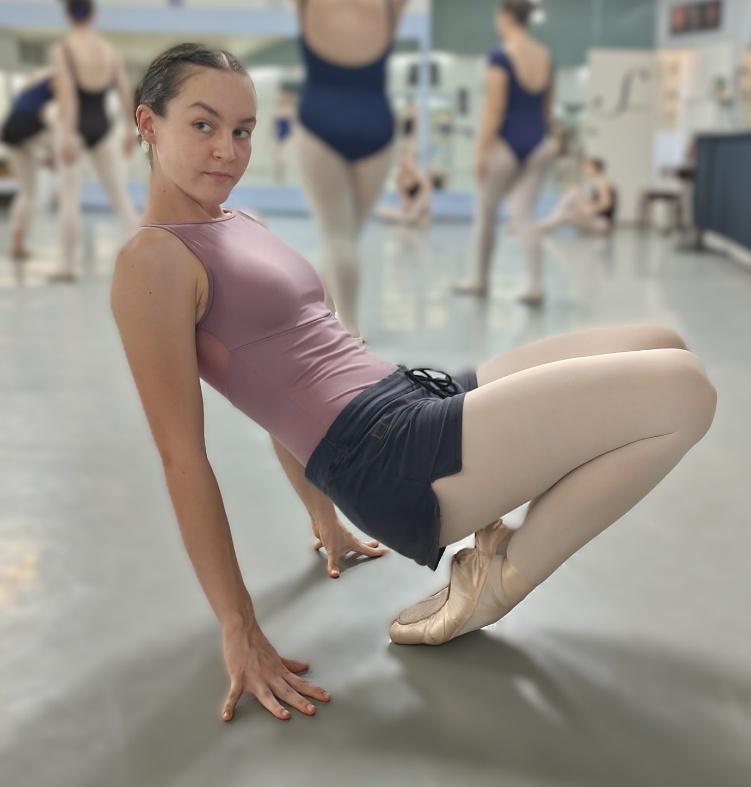
Figure 1. Picture of a dancer in a position of forced ankle plantarflexion that could potentially cause posterior ankle impingement syndrome.
What Can Cause Posterior Ankle Impingement Syndrome?
So, how does CAI develop in the first place? This is where ‘getting it right’ initially becomes key. More than 50% of the dance population may be dealing with residual pain, impaired postural control, instability and weakness, and associated injuries.5,6,11 This prompts us to consider what we could do to bring this number down. Dance teachers and dancers are experts in their eye for detail, movement quality and alignment, and perhaps applying these highly developed skills to a simple and already widely-used exercise is one of our greatest defenses in preventing chronic foot and ankle issues.
Research Summary
Our research investigated ankle magnetic resonance imaging (MRI) findings in professional ballet dancers and athletes. We discovered that asymptomatic professional dancers typically present with “abnormal” MRIs – we were unable to separate dancers with and without pain based on MRI findings alone. Despite no differences in MRI findings, dancers with PAIS could not perform as many single leg heel rises and reported greater symptoms of ankle instability.
Application of Research Findings to Practice for Dancers and Dance Educators
Injury Prevention and the Single-Leg Heel Rise: More Than Just a Number
Over the past 20 years, the single-leg heel rise (SLHR) exercise has been implemented in dance communities in a global effort to improve dancer strength, endurance, longevity and importantly to prevent injury (see Tools and Resources Section below). Dance research supports this approach, finding links between poor SLHR performance and injuries including PAIS,10 chronic ankle instability,12 medial tibial stress syndrome/shin splints,13 and Achilles tendinopathy.14
A recent study suggests that the ability to perform this movement is a powerful predictor of future injury.15 However, it is not just the numbers that are important. The movement quality and technique of the SLHR test is most important, and this is where health professionals are grateful for the skilled and watchful eye of the dance teacher.
Single-Leg Heel Rise Technique: ‘The Big Three’ Associated with Injury15
- Poor eccentric control: This is defined as an inability to smoothly lower the heel back to the ground. This translates into the studio as the part of movement where the body needs to absorb the greatest amount of energy. An inability to decelerate the body’s mass, for example during a jump landing, spikes the stress on the foot and ankle, increasing injury risk. In this study, dancers with an ‘uncontrolled lowering or visible drop of the heel’ were more likely to sustain an injury.
- Pronounced supination: Rolling onto the outside/little toe side of the foot (lateral ankle rolling) during the rise was also predictive for injury.
- Failure to hit 30 repetitions: This is the baseline for endurance. Dancers who did not reach this threshold may lack the fatigue resistance necessary to withstand the workload demands of a heavy performance, competition or training season.
Watch a short video about foot and ankle injury prevention
The MRI Trap: Why Your Scan is not Your Destiny
In cases of ankle pain that seems to hang around, dancers may be referred for medical imaging, most commonly for an x-ray or MRI scan. There are times when this is entirely appropriate, for example to rule out fracture or other serious pathology. The issue can develop when healthcare providers order a scan to “figure out” what is causing the pain. Scans are very good at ruling out serious injury, but notoriously bad at telling us what is causing the pain, and this is seen in many populations, and all over the body, with many scary things popping up on MRIs in people who have no symptoms whatsoever. The same is true for dancers.
Research has revealed that elite dancers have all sorts of “abnormal” imaging findings, even when they are pain-free.16-17 These imaging findings are highly prevalent in asymptomatic dancers, and very few go on to cause problems.17 To correctly interpret a scan, we need to understand what is normal for that population, and it appears that it is entirely normal for dancers without pain to have extra bones, lots of fluid, bone oedema, and all kinds of other interesting findings on MRI.16-17 These “worrying” findings may simply be red herrings: a hallmark of the demands placed on dancers’ feet and ankles.
This research tells us that if we see something unusual on a scan, it may represent a typical finding for a dancer, and does not automatically require surgical clean out.16-18 Scanning a chronically painful ankle is not routinely recommended, and when scans are performed, they require careful interpretation and correlation with the dancers’ training and performance loads, symptoms and capacity. What is more important is that we assess and treat the dancer, NOT the scan.
Tools and Resources
Bloch, in association with The Australian Ballet, produced this video on how to perform single-leg heel rises with excellent technique. This is what we are aiming for:
Watch a short video about how to perform single-leg heel rises
Reflections and Invitations
| Your Action Plan: Taking This Into the Studio | |
|---|---|
| 1. | Invest in good care for ankle sprains, it’s worth it. |
| 2. | Even better, invest in injury prevention, including building the strength and endurance of the calf muscle complex under the watchful eye of dance teachers, remembering ‘the big three.’ |
| 3. | Single-leg heel rises: build to 30+ repetitions, with excellent technique. If you cannot achieve the numbers, focus on technique first. Perform this exercise 2-3x week with 48 hours recovery in between* |
| 4. | Avoid the MRI trap: Do not allow yourself/your dancers to be reduced to a set of 2D images. A dancer's physical presentation, symptoms and history are far more important. |
*This is a generic prescription. Dancers with injury or other considerations should undergo formal assessment and individually prescribed exercises.
Conclusion
Key Take-Home Messages
- Chronic ankle instability (CAI), often developing after ankle sprains, is common in dancers, associated with other ankle problems, and can significantly impact quality of life. It is treatable and should not be accepted as something that dancers simply have to live with.
- Every ankle sprain deserves prompt assessment and complete rehabilitation, to reduce the risk of developing chronic ankle instability.
- Single leg heel rise performance is a useful predictor of injury risk. As dance teachers already recognize, heel rise technique is just as important as the number of repetitions.
- MRI findings should always be interpreted carefully, as “abnormal” findings are common even in asymptomatic dancers. First and foremost, we should always treat the dancer, not the scan.
So, to answer the question of whether calf rises everyday really do keep the doctor away: there is evidence to suggest that they may indeed help, but only if they are executed with excellent control and strong alignment. Of course, they are not the only tool in our kit, but they are quick, cost effective, and are backed by evidence. We need to ensure that first time ankle sprains are allowed time for complete recovery and rehabilitation to restore normal ankle range, power and agility. We need to look beyond the scans to see the whole dancer, in all their intelligence, wisdom, body awareness, and grit, as well as the brilliant teachers supporting them. So, how many calf rises can you do?
Original Article
Baillie P, Cook J, Ferrar K, Mayes S. Single-leg heel raise capacity is lower, and perceived ankle instability is greater, in dancers and athletes with posterior ankle impingement syndrome. Clin J Sport Med. 2024;34(4):376–380. https://doi.org/10.1097/JSM.0000000000001217
Further Resources
How to Get Strong Calves. The Australian Ballet Blog. Published March 23, 2020. Accessed October 15, 2026. https://australianballet.com.au/blog/how-to-get-strong-calves
This short blog, with linked instructional video, explains the importance of strong calves for dance. Detail is provided on when and how calf rises can be done, and a few hints on where they could be performed.
Mulready R. Strength and Numbers. The Australian Ballet Blog. Published December 19, 2024. Accessed October 15, 2026. https://australianballet.com.au/blog/strength-and-numbers?srsltid=AfmBOopYmOsD6Ids-Ug6lQeTlQsInKjvpUBuJ9asjcaS2Epi_Rrg7fgZ
This blog describes the science behind maintaining healthy ankle tendons with an example of a research project that was implemented with The Australian Ballet dancers during the demanding Swan Lake season. The results of the research may surprise you!!!
References
- Katakura M, Kedgley AE, Shaw JW, et al. Epidemiological characteristics of foot and ankle injuries in 2 professional ballet companies: a 3-season cohort study of 588 medical attention injuries and 255 time-loss injuries. Orthop J Sports Med. 2023;11(2). https://doi.org/10.1177/23259671221134131
- Ramkumar PN, Farber J, Arnouk J, Varner KE, McCulloch P. Injuries in a professional ballet dance company A 10-year Retrospective Study. J Dance Med Sci. 2016;20(1):30–37. https://doi.org/10.12678/1089-313X.20.1.30
- Rupendran R, Wadud AA, Davis RE, Taglia SG, Rusby TA, Angioi M. Prevalence, incidence, severity, and anatomical location of overuse injuries in male and female ballet dancers: a systematic review and Meta-analysis. J Dance Med Sci. 2026;0(0). https://doi.org/10.1177/1089313X251412479
- Hamilton LH, Hamilton WG, Warren MP, Keller K, Molnar M. Factors contributing to the attrition rate in elite ballet students. J Dance Med Sci. 1997;1(4):131–138. https://doi.org/10.1177/1089313X9700100402
- Simon J, Hall E, Docherty C. Prevalence of chronic ankle instability and associated symptoms in university dance majors: an exploratory study. J Dance Med Sci. 2014;18(4):178–184. https://doi.org/10.12678/1089-313X.18.4.178
- Stander C, van der Merwe A, Nel M. Chronic ankle instability and associated self-reported function in South African professional ballet dancers. J Dance Med Sci. 2023;27(1):20–26. https://doi.org/10.1177/1089313X231176607
- Houston MN, Van Lunen BL, Hoch MC. Health-related quality of life in individuals with chronic ankle instability. J Athl Train. 2014;49(6):758–763. https://doi.org/10.4085/1062-6050-49.3.54
- Gribble PA, Bleakley CM, Caulfield BM, et al. Evidence review for the 2016 International Ankle Consortium consensus statement on the prevalence, impact and long-term consequences of lateral ankle sprains. Br J Sports Med. 2016;50(24):1496–1505. https://doi.org/10.1136/bjsports-2016-096189
- Ekegren CL, Quested R, Brodrick A. Injuries in pre-professional ballet dancers: incidence, characteristics and consequences. J Sci Med Sport. 2014;17(3):271–275. https://doi.org/10.1016/j.jsams.2013.07.013
- Baillie P, Cook J, Ferrar K, Mayes S. Single-leg heel raise capacity is lower, and perceived ankle instability is greater, in dancers and athletes with posterior ankle impingement syndrome. Clin J Sport Med. 2024;34(4):376–380. https://doi.org/10.1097/JSM.0000000000001217
- Doherty C, Bleakley C, Hertel J, Caulfield B, Ryan J, Delahunt E. Recovery from a first-time lateral ankle sprain and the predictors of chronic ankle instability: a prospective cohort analysis. Am J Sports Med. 2016;44(4):995–1003. https://doi.org/10.1177/0363546516628870
- Jamsandekar MS, Patel VD, Prabhakar AJ, Eapen C, Keogh JW. Ability of functional performance assessments to discriminate athletes with and without chronic ankle instability: a case-control study. PeerJ. 2022. https://doi.org/10.7717/peerj.13390
- Madeley LT, Munteanu SE, Bonanno DR. Endurance of the ankle joint plantar flexor muscles in athletes with medial tibial stress syndrome: a case-control study. J Sci Med Sport. 2007;10(6):356–362. https://doi.org/10.1016/j.jsams.2006.12.115
- Hasani F, Vallance P, Haines T, Munteanu SE, Malliaras P. Are plantarflexor muscle impairments present among individuals with achilles tendinopathy and do they change with exercise? A systematic review with meta-analysis. Sports Med. 2021;7(1):18. https://doi.org/10.1186/s40798-021-00308-8
- Schrefl A, Kolokythas N, Erlacher D, Schärli A. Association Between Single-Leg Heel Rise Performance and Lower Leg, Ankle, and Foot Injuries in Adolescent Ballet Dancers: A Prospective Cohort Study. J Strength Cond Res. 2026;40(9). https://doi.org/10.1519/JSC.0000000000005470
- Baillie P, Ferrar K, Cook J, Smith P, Lam J, Mayes S. Posterior ankle impingement syndrome clinical features are not associated with imaging findings in elite ballet dancers and athletes. Clin J Sport Med. 2022;32(6):600–607. https://doi.org/10.1097/JSM.0000000000001021
- Katakura M, Clark R, Lee JC, et al. Foot and ankle MRI findings in asymptomatic professional ballet dancers. Orthop J Sports Med. 2024;12(8). https://doi.org/10.1177/23259671241263593
- Baillie P, Cook J, Ferrar K, Smith P, Lam J, Mayes S. Magnetic resonance imaging findings associated with posterior ankle impingement syndrome are prevalent in elite ballet dancers and athletes. Skeletal Radiol. 2021;50(12):2423–2431. https://doi.org/10.1007/s00256-021-03811-x
Acknowledgements
Images and video credit: Peta Baillie and with thanks to dancers from Duprada Dance Company - Australian Dance Academy.