Front cover image: Photographer Wendy Chu featuring dancers from Hong Kong Academy of Performing Arts
About the IADMS Bulletin for Dancers & Teachers
The Bulletin for Dancers & Teachers is produced and published by the International Association for Dance Medicine & Science (IADMS). The Bulletin translates scientific research into accessible, practitioner-oriented articles for dancers, educators, parents, and others invested in dancer health and safety. Drawing on leading peer-reviewed academic sources, including the Journal of Dance Medicine & Science, the Bulletin exists to bridge research and practice in dance medicine, science and education.
Editorial Team
Editor-in-Chief
Elsa Urmston, PhD, MSc, PGCAP, SFHEA
Associate Editors
Susan Mayes, AM, PhD, B.App.Sci (Physio), PGDip (Sports Physio), APAM
Jia Xi Lee, MSc
Assistant Editor
Joan Liu, MA, MS
Co-Founding Editor-in-Chief
Gayanne Grossman, PT, EdM, FIADMS
Advisory Editors
Joe Bowie, MFA
Jennifer Deckert, MFA
Ellie Kusner, MS
Ines Pinto, MD, PhD, PsyD
Margaret Wilson, PhD
About IADMS
IADMS is a global network of medical professionals, educators, dancers and researchers. We are committed to promoting best practices in the clinic and classroom for dancers worldwide. Through our programs and services, IADMS continues to better the health of dancers and advance the use of dance to improve health outcomes. For more information, go to www.iadms.org.
The IADMS Bulletin for Dancers & Teachers is produced in partnership with the Rudolf Nureyev Foundation
Letter from the Editors
Dear dancers and teachers,
Welcome to Volume 10, Issue 2 of The IADMS Bulletin for Dancers & Teachers. We are delighted to continue developing this publication as a space where research and practice meet, and where evidence, professional experience and the artistry of dance can inform one another.
A central question for us as editors is how best to balance the presentation of research evidence with its practical application. We want the Bulletin to offer accessible insights and resources that readers can take into their studios, classrooms and rehearsal spaces. Yet meaningful application sometimes requires us to look more closely at the research itself: how knowledge has been generated, what the findings can tell us, and where the limitations of the evidence lie. As editors, we believe strongly that if we are to adopt research-informed ideas into our dance practices, we need to exercise critical judgement as to what might be appropriate for our own contexts.
This issue offers several opportunities to explore that relationship between evidence and application. We would particularly welcome your feedback on how we are striking this balance. It is not our aim to be a research publication, but we want to know whether you find the research detail useful in helping you decide what is and isn’t useful for your work? Or are you more interested in the application ideas we provide with just enough research context to aid your understanding? Your perspectives will help us to continue to shape the Bulletin in ways that are meaningful and useful to our readership.
We are very pleased to introduce a new feature in this issue. We warmly welcome Gigi Berardi, book review editor of the Journal of Dance Medicine & Science since its inception, and previously founding editor of Kinesiology and Medicine for Dance. Gigi is an esteemed member of the dance science and education community, whose review of Research Methods in the Dance Sciences considers the value of this wide-ranging resource for students, educators, researchers and practitioners. We hope this addition will open up further opportunities to share books and other resources that support learning across our community.
This issue brings together contributions that explore physical health, psychological wellbeing and more inclusive approaches to dance practice, education, training and performance. Although the articles address different topics, each invites us to consider how research can inform the decisions we make and the conditions we create for dance practice to flourish.
In Creating Conditions to Thrive: Trauma-Informed Practices for Dance Education, Rebecca Gose explores how trauma can influence attention, emotional regulation, relationships and readiness to learn. The article reminds us that creating conditions for dancers to thrive involves attending to the whole person, while recognizing the boundaries of our professional expertise.
Imogen Aujla and Stacey Green share findings from research exploring racial discrimination and wellbeing among dance students in The Representation and Equity in Dance (RED) Project: Enhancing Racial Equity in Dance Education. Their work highlights the relationship between exclusion, unequal treatment and poorer wellbeing for Global Majority dancers, with practical tools and reflective questions to help teachers and dancers examine representation, challenge assumptions and take action towards more equitable training environments.
Peta Baillie’s Do Calf Rises Every Day Really Keep the Doctor Away? A Practical Guide to Chronic Ankle Injury Prevention translates research on ankle health into accessible guidance for dancers and teachers. The article explores chronic ankle instability, the importance of appropriate rehabilitation, and how the quality of single-leg heel rises can offer valuable information about injury risk.
Finally, in our new book review feature, Gigi Berardi appraises Research Methods in the Dance Sciences, edited by Tom Welsh, Jatin P. Ambegaonkar and Lynda Mainwaring. The review highlights the breadth of this resource, from research design and methodology to interpreting findings and translating evidence into practice. It is a fitting addition to this issue, reinforcing the importance of research literacy across dance education, science and professional practice.
As we continue to develop the Bulletin, we invite you to read, question, experiment and reflect. Try out the ideas and resources that resonate with your practice, consider what the evidence might mean in your own context, and share your experiences with us and with one another. Your feedback, questions and contributions are an important part of making this a genuinely collaborative space for learning.
We look forward to continuing the conversation with you.
With very warm wishes,
Elsa Urmston PhD, MSc, PGCAP, SFHEA
Sue Mayes AM, PhD, B.App.Sci(Physio), PGDip (Sports Physio), APAM
Jia Xi Lee MSc
Joan Liu MA MS
Creating conditions to thrive: Trauma-informed practices for dance education
Rebecca Gose, MFA
Rebecca Gose is Professor of Dance at the University of Georgia, US with a professional performance background whose expertise lies in dance education. She explores aspects of the dance learning environment through scientific and somatic perspectives including motor learning and wellness. She is also an active choreographer and certified yoga and mindfulness teacher.
Reader notice: This article discusses trauma, its impacts in the dance education context, and strategies for creating trauma-aware spaces for dancing and dance learning.
Context and Rationale
Although the dance studio is a place for learning movement, refining technique, and preparing for performances, as teachers and students, we bring our full selves and the context of our lives into the classroom each day. In recent years, growing awareness of adolescent and young adult mental health concerns, including trauma and adverse childhood experiences (ACEs), has encouraged many researchers and educators within the dance community to think more deeply about how these experiences influence learning and participation.
Dance educators and their students often observe that meaningful engagement in class depends on capacities such as focus, memory, readiness to learn, and the ability to connect and collaborate with others.1-2 Students may recognize moments when these capacities feel readily available and others when they are more difficult to access. For some individuals, the effects of trauma can make learning, social engagement, or self-regulation especially challenging. In any given class, however, a student may exhibit a diverse range of behaviors and/or emotions for any number of reasons, which may or may not include trauma. It is helpful to remember that as teachers we must remain within our scope of expertise while striving to be inclusive and adaptable in our pedagogy to help all learners succeed. As Schwartz and colleagues note, “dance is a somewhat unique form of physical movement, in that dancers must connect to their bodies and acknowledge their movements in complex ways. It brings up emotions and triggers, sometimes ones the dancer is not ready to confront.”3(p339) By continuing to learn from both research and lived experience, dancers and educators can work to cultivate trauma-sensitive environments where students feel safe, supported, and able to learn, grow, and thrive.
Research Summary
My interest in trauma-informed practices grew out of my lived experiences as a dance educator with a growing curiosity about how the needs and experiences of individuals affected by trauma were being recognized and addressed within dance education. I explored the literature and research about trauma and its related concepts including arousal and attention, shame and anxiety, concepts of moral and cultural safety and mindfulness, as well as existing trauma-informed practices in dance and education. This illuminated connections between trauma, learning and dancing.4-7 These findings can serve as starting points for reflection and conversation among teachers and students seeking to better understand the relationship between trauma and dance.
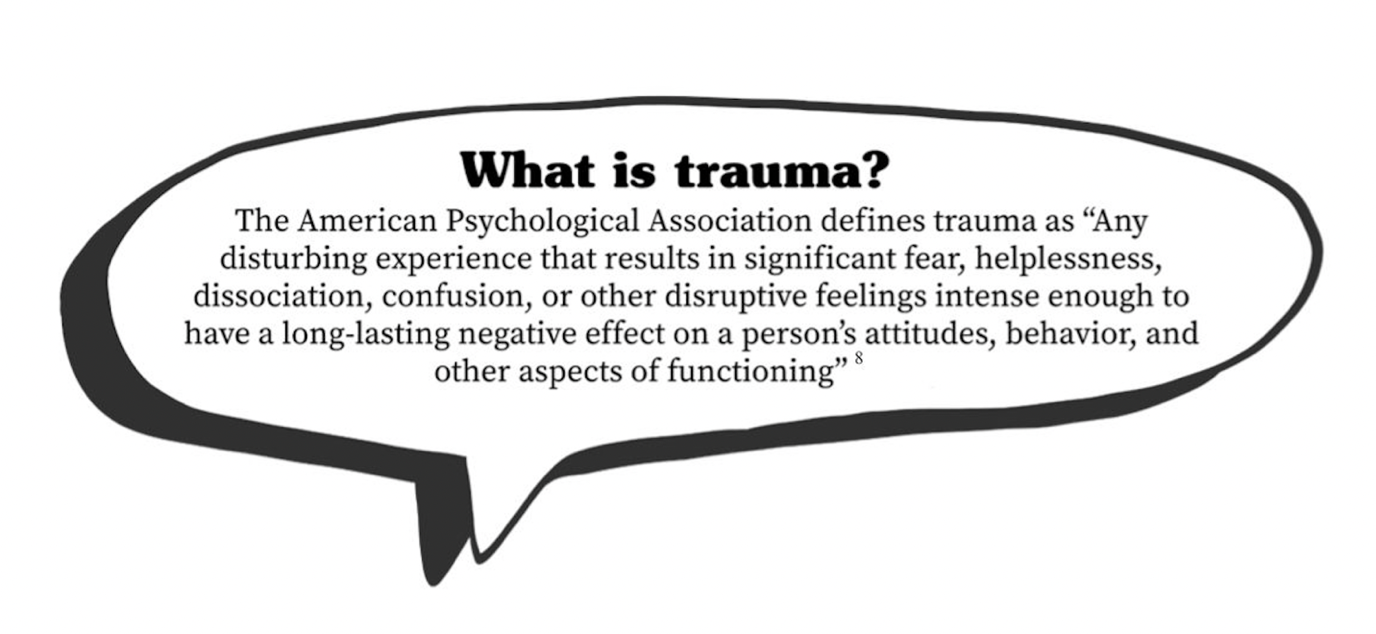
Trauma is complex and can take many forms. It may be acute or chronic, simple or complex, individual or collective in nature. Experiences such as natural disasters, abuse, war, discrimination, community violence, serious illness, or injury can all contribute to trauma. Research has shown that childhood trauma is a significant risk factor for many of the leading causes of illness, mortality, and reduced quality of life in adulthood,9 and more than two-thirds of children report experiencing at least one potentially traumatic event by the age of sixteen years.10
Although each person’s experience relative to trauma and its effects is unique, several themes consistently emerge across the trauma literature.
Some Common Characteristics of Trauma
Trauma is subjective. Exposure to a difficult event alone does not determine whether trauma occurs; the individual’s experience and response matter.
Trauma can have lasting effects. Its impact may be felt long after an event has occurred and can influence one’s experiences across the lifespan.
Trauma can influence cognition, emotion, and physical well-being. These effects may vary considerably from person to person.
Trauma is embodied. Trauma can create physiological symptoms such as chronic muscular tension, nervous system dysregulation, and gut-brain miscommunication.
Trauma can affect learning. Attention, memory, concentration, and readiness to learn may, at times, be more difficult to access.
Trauma is associated with increased vulnerability to risk-taking behaviours. These include substance abuse and other health-related risks.
Our understanding of trauma continues to evolve. Researchers increasingly recognize the importance of cultural context and the need to better understand how trauma is experienced across diverse communities and identities.
Application of Research Findings to Practice for Dancers and Dance Educators
From what researchers currently understand about trauma11 and the three main areas discussed in the original study on which this article is based, some practical takeaways for dance teachers and students to consider are suggested below, beginning with the foundational concept of arousal.
Arousal in the Dance Class
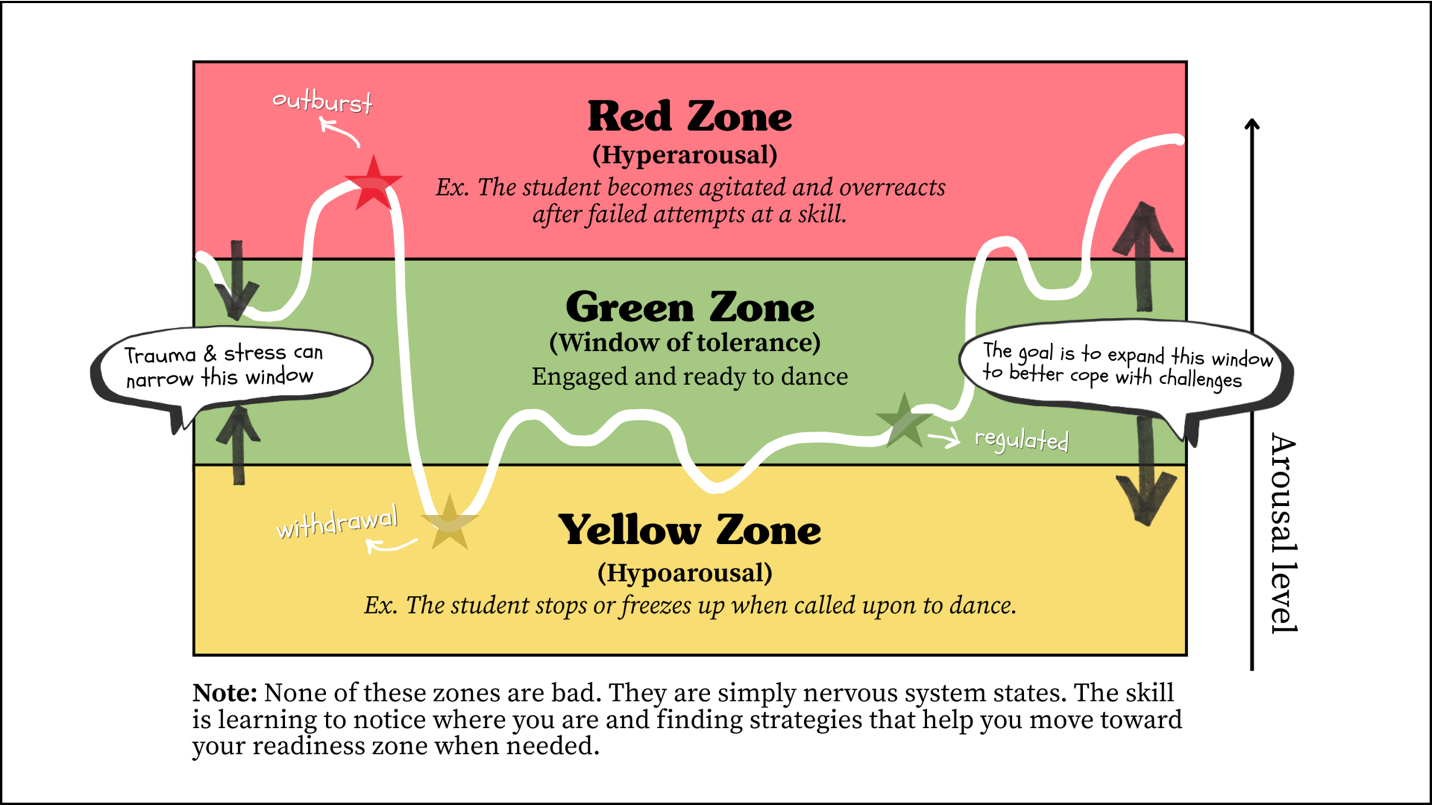
As most teachers have likely observed, arousal is a central player in the dance class; it refers to an individual’s emotional and physical regulation in response to a stimulus, and affects the individual’s attention, motivation, and more. It is also a foundational factor in those who have experienced trauma, affecting those same abilities around focus, alertness, engagement in activities, and also a student’s sense of safety. The windows of tolerance model,12 as depicted in Figure 1, is a helpful way to consider the different levels of arousal that teachers may see and that students may experience: hypoarousal, hyperarousal, and a middle level where an individual is optimally regulated. Although everyone’s arousal state fluctuates, difficulty maintaining a regulated state is more common for those affected by trauma.
Figure 1: Window of Tolerance Model. (Adapted from Siegel, 1999)12
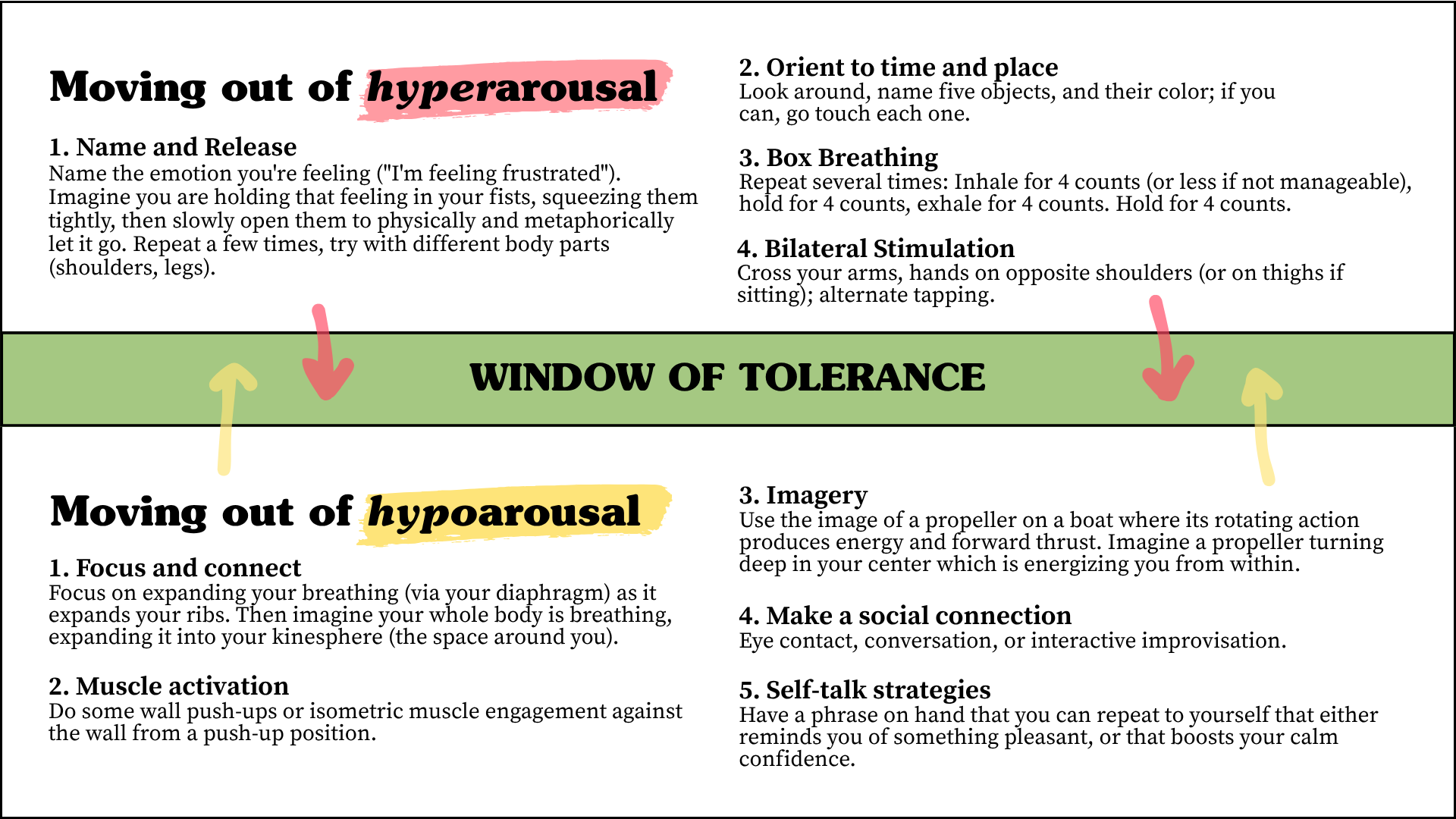
Students may often perceive dancing as having an emotionally and/or physically regulating effect. However, they might also feel that it further dysregulates them if they already feel a bit above their window. And if a student is feeling below their window, engaging physically or simply staying present and concentrating might be particularly challenging. However, tools and strategies can have a positive impact on these challenges, such as orienting to time and space, connecting to and specific ways of harnessing our breath, and using muscle activation (see Figure 2 Strategies for Regulating). Although as teachers we cannot directly change a student’s level of arousal, one question worth considering is how the dance environment can support students when they need opportunities for self-regulation or different ways to engage.
Figure 2: Strategies for Regulating
Focusing Attention for Better Regulation
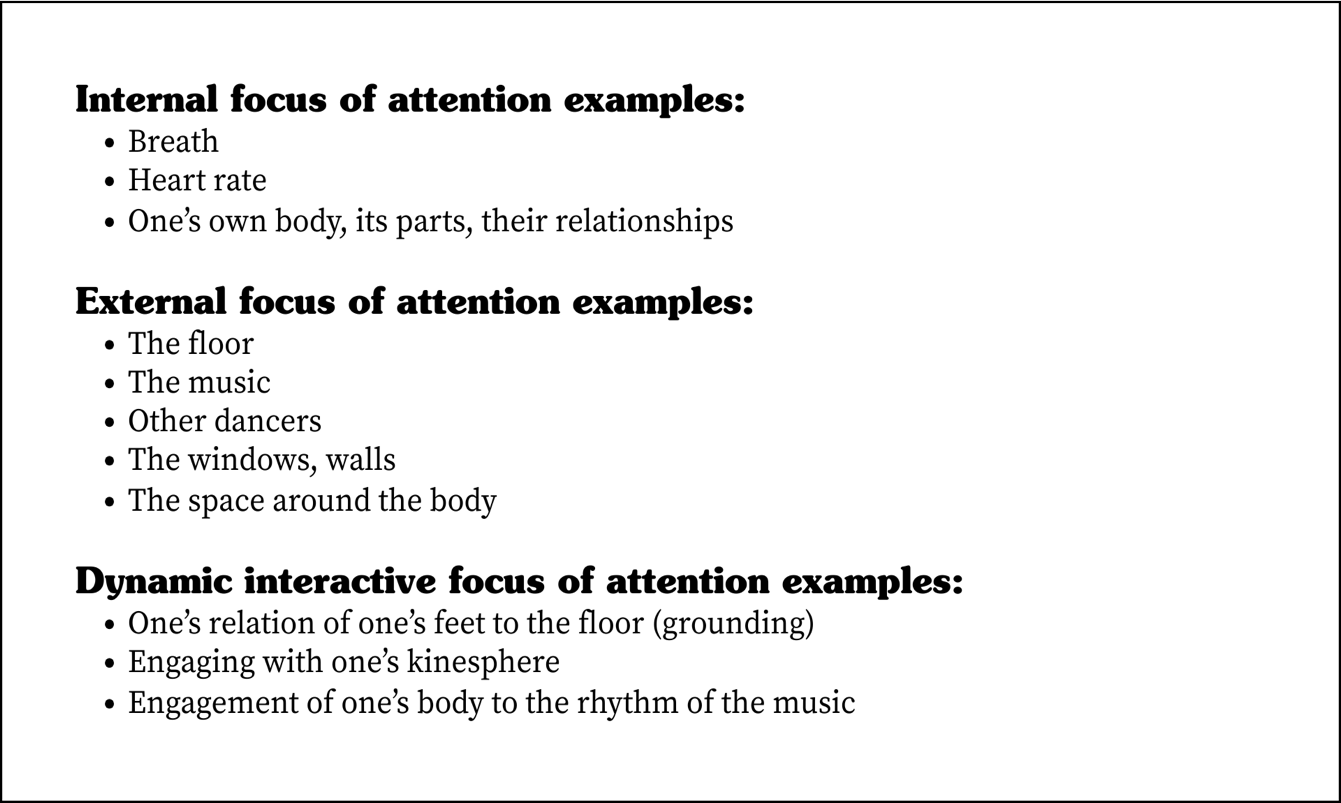
The dance class often invites various forms of attention, as in Figure 3, including internal focus (bodily sensations, movement patterns), external focus (other dancers, the floor, surrounding space, and the music) and dynamic interactive focus (focusing specifically on dynamic, interactive relationships between internal and external stimuli such as the feet and the floor or dancers to one another). For some individuals affected by trauma, these different forms of attention may be experienced in unique ways. Teachers and students alike may notice that while attending to bodily sensations can be helpful and grounding for some, it can feel uncomfortable or overwhelming for others or in other contexts. In these moments, shifting attention outward — to the music, imagery, spatial relationships, or connections with others — may offer another avenue for engagement and regulation.
Figure 3: Types of Focus of Attention
Applying Mindfulness
Mindfulness is one approach that many educators have explored as a way of supporting attention, awareness, and self-regulation. Research suggests mindfulness practices may contribute to greater resilience, self-awareness, and well-being for some individuals, including dancers.13-14 Within dance settings, teachers often apply mindfulness in many ways, including activities that encourage present-moment awareness, curiosity rather than judgment, acceptance of experience, and non-attachment.15
Many teachers may also find that incorporating moments of mindfulness into class can help normalize self-regulation as a regular part of the learning process rather than as something that occurs only when difficulties arise. Dancers, in turn, may begin to recognize patterns in their own attention, energy, and responses, developing greater awareness of what helps them feel focused, engaged, or grounded in class. Meditation is one form of mindfulness, often involving focused, non-judgmental attention on an anchor such as the breath. Other approaches might include slowing down movement or daily actions to notice internal sensations, external cues, and patterns of attention with greater awareness and curiosity. They might also create routines or rituals around practices of gratitude or non-attachment.
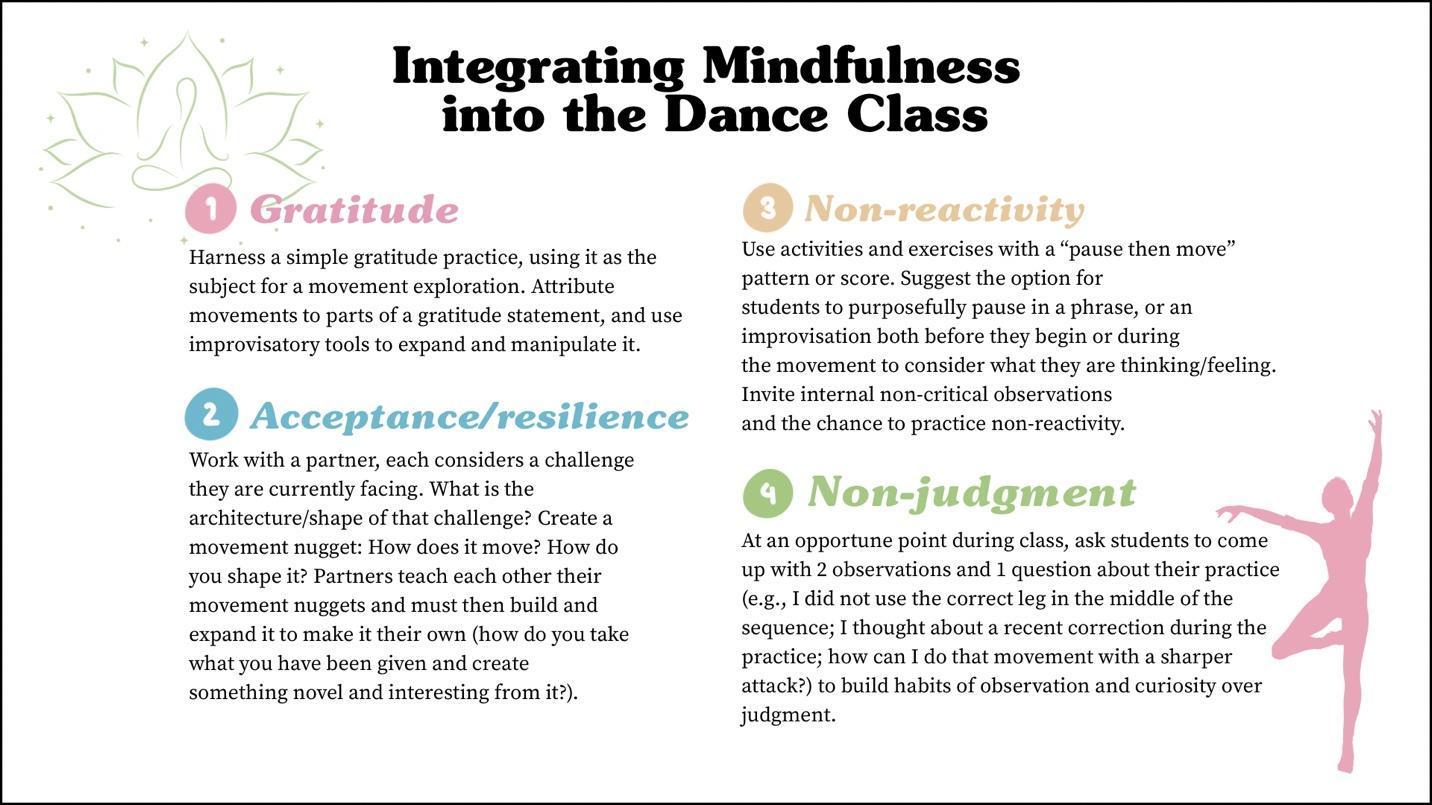
For some individuals, these practices may support a stronger connection to the present moment and provide opportunities to notice and respond to their experiences more intentionally. For teachers, students, and dancers of all levels, mindfulness can offer a shared language for talking about attention, presence, and self-regulation within the dance environment. The practical ideas detailed in Figure 4 offer examples of how mindfulness principles might be incorporated throughout different phases of a dance class. Rather than a prescribed set of strategies, they are intended as possibilities that teachers may adapt to their students, context, and teaching philosophy, and that students may explore to discover what best supports their own learning and well-being.
Figure 4: Integrating Mindfulness
Shame-Resilient Pedagogy
Shame is an emotion that manifests as feelings of failure, inadequacy, being exposed, or weakness, and can worsen social anxiety. It is closely linked to trauma, in that the distress and threat generated by a traumatic experience can become directed inward, leading people to view themselves as flawed, damaged, or unworthy, rather than simply understanding the traumatic event as something that happened to them.16 Studies have shown that ACEs (adverse childhood experiences) are associated with shame-based self-beliefs as well as anxiety symptoms, resulting in lifelong struggles with negative assessments of self-worth.17 Although the reasons are not clearly understood, studies have shown that dancers have a higher rate of PTSD than the general population and higher levels of shame than other athletes.18 Thus, strategies that focus on self-esteem, resilience, belonging, and the idea that students have agency for change in helping mitigate the effects of shame may be appropriate. Reflecting on the following research-based reflective prompts and classroom ideas may further support teacher practices:
A Teacher Framework for Reflecting on Shame Resilience in the Dance Class
1
Reflect: How might you incorporate self-talk practices during the dance class that are aimed at positively reframing any unwanted current self-beliefs?
Try: Ask students to reframe an unwanted thought or dialogue, by changing or replacing that thought with a neutral or more positive one. This can be done alone or in partners - it may be most helpful for them to write down the unwanted beliefs and then edit them, so they can visually track the editing process.
2
Reflect: Consider both the challenges and opportunities to integrate empathy and social connection, which have been shown to help with experiences of shame, into the dance class.
Try: Utilize creative ways to make social connection integral to the class format, such as regular short pair and shares, setting up “teams” or “tribes” that work together and carry out frequent check ins with one another, or creating a “dance buddy” system, so everyone has a peer to connect with throughout the term.
3
Reflect: Consider how the use of imagery and metaphors might help nurture and reinforce positive experiences and identities.
Try: Ask students to develop an enduring image of a positive experience they’ve had or a metaphor that represents a positive concept, so that they can refer to it over time. Examples could include creating a mental “snapshot” of a moment of success, pride, or accomplishment, or other positive feeling from personal experience. Title it and use it as a touchstone memory to return to regularly. Conjure up and regularly refer to a specific image/metaphor from nature such as a bamboo tree, which is flexible and rarely breaks (signifying resilience); a sunflower, a plant that always follows the light as it grows (signifying always turning toward positivity); a rainforest, where each creature and plant serves a valuable and unique purpose and contributes to the health of the whole (signifying uniqueness and interdependence).
4
Reflect: Give thought to coping strategies, their relation to learning, and how they might be relevant for the dance learning environment.
Try: Consider creative coping strategies such as renaming/reframing an experience, suggesting students use a curiosity journal, where they rephrase and reframe self-judgmental thinking into descriptions of curiosity and mindfulness about situations they encounter.
5
Reflect: How do you weave a culture of self-compassion into the learning process and class structure?
Try: Explore how your teacher “script” or narrative during class can include examples for how a student might think or self-talk about their efforts in class. For example, you might say, “As you work on this new material, you may try to give yourself some grace, saying to yourself: ‘I can do hard things!’, or ‘This may take some effort to get there, but I can already feel progress on this material.’”
6
Reflect: Consider how your students respond to leadership opportunities in your classes.
Try: In group and partnered activities, focus on fostering connection and competence, and trade leaders often with micro-leadership opportunities as well as larger leadership roles.
And, for dancers, the following reflective prompts can help you focus on positive skills with opportunities for building empowering habits:
Reflections for Dancers on Shame Resilience
1.
Focusing on Self-Esteem: I am worthy; I am enough.
When have you felt proud of yourself for reasons beyond an external achievement?
What personal qualities would a trusted friend or family member describe as your greatest strengths?
2.
Focusing on Self-Compassion: I am kind to myself.
What kind words or encouragement do you need to hear from yourself right now?
What does being “good enough” look like in this moment?
3.
Focusing on Belonging: I feel connected.
When do you feel most connected to your dance community?
What qualities in others help create a sense of comfort and belonging for you?
4.
Focusing on Body Appreciation: I am respectful of my unique body.
How has your body supported your goals this week?
What do you appreciate about your body’s strength, adaptability, or resilience?
5.
Focusing on Resilience: I am capable of growing through challenges.
How has a challenge helped you grow as an artist or person?
What coping strategies help you regain balance when you feel overwhelmed?
Viewing Trauma Within a Larger Frame
In recent years, many dance educators have expanded conversations about wellness beyond physical health alone. While dance wellness research has historically focused on physical dimensions of training and injury prevention, there is growing recognition that well-being is shaped by multiple, interconnected factors.18
Teachers and students alike may recognize that our experiences do not exist in a vacuum. The ways we move through the world are influenced by our identities, relationships, communities, opportunities, and challenges. These broader social contexts can shape how we experience learning, belonging, stress, and well-being. As educators continue to explore wellness through a more holistic lens, trauma has become an important part of the conversation.
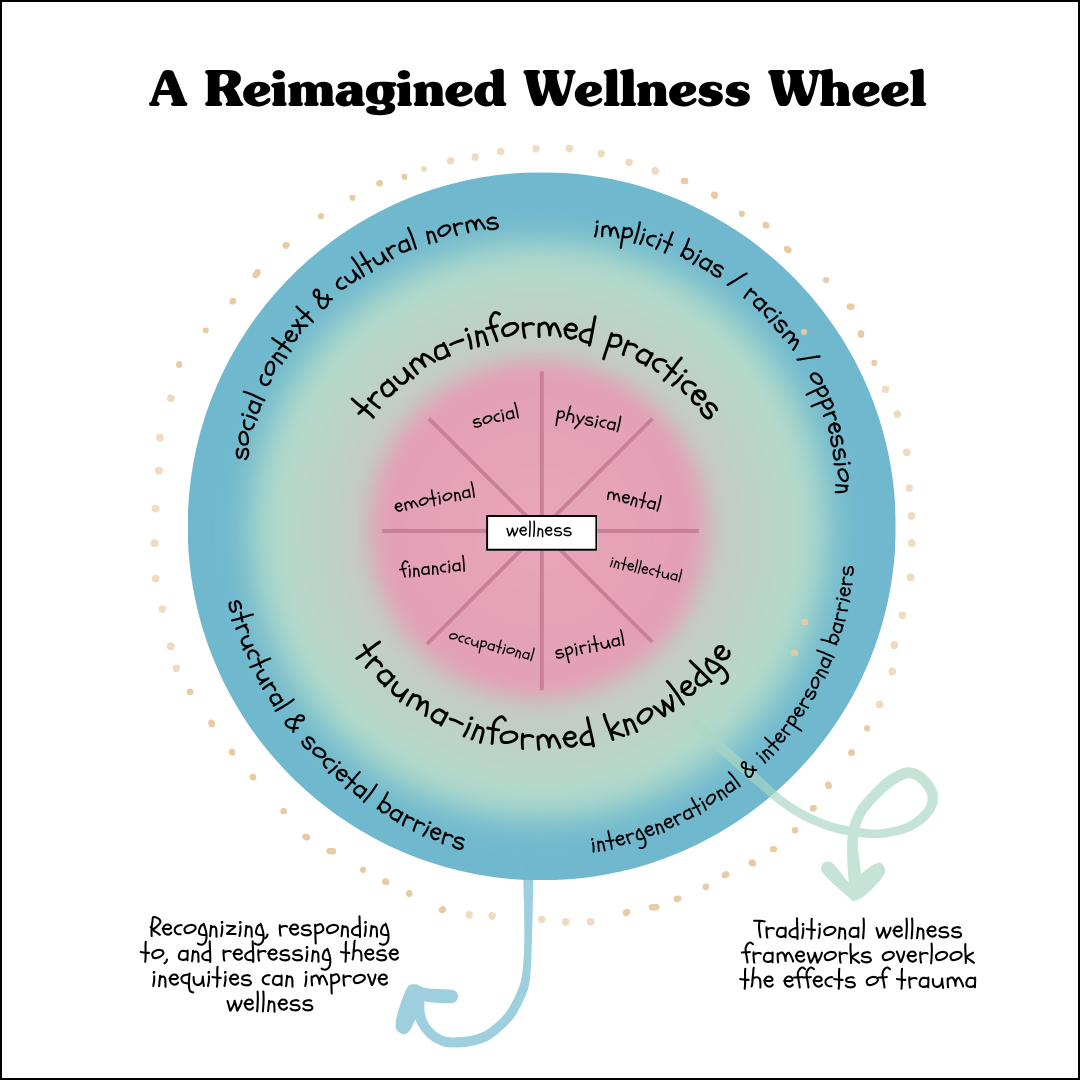
Looking at trauma as a dimension of wellness, and considering wellness within the context of equity and inclusion, can offer a broader understanding of the experiences that students bring into the dance class (see Figure 5 below). It invites teachers to remember that learners arrive with different histories, strengths, stressors, and resources.
This broader framework encourages an appreciation for how personal experiences interact with larger social systems and environments. From this perspective, trauma-informed practices become one way of supporting learning, participation, and well-being within a more inclusive dance community.
Figure 5: A Reimagined Wellness Wheel
In considering this reimagined wellness wheel model, reflecting on these prompts can help us as teachers focus our thinking and our actions. Use the space here to record your thoughts:
Reflections for Teachers
How might social context influence a situation or dynamic I encounter?
How might I be acting on beliefs, values, or assumptions that are unrelated to this moment?
Where do I need to increase my competence around social context?
How am I recognizing and responding to issues of inequity in my own practice, my pedagogy, and my community?
For students applying this model, the following questions can elicit ways to approach your dance class, your thinking, and your actions. Use the space here to record your thoughts:
Reflections for Students and Dancers
How might social context be shaping my experience of this moment?
What assumptions might I be making about myself or others, in a given situation?
What helps me feel respected, valued, and safe enough to learn, take risks, or make mistakes?
Are there parts of my identity or experience that influence how I interpret what happens during class?
How might my actions, words, or responses affect the sense of belonging and safety of others in this space?
Tools and Resources
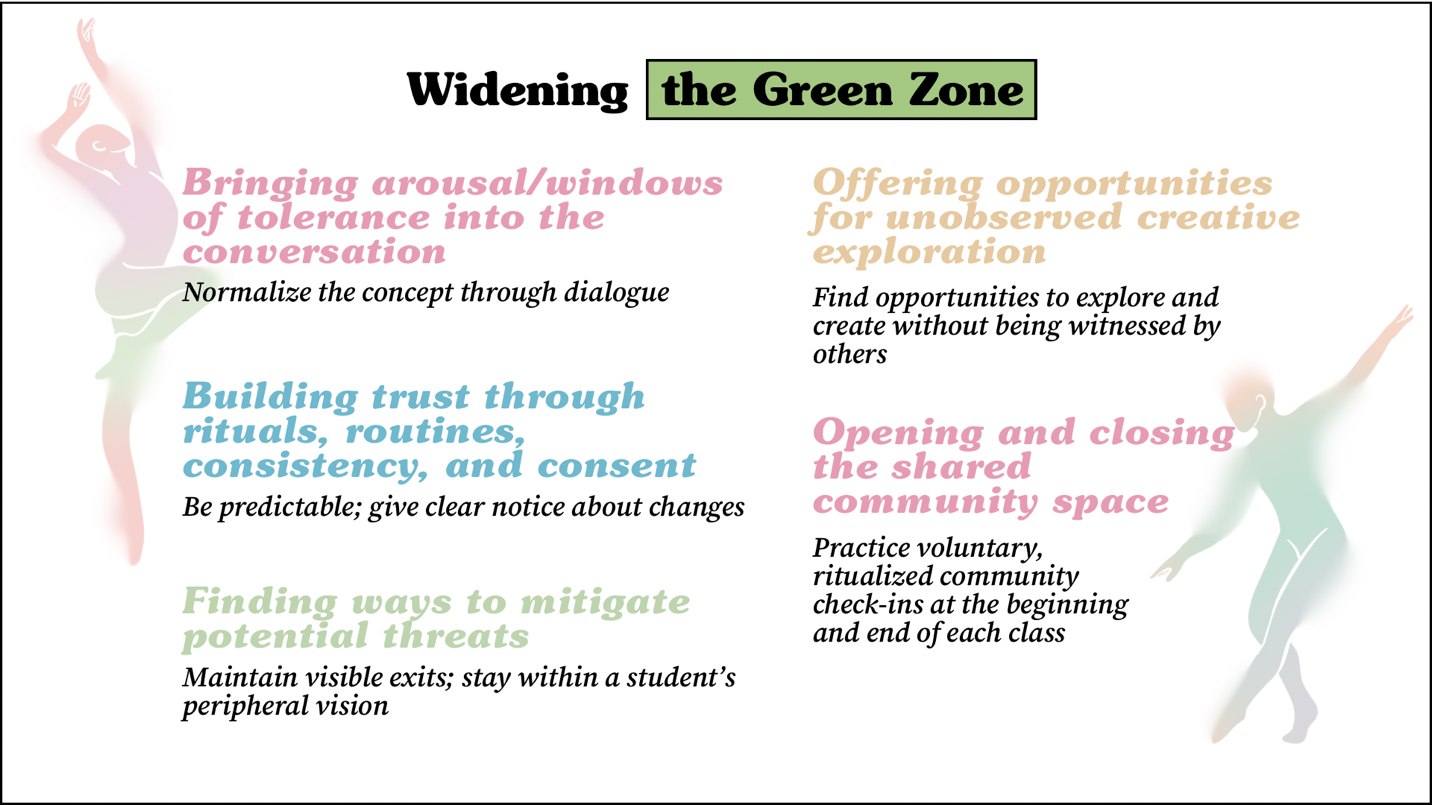
Additional suggestions for a trauma-sensitive or trauma-informed classroom, detailed in Figure 6, address critical aspects of a student’s lived experience and potential stressors, such as hypervigilance and arousal, the need for consistency and routine, safety, and consent.
Figure 6: Widening the Green Zone
As teachers, we cannot ensure that any practice we employ will result in regulating our students. However, we can work to create optimal environmental and interpersonal conditions and settings that can help to facilitate improved regulation. Toward this effort, it may be helpful to reflect on some of the specifics of our own practices:
Reflections and Invitations
We invite you to reflect on your own trauma-sensitive pedagogy, using the following prompts to stimulate thinking and further dialogue:
How much agency do I provide students in the dance class?
How clear are my goals and objectives?
How do I communicate a realistic optimism about my students’ ability to achieve their goals?
How often do I check in with students?
How do I foster empowerment with my students?
In what ways am I consciously building trust and reliability with my students?
How am I using curiosity and inquiry to check my own assumptions and implicit biases when observing and communicating with students?
Conclusion
Teachers see that dancers bring themselves along with their past and present, their challenges and their assets into the dance class each day. Equipped with knowledge about how trauma shows up and their willingness to expand classroom culture and norms, teachers are helping students to stay more regulated and feel safer in the dance class so that they can have a more enjoyable and successful learning experience. Although while not qualified to serve as therapists or counselors in any way, dance teachers are in a uniquely valuable and important position to offer a positive, safe, self-esteem building learning environment for all young dancers, including those who have experienced trauma.
Original Article
Gose R. Dancing within windows of tolerance: Considerations for a trauma-informed pedagogy for dance education. J Dance Educ. 2025;25(4):402-412. https://doi.org/10.1080/15290824.2024.2403765
This study looked at both risk factors as well as protective factors in 292 pre-professional/professional dancers with (or without) PTSD (post-traumatic stress disorder) and with (or without) trauma exposure. In this descriptive study, researchers found that 66% of the participants had been exposed to a traumatic event, and of that subgroup 32% had a diagnosis of PTSD. Dancers exposed to trauma and who also had PTSD had significantly more challenges with emotional regulation, engaged in more emotion-oriented coping under stress (self-focused emotional responses to stress), had increased depression, trait anxiety, and cumulative trauma. Despite the differences of trauma exposure or PTSD diagnosis, no differences were evidenced in the dancers’ ability or tendency to engage in flow (a state of optimal focus, arousal and challenge). Thomson & Jacques’ study also acknowledges what has been asserted elsewhere; that the dance environment is potentially a place of stress and even trauma. However, it can also be a place where flow-like experiences are promoted, which, in turn, can potentially mitigate effects of trauma. Recommendations, in addition to building more awareness of trauma, included that dancers may need to learn stress management, increase their tolerance of negative emotions, and employ task-oriented coping strategies, or ways to directly address problems/challenges, along with social support and nurturing a sense of belonging.
References
Borowski TG. How dance promotes the development of social and emotional competence. Arts Education Policy Review. 2023;124(3), 157–170. https://doi.org/10.1080/10632913.2021.1961109
Krasnow D, Wilmerding V. Motor Learning and Control in Dance. Human Kinetics; 2015.
Schwartz TA, Page AD. Dance and the violated body: Trauma-informed frameworks for dance in non-clinical settings. J Dance Educ. 2024;24(4):330-340. https://doi.org/10.1080/15290824.2023.2183503
Treleaven DA. Trauma-Sensitive Mindfulness. W.W. Norton & Company; 2018.
Jennings PA. The Trauma-Sensitive Classroom: Building Resilience with Compassionate Teaching. W.W. Norton; 2019.
Gose R, Abraham A. Looking beyond the binary: An extended paradigm for focus of attention in human motor performance. Exp Brain Res. 2021;239(6):1687–1699. https://doi.org/10.1007/s00221-021-06126-4
Quin E, Rafferty S, Tomlinson C. Safe Dance Practice. Human Kinetics; 2015.
American Psychological Association. Trauma. American Psychological Association. Accessed September 8, 2026. https://www.apa.org/topics/trauma
Felitti VJ, RF Anda. The relationship of adverse childhood experiences to adult medical disease, psychiatric disorders and sexual behavior: implications for healthcare. In: Lanius RA, Vermetten E, Pain C, eds: The Impact of Early Life Trauma on Health and Disease: The Hidden Epidemic. Cambridge University Press 2010:77-87.
Substance Abuse and Mental Health Services Administration. SAMHSA’s Concept of Trauma and Guidance for a Trauma-Informed Approach. HHS Publication No. (SMA) 14-4884. Rockville, MD: Substance Abuse and Mental Health Services Administration; 2014. Accessed August 25, 2026. hhs.gov.
Siegel DJ. The Developing Mind: Toward a Neurobiology of Interpersonal Experience. Guilford Press; 1999.
Blevins P, Moyle G, Erskine S, Hopper L. Mindfulness, recovery-stress balance, and well-being among university dance students. Res Dance Educ. 2021;23(1):142–155. https://doi.org/10.1080/14647893.2021.1980528
Brown KW, Ryan RM. The benefits of being present: Mindfulness and its role in psychological well-being. J Pers Soc Psychol. 2003;84(4):822-848. https://doi.org/10.1037/0022-3514.84.4.822
Massarelli L, Petsilas P. The way out is in (Thich Nhat Hanh): Cultivating awareness through meditation for dancers. The IADMS Bulletin for Dancers & Teachers 2026; 10(1). Retrieved from https://bulletin.iadms.org/index.php/iadms/article/view/1282
López-Castro T, Saraiya T, Zumberg-Smith K, Dambreville N. Association between shame and posttraumatic stress disorder: A meta-analysis. J Trauma Stress. 2019;32(4):484-495. https://doi.org/10.1002/jts.22411
Thomson P, Jacque SV. Shame and anxiety: The mediating role of childhood adversity in dancers. J Dance Med Sci. 2018;22(2):100-08. https://doi.org/10.12678/1089-313X.22.2.100
Wilmerding V, Krasnow D. Dancer Wellness. Human Kinetics, Inc; 2017.
The Representation and Equity in Dance (RED) project: Enhancing racial equity in dance education
Imogen Aujla, PhD and Stacey Green
Imogen Aujla is a freelance dance psychology specialist from Dance in Mind. She works across three main areas: research, psychological coaching for individuals and groups, and education. Imogen’s main focus with her work is mental health promotion, helping dancers develop the skills they need to flourish on and off stage.
Stacey Green is the founder of the TIRED Movement (Trying to Improve Racial Equality in Dance). She has dedicated her career to empowering people through education, dance, and meaningful conversations that inspire change. Stacey is a member of the Equality, Diversity and Inclusion Advisory Board of the Imperial Society for Teachers of Dance (ISTD).
Context and Rationale
Equity, diversity, and inclusion have gained increasing attention in many areas of society, including dance, in recent years. Many discussions about representation and racial equity have taken place in the dance industry, but action for real change has been limited. This issue is worsened by a lack of specific research evidence about racial discrimination in dance.
Anecdotal evidence highlights the unique challenges that Global Majority dancers face, such as perceptions about ideal body shapes and stereotypes that influence casting. For example, Global Majority dancers have described being cast in “exotic” roles rather than as the “princess.”1 These views stem from ballet’s dominance as the “high art” of dance, which implies that Whiteness is standard2, universal, and neutral. The roles of Global Majority dancers in shaping different dance genres are often overlooked.3
Individual accounts of racist experiences reveal that Western dance training can negatively affect the self-esteem, motivation, and ambitions of Global Majority dancers.4 However, research on these effects has been limited until recently.
Stacey Green founded the TIRED Movement specifically to address the above challenges. She was tired of having the same conversations over and over again, with few real actions being taken. Stacey discussed her ideas with Imogen, an independent researcher with a commitment to inclusion in dance. To tackle the inaction in the dance world, the TIRED Movement launched the Representation and Equity in Dance (RED) research project to provide data that can lead to positive change by exploring two main objectives:
The effects of the lack of equity and representation in dance education on Global Majority dance students.
Create and test a framework to improve equity and inclusion in dance training.
The project supports TIRED’s goal to enhance access and inclusion in dance and improve representation in the industry.
This article summarizes the main findings from the project and offers some practical tools for dancers and teachers to use in the studio. Racism can appear at both individual and organizational levels, and we hope that readers will feel inspired to take steps to make positive changes in their own settings. White dancers and teachers can become active allies by exploring the tools and resources presented in this article to support and advocate for Global Majority dancers across the industry.
Research Summary
TIRED teamed up with nine dance colleges in the UK for the RED project. While the focus was on Global Majority dancers, White dancers were also included to highlight how tackling racism is a shared responsibility. With 150 dancers (Global Majority 26%; White 74%) completing a survey about dancers’ experiences of racial discrimination and their mental health, we found that discrimination, particularly exclusion and rejection, is strongly related to lower wellbeing among Global Majority dancers. Feeling ignored (e.g., views being ignored in a group), being excluded (e.g., not being chosen for pair or group activities), and being treated unfairly or made to feel different (e.g., being criticized more often than White dancers) were strongly related to lower wellbeing amongst Global Majority dancers. Even with the same ambitions as White dancers, Global Majority dancers expected to encounter more barriers when entering the profession due to systemic biases and discrimination. The negative impacts of discrimination include experiencing poorer life satisfaction, lower body appreciation, negative self-perceptions of ability, and poorer relationships with others.
Nineteen dancers (Global Majority 8; White 11) took part in a series of focus groups, discussing experiences of discrimination as well as how they coped with discrimination in dance and suggestions for change. The focus groups confirmed and supported the survey results. We found that:
Teachers and peers exclude Global Majority dancers and treat them differently from White dancers:
“I just feel like they’re picking on me, everyone else will make a mistake, but then when I make a mistake it’s like, “Oh, why didn’t you practice?... There were other people around me going wrong, but [teacher] didn’t say anything about them.”
White peers suggested that casting decisions were based on skin color rather than talent:
“I felt really invalidated, that I’d worked so hard this whole year, and then went through a really difficult audition process, and made it through, to be told it’s only because you look different, like, it’s nothing to do with your dance abilities.”
Teachers making learning activities and casting decisions based on stereotypes:
“[the script] was very stereotypical ghetto… I don’t feel comfortable doing it.”
From these findings, we learned that experiencing discrimination leads to self-doubt, isolation, and lower confidence. Dancers often hesitated to report incidents, as they were unsure if action would be taken.
Overall, the RED findings show that racism exists in dance training and affects Global Majority dancers’ psychological wellbeing and mental health. During the final phase of the project, we aimed to create a framework to improve racial equity in dance training. Although data from pilot testing of the framework is not yet published, the framework is available through TIRED Connect, a platform that connects people and organizations, shares knowledge, and supports the TIRED Movement.
Application of Research Findings to Practice for Dancers and Teachers
Western dance training often treats White practices as normal and universal4. This appears in course content, syllabi, and teaching and assessment methods. The first step towards racial equity in the dance training environment is to be aware that Whiteness may be perceived as more important or superior to other cultures.5 For instance, when discussing the “ideal body” in dance, it usually means a White balletic body, which can exclude Global Majority dancers.5 Understanding the multiple ways in which Whiteness pervades dance training provides an important context for the other suggestions and tools in this article.
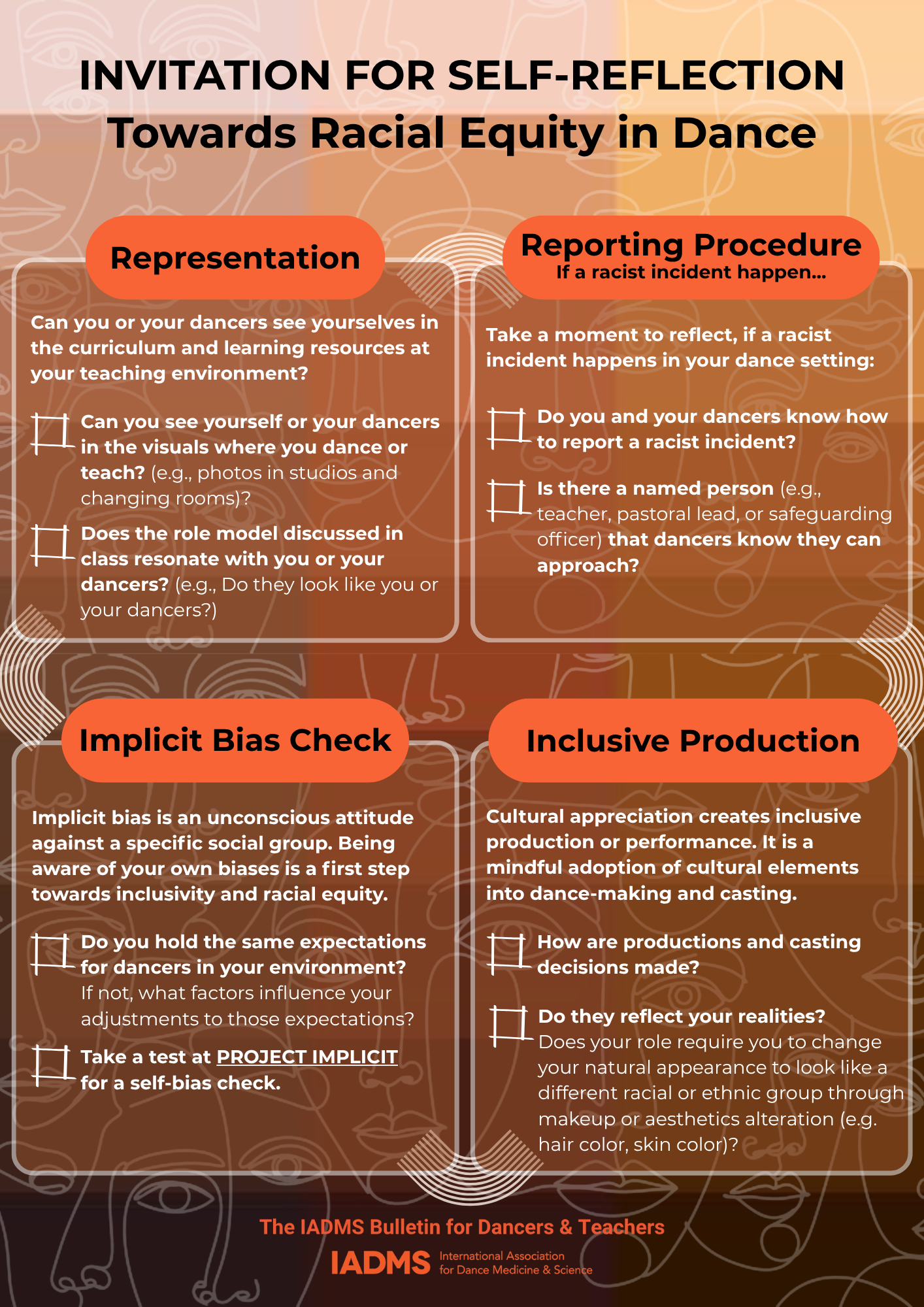
Before you explore the tools and resources in this article, we invite you to pause and reflect:
Whose histories, bodies, and artistry are reflected in your curriculum or syllabus?
Which aesthetic lens sets the standard for technique, feedback, and assessment in your setting?
Does that lens give every dancer an equal starting point?
Are Global Majority dancers included within that standard, or measured against it from the outside?
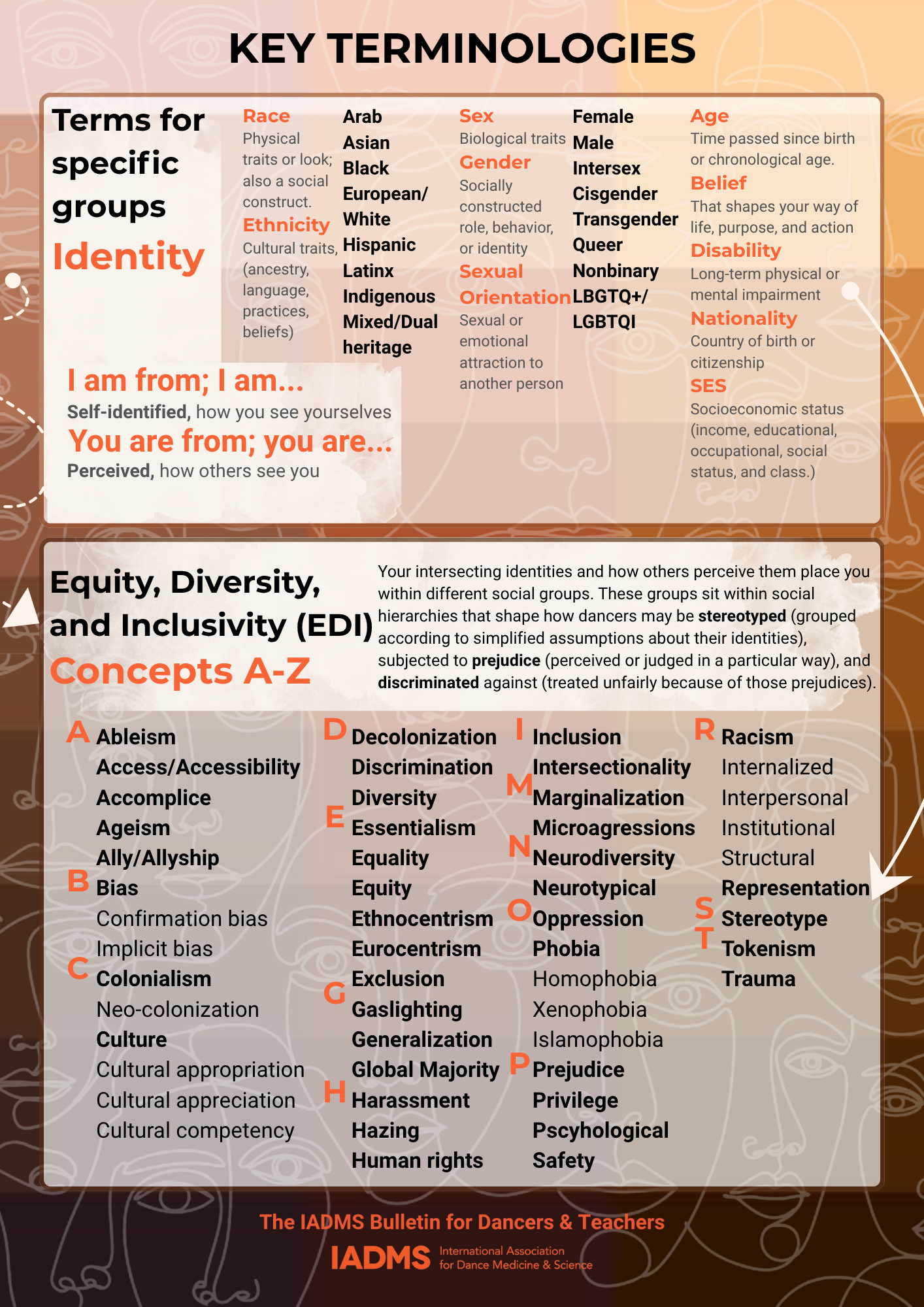
These questions are not easy, nor are they meant to be answered in a single sitting. They are offered as a starting point for the practical tools that follow, and we hope they help you read the rest of this article not as a checklist but as an invitation to notice, question, and perhaps begin to shift what happens in your dance setting. Your reflections can lead to open discussions with colleagues, dancers, and students about stereotyping, microaggressions, gaslighting, and allyship, and conversations about what terms like equity and inclusion mean can be equally productive and eye-opening. A glossary is provided at the end of this article.
The supplementary material, courtesy of The IADMS Bulletin Editorial Team, may be printed as posters for your studio or workspace, and we also invite you to listen to the ResDance podcast episode hosted by Dr Gemma Harman which offers further insights from the authors around racial equity in dance. While those facilitating these discussions may need further training to hold these spaces sensitively, such conversations can help White teachers and dancers better understand the practical recommendations highlighted in this article.
Tools and Resources
Tackling racism can feel overwhelming and may leave us feeling powerless, but the following tools offer a starting point for dance teachers and dancers to begin embedding racial equity into training environments. These strategies include rethinking how dancers are grouped for tasks and assignments, ensuring uniform inclusivity, understanding or establishing zero-tolerance policies against racism, and facilitating access to mental health support.
Grouping Dancers for Tasks
Dancers
Teachers
Think about who you’re choosing to work with.
Choose someone you’ve never worked with before.
Think about how dancers are grouped for tasks.
Take full ownership of grouping dancers to encourage interaction and collaboration focused on a common goal or task.
Change groups regularly to facilitate further interactions.
Uniform Inclusivity
Dancers
Teachers
You should have the option to choose dancewear that suits your skin color and body type.
You should be allowed to keep your natural hair and manage it accordingly in a way that will not be obstructing your dance practice.
Update uniform requirements to include skin-tone matching dancewear if you do not already do so.
Consider adopting the Halo Code (www.halocollective.co.uk), which aims to address hair-based discrimination.
Zero Tolerance Policy
Dancers & Teachers, A Shared Responsibility
Have a clear zero tolerance policy and reporting procedures.
All dancers (both Global Majority dancers and White dancers) are encouraged to engage with the policy and learn about reporting procedures.
Take action following racist incidents:
Be explicit on what is and isn't acceptable behavior in your setting.
Clarify how unacceptable behaviors will be dealt with.
Encourage the use of tools by which dancers can explain to each other why certain language or comments are unacceptable. McCarthy-Brown suggests the following protocol.5
I heard you say ____________ and it made me feel _____________.
Thank you for letting me know what you heard and how it made you feel. I receive your words and feelings. I am going to think through this today and moving forward.
Signpost Dancers to Mental Health Support
Dancers
Teachers
Seek professional mental health services (e.g., in-house counselor or psychologist).
Check with teaching or administrative staff if you’re unsure how to access such services.
Dancers may see you as a safe person to talk to after a racist incident. Don't assume they know who else to approach or where to find support. Instead, try to listen with respect and without judgement, being mindful not to offer unsolicited personal advice.
Help dancers access mental health services but remember to stay within your area of expertise. For example, you could help them make an appointment with an in-house counsellor or psychologist or signpost them to external organizations such as the TIRED Movement if your setting does not have these.
Reflections and Invitations
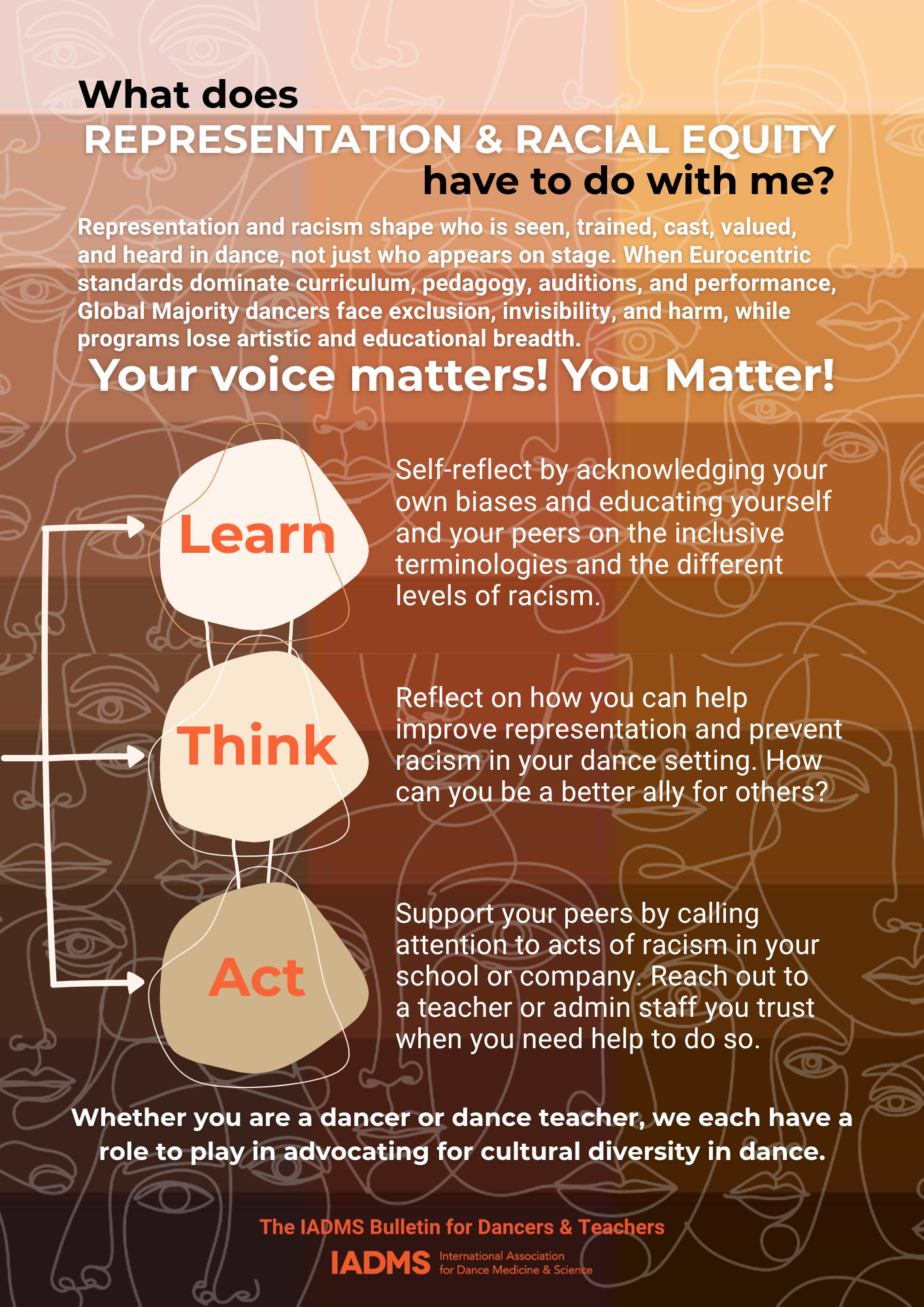
Figure 1: What does “Representation and Racial Equity” have to do with you? Learn, Think, Act.
Figure 2: Invitation for self-reflection towards racial equity in dance.
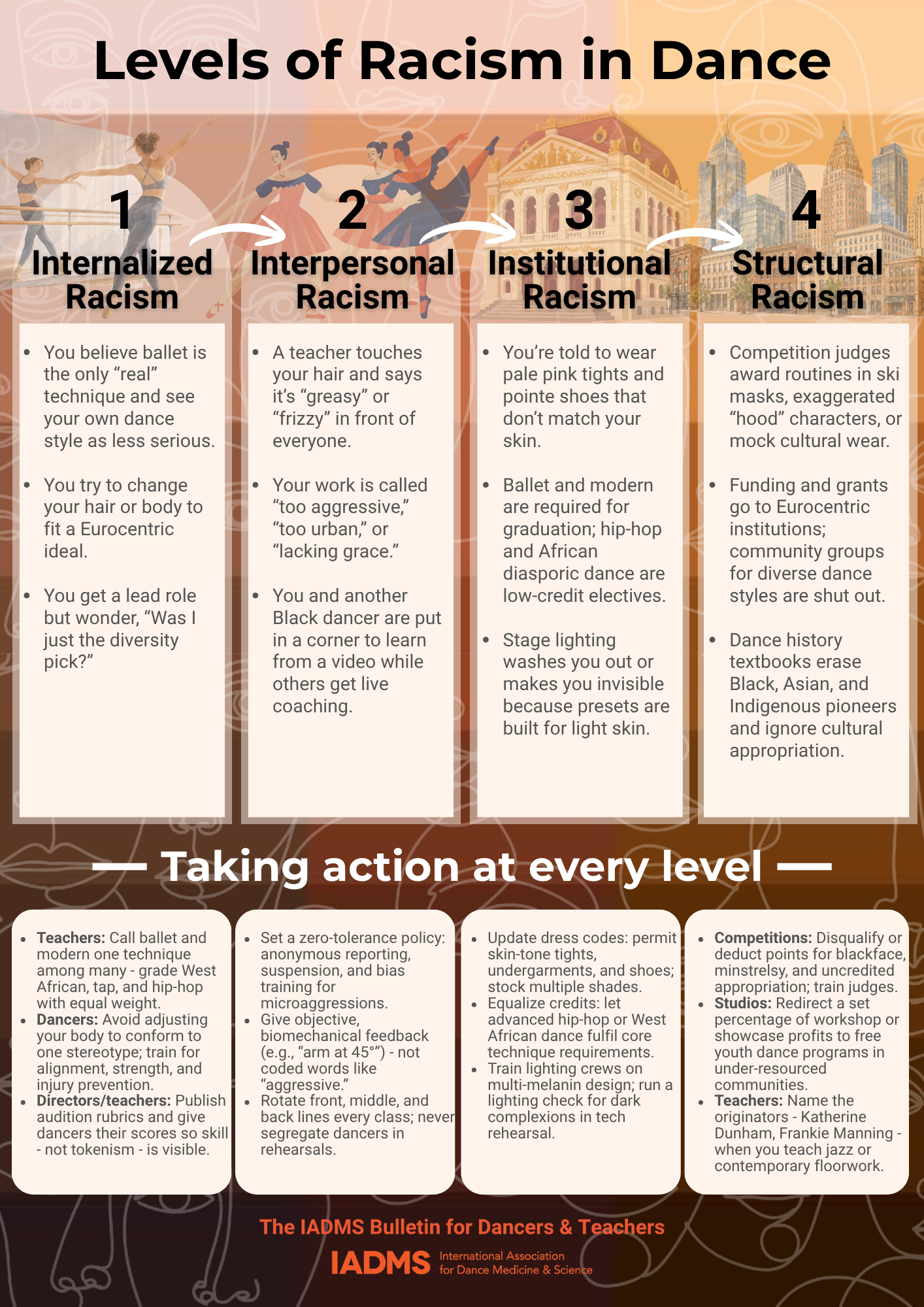
Figure 3: Levels of racism in dance.
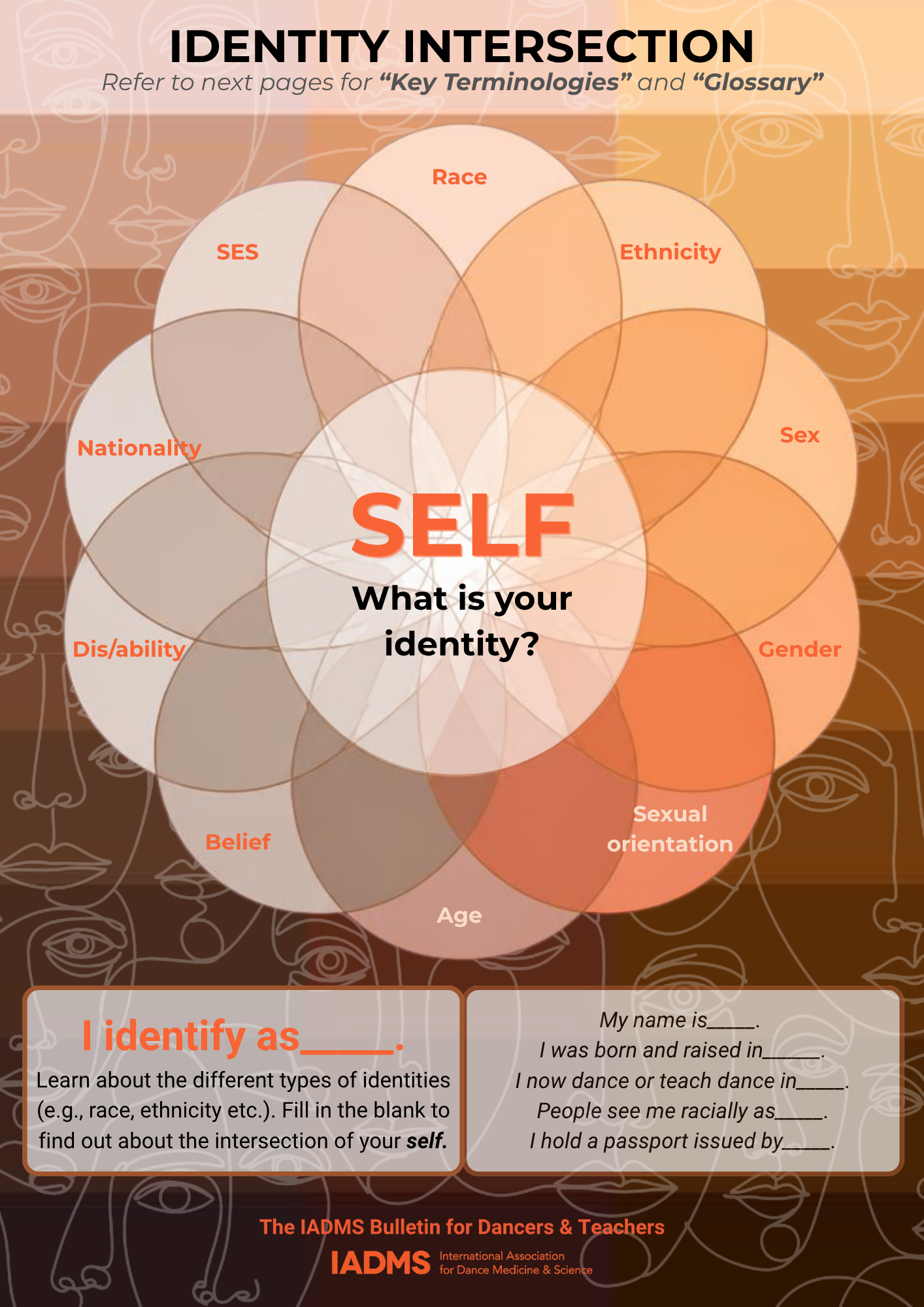
Figure 4: Identity Intersection: What is your self-identity?
Figure 5: Learn: Key Terminologies.
Conclusion
Dismantling longstanding biases, such as the privileging or favoring of White practices in dance education, is neither easy nor quick, but is essential in creating a better environment for Global Majority dancers. It is an ongoing effort, and it is everybody’s responsibility. The tools and resources in this article invite teachers and dancers to reflect on racial equity inside your respective dance studios while suggesting some feasible actions you can take to influence a positive shift in the dance education environment where no one is left behind and everyone is included.
To help us create this change, the authors invite you to join both the TIRED Movement and TIRED Connect - a brand-new, global creative networking platform designed to help Global Majority artists, designers, musicians, makeup artists, filmmakers, dance photographers, creative organizations (and more!) connect, collaborate, and grow. TIRED Connect provides a dedicated space to showcase creative work, build professional relationships, and discover new opportunities within the creative industry. By joining TIRED Connect, you will also be able to access the RED Framework and be a part of the effort to ensure that Global Majority dancers feel safe and supported in their dance training.
Original Articles
Aujla IJ, Green S, Grant L. The impact of racial discrimination on the well-being of dance students. Arts Commun. 2024;3(1). doi:10.36922/ac.3165
Aujla IJ, Green S, Grant L. Lived experiences of discrimination among Global Majority dance students: A qualitative exploration of racial inequity. Arts Commun. 2025;3(4). doi:10.36922/ac.8530
Prichard R. From Color-Blind to Color-Conscious: Advancing Racial Discourse in Dance Education. J Dance Educ. 2019;19(4). doi:10.1080/15290824.2018.1532570
In this article, Prichard examines how approaches to race can shape teaching and learning in dance education. Drawing on social science, education, and legal scholarship, Prichard critiques color-blind racial ideology, which treats race as irrelevant or seeks to avoid discussing racial differences. The article argues that this approach can obscure racial inequities and contribute to harmful experiences for teachers and students. In contrast, Prichard advocates for color-consciousness, an approach that explicitly recognizes the significance of race and racialized experiences. The author identifies four strategies for developing color-conscious dance education: recognizing the role of race, openly identifying racist practices, questioning the perceived neutrality of Whiteness, and ensuring that Global Majority dancers are able to fully express their perspectives. Applying these strategies to dance education, Prichard highlights existing shortcomings and proposes ways educators can engage more directly with race, challenge inequities, and create more inclusive educational environments.
References
Johnson O. The black sheep is the Black dancer. Dance Major J. 2017;5(1). doi:10.5070/d551036259
Evans L. 21st century ballet, 20th century racism. Dance Major J. 2022;10(1). doi:10.5070/d510158899
Wilson L. Dancing under the weight of racism. International Journal of Education and the Arts. 2022;23(Special Issue 1). doi:10.26209/ijea23si1.4
McCarthy-Brown N. Navigating anti-racism in an anti-black landscape: a dance educator’s reflection. Int J Educ Arts. 2022;23(1). doi:10.26209/ijea23n1
Acknowledgements
Thank you to the colleges and students who took part, without whom this project would not have been possible. We also thank Jia Xi Lee and The IADMS Bulletin Editorial Team for contributing to the supplementary materials and graphics that enrich this article.
Glossary
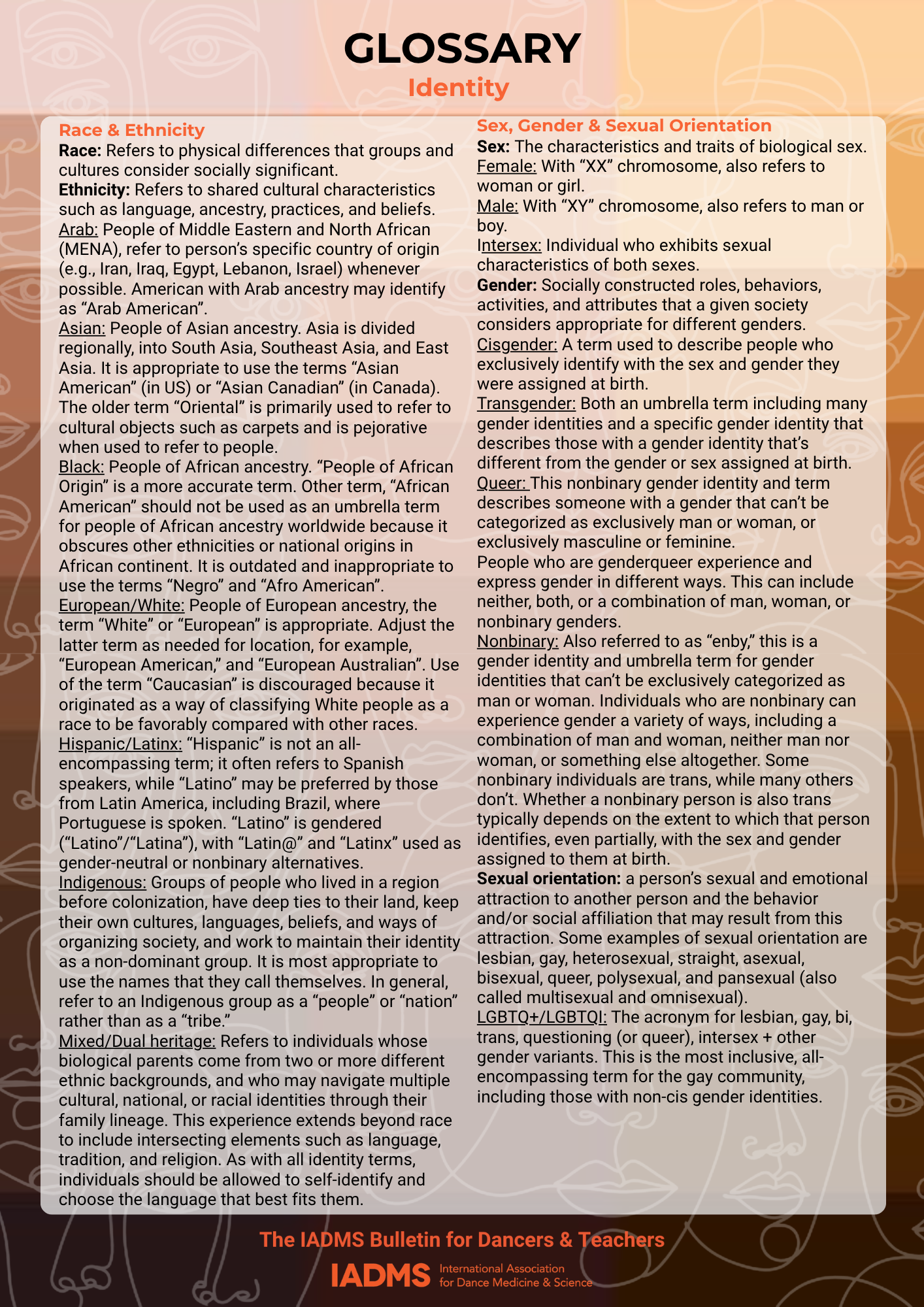
Glossary: Identity. Race and ethnicity; sex, gender and sexual orientation.
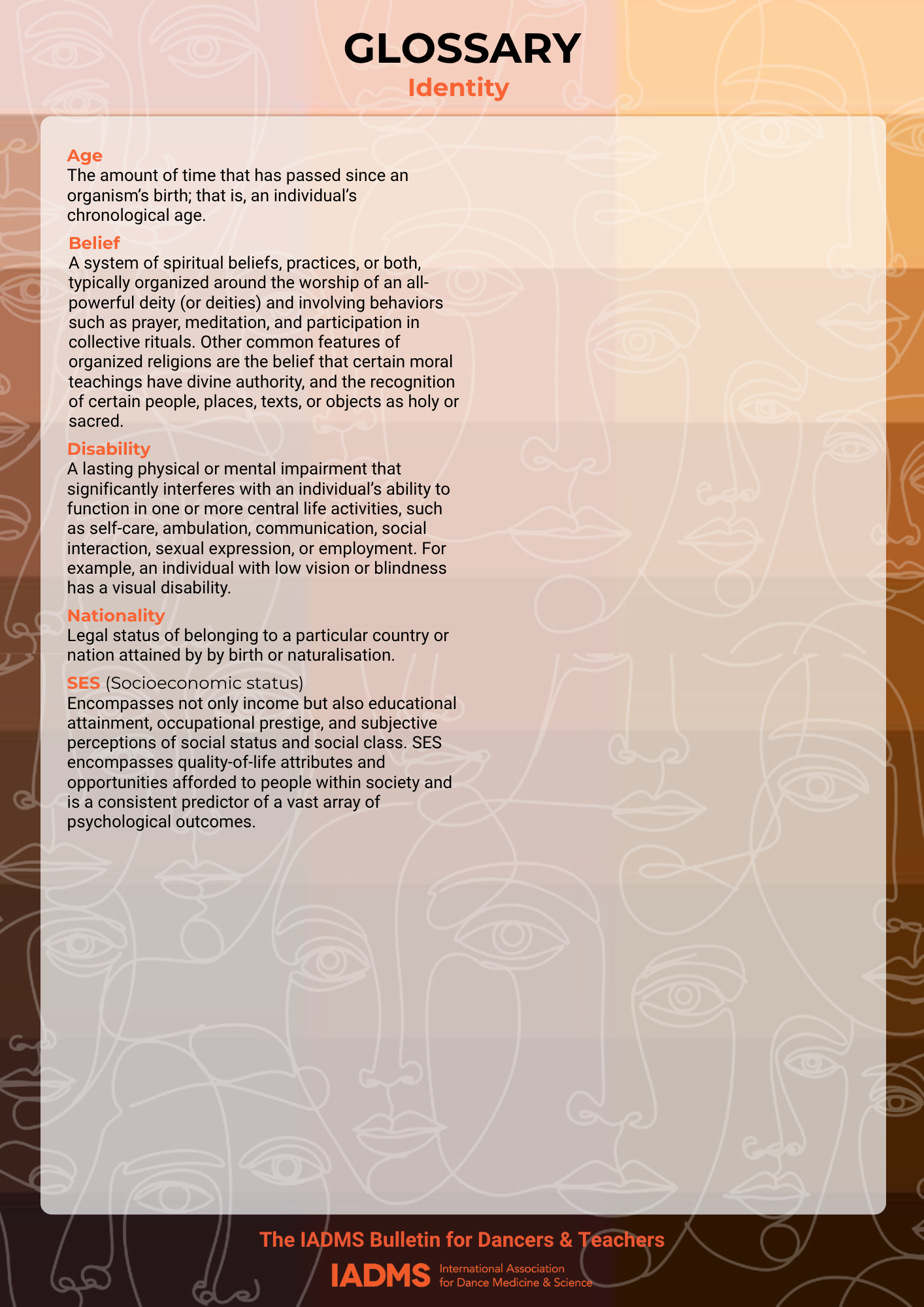
Glossary: Identity. Age, belief, disability, nationality, and socioeconomic status.
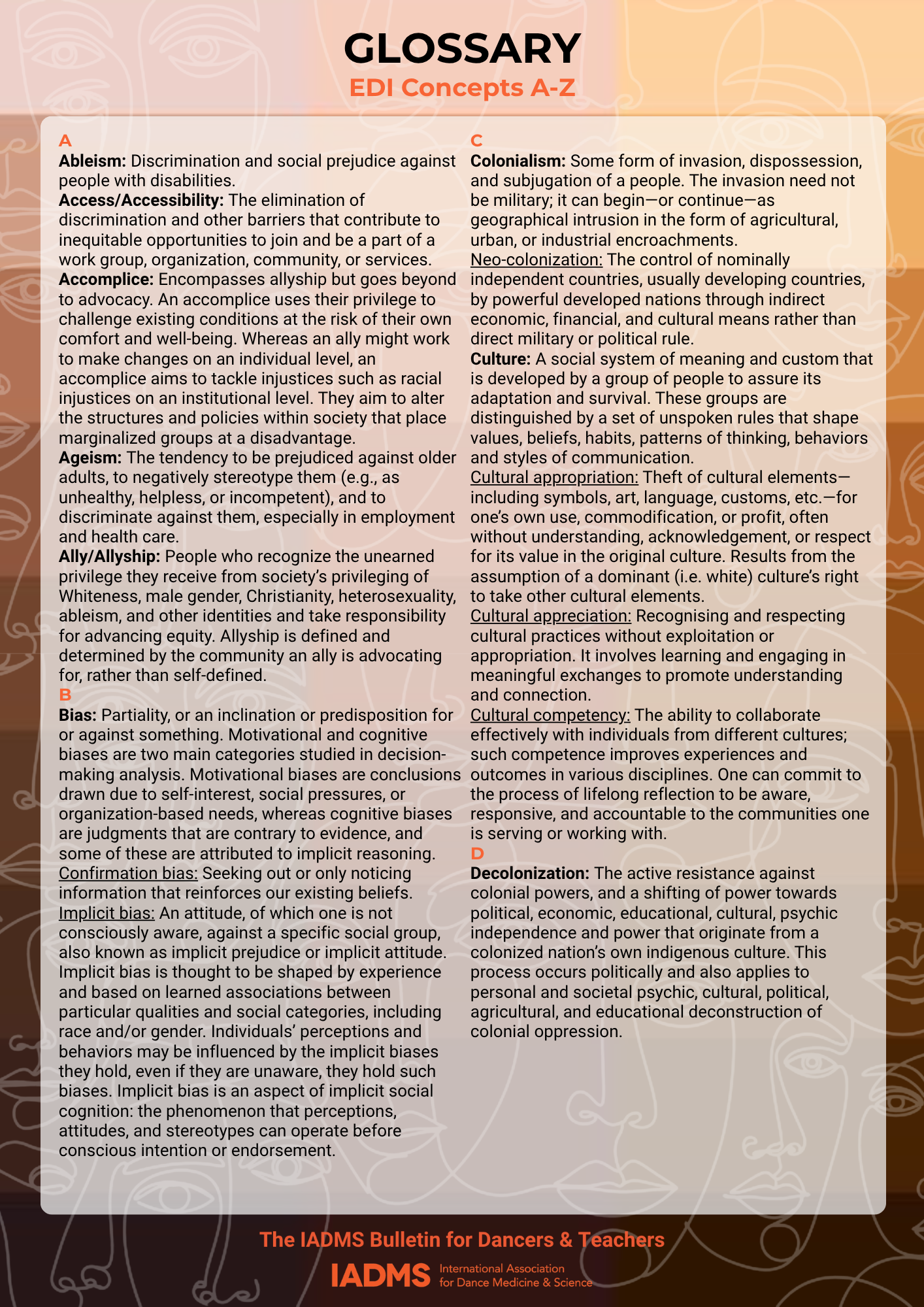
Glossary: EDI Concepts A–C.
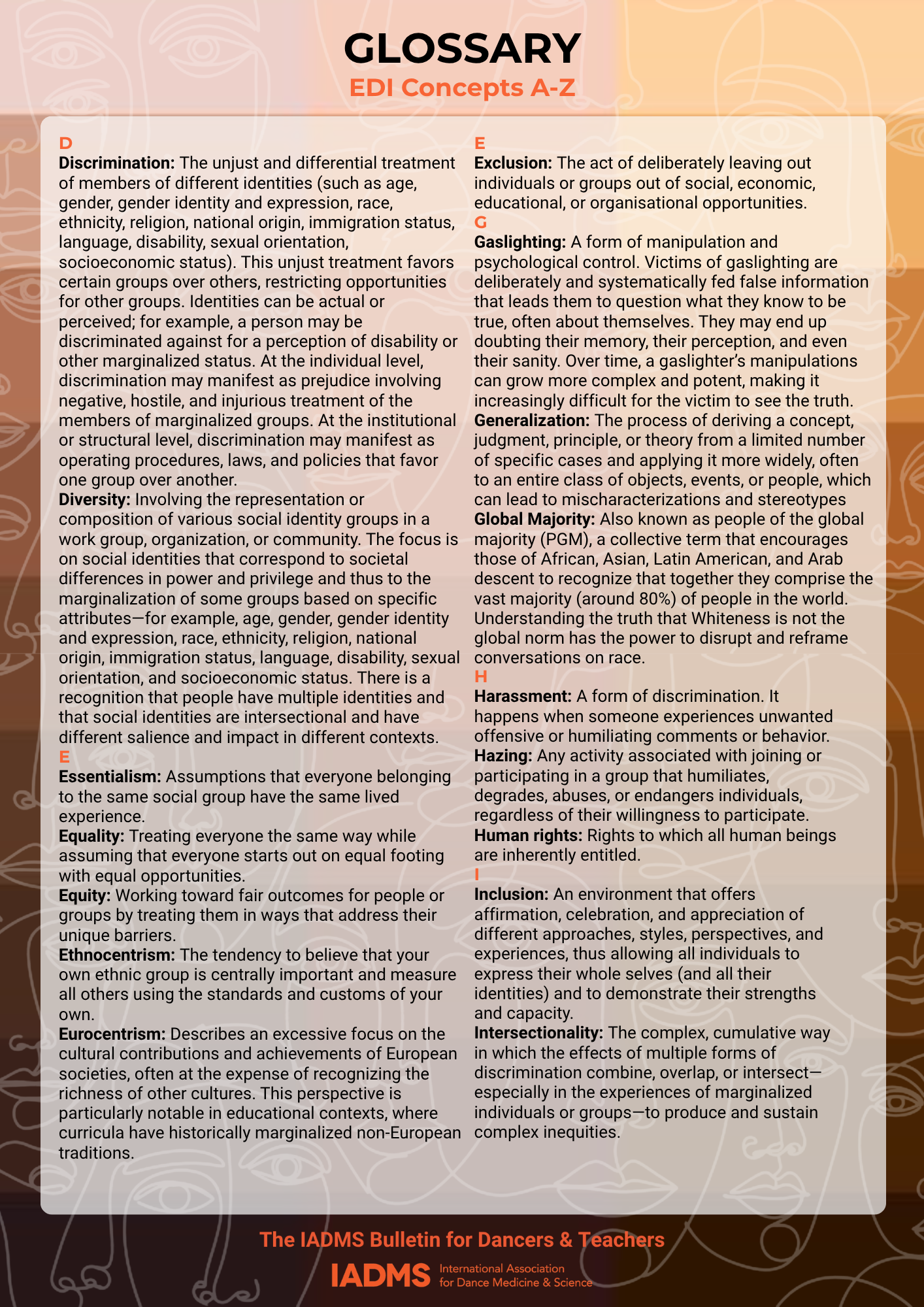
Glossary: EDI Concepts D–I.
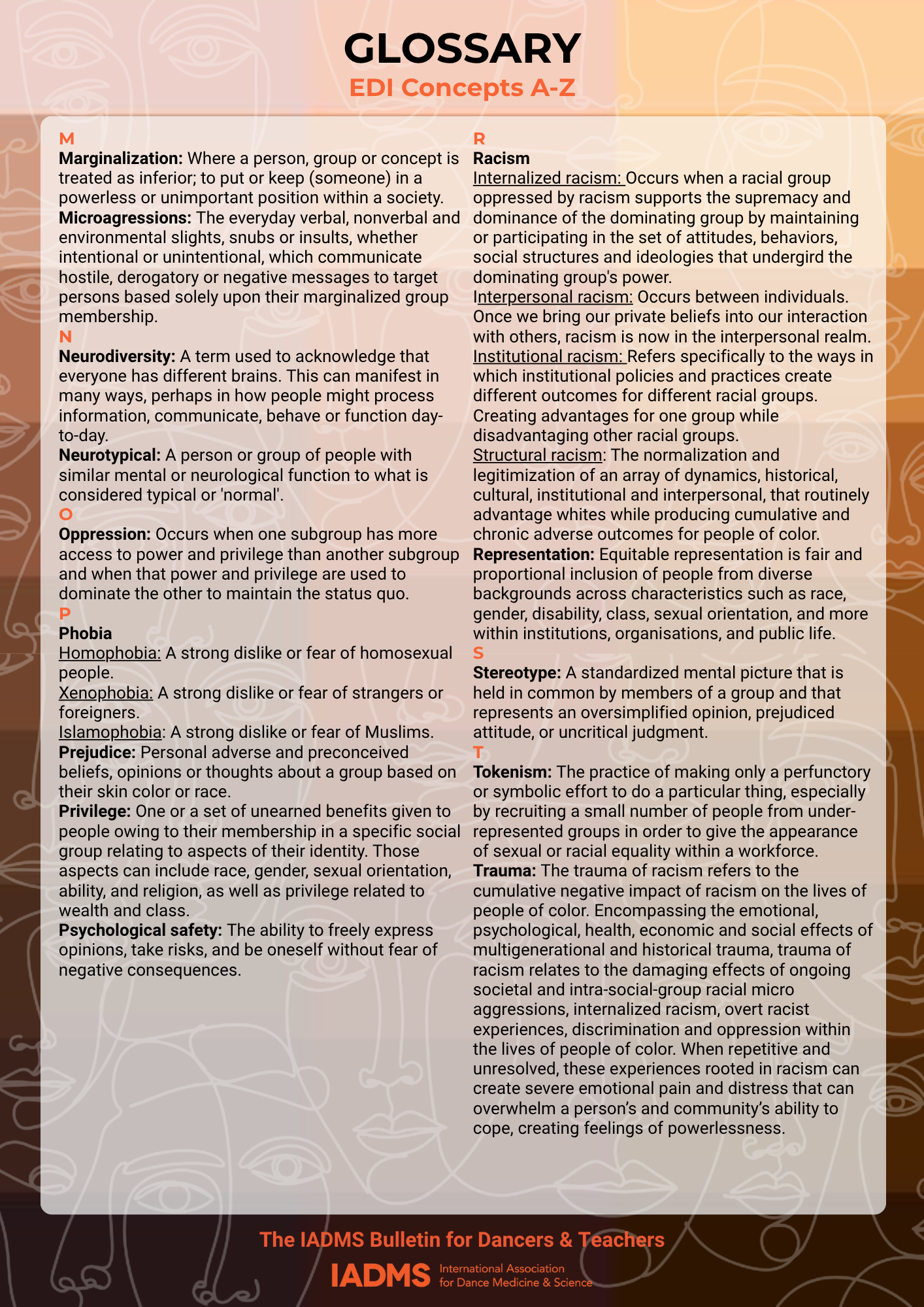
Glossary: EDI Concepts M–T.
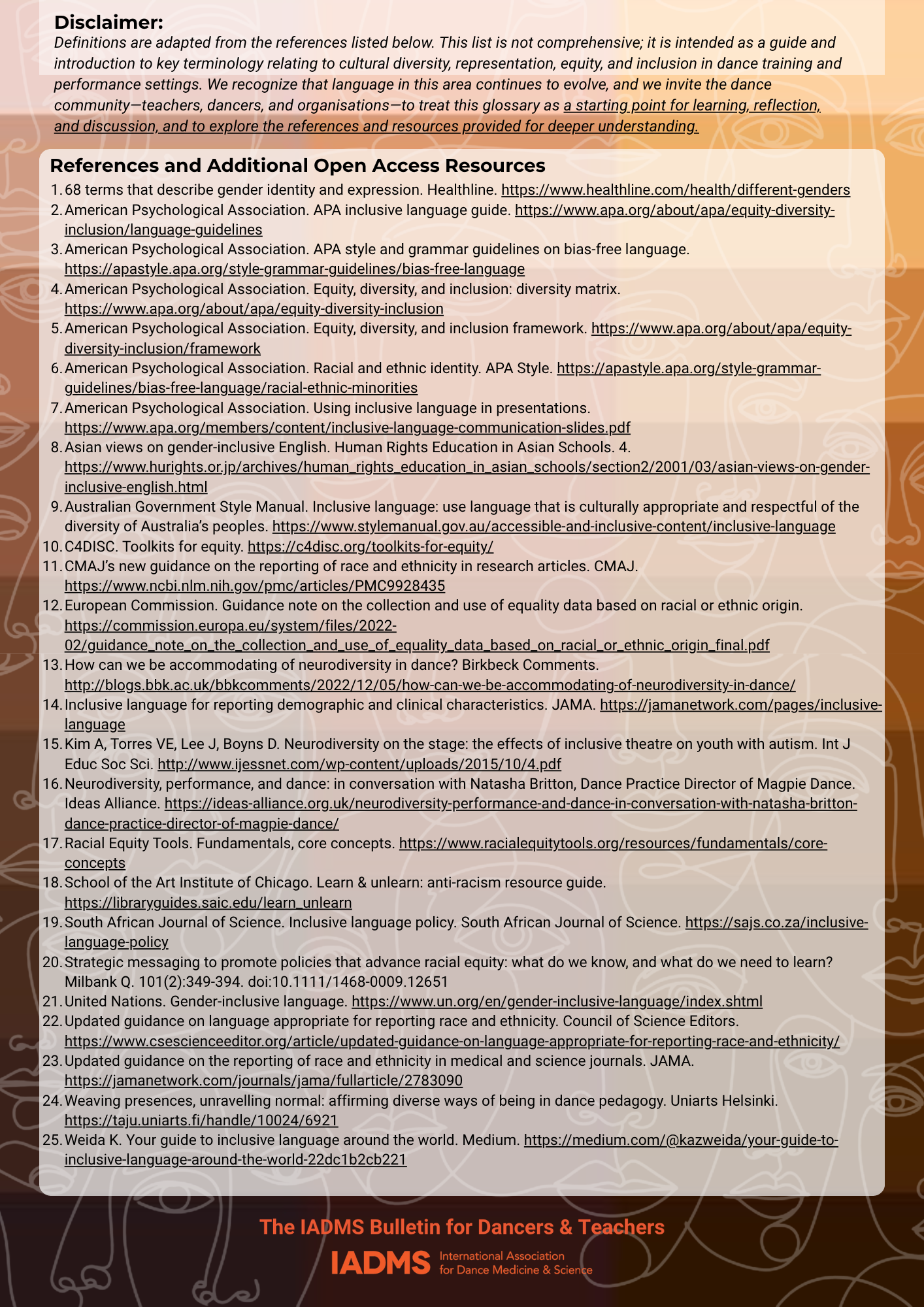
Glossary: disclaimer, references, and additional open access resources.
Do calf rises every day really keep the doctor away? A practical guide to chronic ankle injury prevention
Peta Baillie BPhys, MAppSci
Peta Baillie is a Lecturer (Physiotherapy) at Charles Darwin University, and previous physiotherapist at The Australian Ballet. She has 15+ years of experience as a physiotherapist, and her current clinical practice involves rehabilitating dancers and non-dancers with complex injuries and pain presentations. Her research investigates magnetic resonance imaging findings in elite dancers and athletes, and posterior ankle impingement syndrome.
Context and Rationale
We’ve all been there. The final run of a rehearsal: a dancer misplaces their foot and rolls their ankle. Perhaps the dreaded “crack” is heard over the music. It hurts to walk, let alone dance. It starts to swell and a dark purple bruise begins to bloom, shortly followed by the questions: Can they still perform next week? How can we modify the solo? Should they get a scan?
Why Investing in that First Ankle Sprain is Key
The foot and ankle complex remains the most frequently injured region in dancers, and ankle sprain injuries are one of the most common injuries.1-3 Lack of early expert assessment and care may alter the recovery process and lead to further, more significant injury and lost performance.4 For example, in a university dance population, 75.9% of dancers with a previous lateral ankle sprain developed chronic ankle instability.5 Investing time in adequate recovery and comprehensive rehabilitation following an initial ankle sprain may be the difference between complete recovery, and significant long-term consequences that may impact dance participation.
Chronic ankle instability (CAI) is particularly common in the dance population, with one study finding that it impacted 73% of dancers in a single ballet company.6 Chances are you have it and you may not even know it. If not, you will almost certainly know/dance with/teach someone who does.
Dancers with chronic ankle instability feel that their ankle is unstable, as it may repeatedly ‘give way’ or feel as though it is about to, and is frequently sprained.6 Dancers with unstable ankles tend to have less control over their ankles and take longer to recover when they do sprain.6 This chronic instability not only impairs physical function and performance but impacts a dancer’s quality of life and psychological state.7-8
What is Posterior Ankle Impingement Syndrome (PAIS)?
Beyond its direct effects, chronic ankle instability is associated with a range of secondary problems that can further impact function and quality of life, including PAIS, one of the most common injuries in dance.9 The first signs of PAIS start off as a mild ‘niggle’ in the back of the ankle in positions of plantarflexion (where the foot is pointed, as exemplified in Figure 1), that usually ‘warms up’. If not addressed, this ‘niggle’ can quickly develop into a pain that limits the dancer’s ability to meet their required training, performance or competition demands, leading to sub-optimal performance.
Our research has shown that dancers with PAIS were also more likely to report symptoms of chronic ankle instability. This means that if you have CAI, you may also be more likely to experience posterior ankle pain/PAIS.10 Posterior ankle impingement syndrome presents as pain in the back of the ankle, in positions of ankle plantar flexion, especially in weightbearing (Figure 1). Tendus, demi-pointe, and jumping can also be painful.
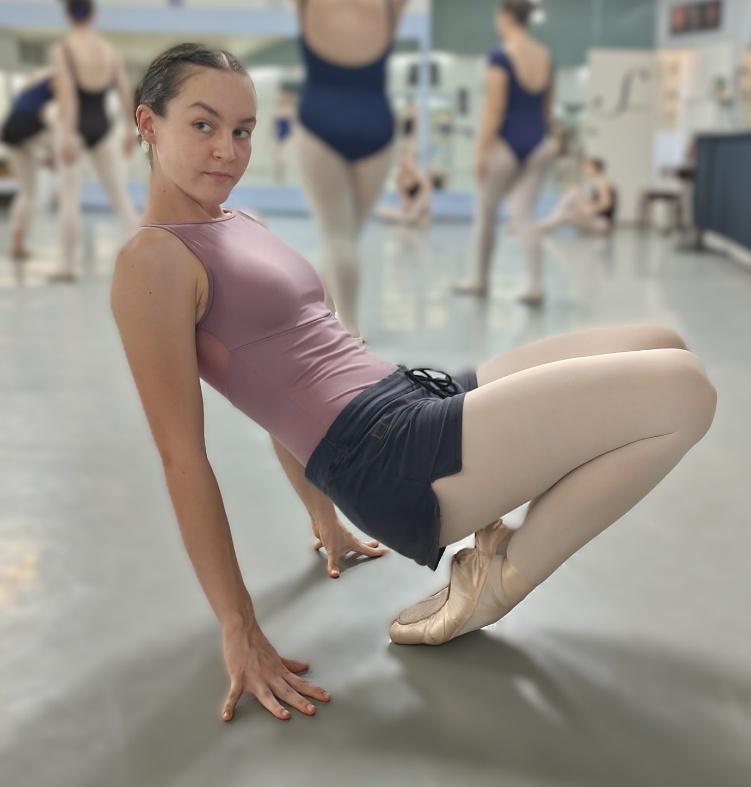
Figure 1. Picture of a dancer in a position of forced ankle plantarflexion that could potentially cause posterior ankle impingement syndrome.
What Can Cause Posterior Ankle Impingement Syndrome?
So, how does CAI develop in the first place? This is where ‘getting it right’ initially becomes key. More than 50% of the dance population may be dealing with residual pain, impaired postural control, instability and weakness, and associated injuries.5,6,11 This prompts us to consider what we could do to bring this number down. Dance teachers and dancers are experts in their eye for detail, movement quality and alignment, and perhaps applying these highly developed skills to a simple and already widely-used exercise is one of our greatest defenses in preventing chronic foot and ankle issues.
Research Summary
Our research investigated ankle magnetic resonance imaging (MRI) findings in professional ballet dancers and athletes. We discovered that asymptomatic professional dancers typically present with “abnormal” MRIs – we were unable to separate dancers with and without pain based on MRI findings alone. Despite no differences in MRI findings, dancers with PAIS could not perform as many single leg heel rises and reported greater symptoms of ankle instability.
Application of Research Findings to Practice for Dancers and Dance Educators
Injury Prevention and the Single-Leg Heel Rise: More Than Just a Number
Over the past 20 years, the single-leg heel rise (SLHR) exercise has been implemented in dance communities in a global effort to improve dancer strength, endurance, longevity and importantly to prevent injury (see Tools and Resources Section below). Dance research supports this approach, finding links between poor SLHR performance and injuries including PAIS,10 chronic ankle instability,12 medial tibial stress syndrome/shin splints,13 and Achilles tendinopathy.14
A recent study suggests that the ability to perform this movement is a powerful predictor of future injury.15 However, it is not just the numbers that are important. The movement quality and technique of the SLHR test is most important, and this is where health professionals are grateful for the skilled and watchful eye of the dance teacher.
Single-Leg Heel Rise Technique: ‘The Big Three’ Associated with Injury15
Poor eccentric control: This is defined as an inability to smoothly lower the heel back to the ground. This translates into the studio as the part of movement where the body needs to absorb the greatest amount of energy. An inability to decelerate the body’s mass, for example during a jump landing, spikes the stress on the foot and ankle, increasing injury risk. In this study, dancers with an ‘uncontrolled lowering or visible drop of the heel’ were more likely to sustain an injury.
Pronounced supination: Rolling onto the outside/little toe side of the foot (lateral ankle rolling) during the rise was also predictive for injury.
Failure to hit 30 repetitions: This is the baseline for endurance. Dancers who did not reach this threshold may lack the fatigue resistance necessary to withstand the workload demands of a heavy performance, competition or training season.
Watch a short video about foot and ankle injury prevention
The MRI Trap: Why Your Scan is not Your Destiny
In cases of ankle pain that seems to hang around, dancers may be referred for medical imaging, most commonly for an x-ray or MRI scan. There are times when this is entirely appropriate, for example to rule out fracture or other serious pathology. The issue can develop when healthcare providers order a scan to “figure out” what is causing the pain. Scans are very good at ruling out serious injury, but notoriously bad at telling us what is causing the pain, and this is seen in many populations, and all over the body, with many scary things popping up on MRIs in people who have no symptoms whatsoever. The same is true for dancers.
Research has revealed that elite dancers have all sorts of “abnormal” imaging findings, even when they are pain-free.16-17 These imaging findings are highly prevalent in asymptomatic dancers, and very few go on to cause problems.17 To correctly interpret a scan, we need to understand what is normal for that population, and it appears that it is entirely normal for dancers without pain to have extra bones, lots of fluid, bone oedema, and all kinds of other interesting findings on MRI.16-17 These “worrying” findings may simply be red herrings: a hallmark of the demands placed on dancers’ feet and ankles.
This research tells us that if we see something unusual on a scan, it may represent a typical finding for a dancer, and does not automatically require surgical clean out.16-18 Scanning a chronically painful ankle is not routinely recommended, and when scans are performed, they require careful interpretation and correlation with the dancers’ training and performance loads, symptoms and capacity. What is more important is that we assess and treat the dancer, NOT the scan.
Tools and Resources
Bloch, in association with The Australian Ballet, produced this video on how to perform single-leg heel rises with excellent technique. This is what we are aiming for:
Watch a short video about how to perform single-leg heel rises
Reflections and Invitations
Your Action Plan: Taking This Into the Studio
1.
Invest in good care for ankle sprains, it’s worth it.
2.
Even better, invest in injury prevention, including building the strength and endurance of the calf muscle complex under the watchful eye of dance teachers, remembering ‘the big three.’
3.
Single-leg heel rises: build to 30+ repetitions, with excellent technique. If you cannot achieve the numbers, focus on technique first. Perform this exercise 2-3x week with 48 hours recovery in between*
4.
Avoid the MRI trap: Do not allow yourself/your dancers to be reduced to a set of 2D images. A dancer's physical presentation, symptoms and history are far more important.
*This is a generic prescription. Dancers with injury or other considerations should undergo formal assessment and individually prescribed exercises.
Conclusion
Key Take-Home Messages
Chronic ankle instability (CAI), often developing after ankle sprains, is common in dancers, associated with other ankle problems, and can significantly impact quality of life. It is treatable and should not be accepted as something that dancers simply have to live with.
Every ankle sprain deserves prompt assessment and complete rehabilitation, to reduce the risk of developing chronic ankle instability.
Single leg heel rise performance is a useful predictor of injury risk. As dance teachers already recognize, heel rise technique is just as important as the number of repetitions.
MRI findings should always be interpreted carefully, as “abnormal” findings are common even in asymptomatic dancers. First and foremost, we should always treat the dancer, not the scan.
So, to answer the question of whether calf rises everyday really do keep the doctor away: there is evidence to suggest that they may indeed help, but only if they are executed with excellent control and strong alignment. Of course, they are not the only tool in our kit, but they are quick, cost effective, and are backed by evidence. We need to ensure that first time ankle sprains are allowed time for complete recovery and rehabilitation to restore normal ankle range, power and agility. We need to look beyond the scans to see the whole dancer, in all their intelligence, wisdom, body awareness, and grit, as well as the brilliant teachers supporting them. So, how many calf rises can you do?
Original Article
Baillie P, Cook J, Ferrar K, Mayes S. Single-leg heel raise capacity is lower, and perceived ankle instability is greater, in dancers and athletes with posterior ankle impingement syndrome. Clin J Sport Med. 2024;34(4):376–380. https://doi.org/10.1097/JSM.0000000000001217
This short blog, with linked instructional video, explains the importance of strong calves for dance. Detail is provided on when and how calf rises can be done, and a few hints on where they could be performed.
This blog describes the science behind maintaining healthy ankle tendons with an example of a research project that was implemented with The Australian Ballet dancers during the demanding Swan Lake season. The results of the research may surprise you!!!
References
Katakura M, Kedgley AE, Shaw JW, et al. Epidemiological characteristics of foot and ankle injuries in 2 professional ballet companies: a 3-season cohort study of 588 medical attention injuries and 255 time-loss injuries. Orthop J Sports Med. 2023;11(2). https://doi.org/10.1177/23259671221134131
Ramkumar PN, Farber J, Arnouk J, Varner KE, McCulloch P. Injuries in a professional ballet dance company A 10-year Retrospective Study. J Dance Med Sci. 2016;20(1):30–37. https://doi.org/10.12678/1089-313X.20.1.30
Rupendran R, Wadud AA, Davis RE, Taglia SG, Rusby TA, Angioi M. Prevalence, incidence, severity, and anatomical location of overuse injuries in male and female ballet dancers: a systematic review and Meta-analysis. J Dance Med Sci. 2026;0(0). https://doi.org/10.1177/1089313X251412479
Hamilton LH, Hamilton WG, Warren MP, Keller K, Molnar M. Factors contributing to the attrition rate in elite ballet students. J Dance Med Sci. 1997;1(4):131–138. https://doi.org/10.1177/1089313X9700100402
Simon J, Hall E, Docherty C. Prevalence of chronic ankle instability and associated symptoms in university dance majors: an exploratory study. J Dance Med Sci. 2014;18(4):178–184. https://doi.org/10.12678/1089-313X.18.4.178
Stander C, van der Merwe A, Nel M. Chronic ankle instability and associated self-reported function in South African professional ballet dancers. J Dance Med Sci. 2023;27(1):20–26. https://doi.org/10.1177/1089313X231176607
Houston MN, Van Lunen BL, Hoch MC. Health-related quality of life in individuals with chronic ankle instability. J Athl Train. 2014;49(6):758–763. https://doi.org/10.4085/1062-6050-49.3.54
Gribble PA, Bleakley CM, Caulfield BM, et al. Evidence review for the 2016 International Ankle Consortium consensus statement on the prevalence, impact and long-term consequences of lateral ankle sprains. Br J Sports Med. 2016;50(24):1496–1505. https://doi.org/10.1136/bjsports-2016-096189
Ekegren CL, Quested R, Brodrick A. Injuries in pre-professional ballet dancers: incidence, characteristics and consequences. J Sci Med Sport. 2014;17(3):271–275. https://doi.org/10.1016/j.jsams.2013.07.013
Baillie P, Cook J, Ferrar K, Mayes S. Single-leg heel raise capacity is lower, and perceived ankle instability is greater, in dancers and athletes with posterior ankle impingement syndrome. Clin J Sport Med. 2024;34(4):376–380. https://doi.org/10.1097/JSM.0000000000001217
Doherty C, Bleakley C, Hertel J, Caulfield B, Ryan J, Delahunt E. Recovery from a first-time lateral ankle sprain and the predictors of chronic ankle instability: a prospective cohort analysis. Am J Sports Med. 2016;44(4):995–1003. https://doi.org/10.1177/0363546516628870
Jamsandekar MS, Patel VD, Prabhakar AJ, Eapen C, Keogh JW. Ability of functional performance assessments to discriminate athletes with and without chronic ankle instability: a case-control study. PeerJ. 2022. https://doi.org/10.7717/peerj.13390
Madeley LT, Munteanu SE, Bonanno DR. Endurance of the ankle joint plantar flexor muscles in athletes with medial tibial stress syndrome: a case-control study. J Sci Med Sport. 2007;10(6):356–362. https://doi.org/10.1016/j.jsams.2006.12.115
Hasani F, Vallance P, Haines T, Munteanu SE, Malliaras P. Are plantarflexor muscle impairments present among individuals with achilles tendinopathy and do they change with exercise? A systematic review with meta-analysis. Sports Med. 2021;7(1):18. https://doi.org/10.1186/s40798-021-00308-8
Schrefl A, Kolokythas N, Erlacher D, Schärli A. Association Between Single-Leg Heel Rise Performance and Lower Leg, Ankle, and Foot Injuries in Adolescent Ballet Dancers: A Prospective Cohort Study. J Strength Cond Res. 2026;40(9). https://doi.org/10.1519/JSC.0000000000005470
Baillie P, Ferrar K, Cook J, Smith P, Lam J, Mayes S. Posterior ankle impingement syndrome clinical features are not associated with imaging findings in elite ballet dancers and athletes. Clin J Sport Med. 2022;32(6):600–607. https://doi.org/10.1097/JSM.0000000000001021
Katakura M, Clark R, Lee JC, et al. Foot and ankle MRI findings in asymptomatic professional ballet dancers. Orthop J Sports Med. 2024;12(8). https://doi.org/10.1177/23259671241263593
Baillie P, Cook J, Ferrar K, Smith P, Lam J, Mayes S. Magnetic resonance imaging findings associated with posterior ankle impingement syndrome are prevalent in elite ballet dancers and athletes. Skeletal Radiol. 2021;50(12):2423–2431. https://doi.org/10.1007/s00256-021-03811-x
Acknowledgements
Images and video credit: Peta Baillie and with thanks to dancers from Duprada Dance Company - Australian Dance Academy.
Book Review: Research Methods in the Dance Sciences
Gigi Berardi
by Tom Welsh, Jatin P. Ambegaonkar and Lynda Mainwaring
Tom Welsh, Jatin P. Ambegaonkar, and Lynda Mainwaring are editors of the information-packed Research Methods in the Dance Sciences, accounting also, either singly or as co-authors, for about half of the 23 chapters in the book. A must-have for dance students, educators and scientists, the numerous figures and tables, appendices, impressive glossary with well over 200 terms, and extraordinary 20-page index (one of the most detailed I have ever seen), alone, renders this substantial book critically important for those interested in the dance science foundations of conditioning, technique, health, and longevity for dancers.
Twenty-four scholars and practitioners contributed to the 23 chapters which are divided into six parts. The book includes practical applications as exercises and/or summaries, as well as chapter-specific references and additional resources.
Figures clarify topics and key discussion elements, including models of scientific thinking, aspects of ethical researcher conduct, steps in the research data cycle, and a working model for translating research into injury prevention practice. Tables further organize material for example, as electronic resources in the dance sciences or possible management strategies for threats to internal research-design validity.
Simply put, this book offers everything one might want in a how-to on research design, implementation, analysis, and interpretation, as well as dissemination of results. A careful read of the book gives even first year undergraduates a solid understanding of how to design, conduct, interpret, and report dance science research. Topics and articles from each of the six parts are highlighted below to illustrate the scope of the book.
The beginning section of the book is called “Bringing science to dance,” and includes a provocative article written by the editors titled “Ways of knowing” which asks questions about how the reader can recognize practical information that is accurate. The authors discuss a variety of ways of knowing, ranging from intuition and trial by error, to logical reasoning and emotion. This understanding is somewhat different to more scientific ways of knowing which include observation, identifying and refining a question to answer, and following a systematic way to answer it. The chapter, too, provides an excellent discussion of approaches in understanding science, such as suspending judgement and parsimony, or seeking the simplest explanation of the results, that are tantamount to certain research methods. Also discussed are ways of developing knowledge, suggesting that although researchers themselves are personally involved in the process, they should remain disciplined and systematic in their work, without adding personal bias. The authors conclude that many ways of thinking and knowing can be useful in the right context.
In Part 2, “Creating a foundation for research,” each chapter provides material especially useful for students selecting research topics and designs. Chapters “Reviewing research literature and choosing a topic” by Leah Reilly Sherman and Merry Lynn Morris; “Types of research” by Tom Welsh; “Research ethics and research ethic committees” by K. Michael Rowley and Tom Welsh; and, “Writing a literature review” by Sarah J. Kenny and Jeffrey A Russell, offer suggestions for how to be both critical and productive in reviewing research reports, appreciate the important roles of descriptive research, particularly in new research areas, and understand the importance of recognizing and treating participants ethically, as collaborators in the research process—and, in so doing, adding to the quality of the research work produced. The chapters are worthwhile for researchers in any field of science. For example, the “Writing a literature review” chapter details the general need for clear questions and purpose statements, primary and original research, and citation management programs to help stay organized and efficient.
Part 3, “Designing and conducting research,” consists of three chapters, all of which the editors authored or co-authored. These chapters include a treasure trove of information: selecting participants by identifying target populations and then deciding on sampling techniques, such as non-probability, purposeful selection, and more; choosing research settings; selecting independent variables; pilot testing; understanding common quantitative data analysis types, tests, and results; and, ways to present data, understand research designs, and query internal and external validity, much less methodological integrity.
Part 4, “Choosing a research methodology,” is the largest section of the book, featuring chapters on research methods: descriptive and qualitative approaches; surveys, questionnaires, and interviews; correlation and regression analyses; case studies, reports, and series; experiments; and, epidemiological research in dance—all of which are well explained. Ideas discussed include: the richness of descriptive research (in new research, but also focusing on one person or group); the time-effectiveness of using surveys to collect data from samples; that qualitative research can indeed be robust; correlations as a first step in looking for patterns; the value of case reports; and, within-subject designs useful in assessing patterns of individual performance over time and across conditions. Epidemiological research in dance, a chapter co-authored by Rogier M. van Rijn, Sarah J. Kenny, and Janine H. Stubbe, addresses the question: What are the best ways to measure illness and injuries among dancers? Dance epidemiology is described as the science that studies the patterns, causes, tracking, and prevention of health-related events among dance populations. The authors posit sport injury prevention models and discuss the pattern-recognition aspect of the research.
Both Part 5, “Influencing the field,” and 6, “Pursuing a career in the dance sciences,” offer much guidance regarding reporting research (Jeffrey A. Russell and Jatin P. Ambegaonkar) and applying findings to dance practice (Donna H. Krasnow and Virginia Wilmerding), pursuing graduate studies (Matthew Wyon and Yiannis Koutedakis), and building a research repertoire by focusing on research skills, research communities, and mentors and collaborators (K. Michael Rowley). They emphasize ways to apply research in the day-to-day work of practitioners.
Very little, if anything, has been left out of this all-inclusive but concise tome, and I intend to use it in my own graduate classes. Authors not previously mentioned are Amit Abraham, Manuela Angioi, Liliana S. Araújo, Imogen Aujla, Steven J. Chatfield, Wendy C. Coates, Boyi Dai, Jennifer Deckert, Claire E. Hiller, Nico Kolokythas, Emma Redding, and Selina Shah.
This highly readable text, useful for both undergraduate and graduate classes, as well as professional researchers and clinicians, is based on considerable solid research. Indeed, many of the researchers have been working for decades in the design, implementation, and interpretation of research methods in dance. Research Methods in the Dance Sciences is a unique and wide-ranging text, asking questions and providing many answers, an invaluable addition to the bookshelf of any dance student, educator or dance scientist.
Full Citation
Welsh T, Ambegaonkar JP, Mainwaring L, eds. Research Methods in the Dance Sciences. University Press of Florida; 2023.
Want to submit an article to the IADMS Bulletin for Dancers & Teachers?
The editorial team welcomes proposals and direct submissions for consideration for the IADMS Bulletin for Dancers & Teachers. We work closely with authors to bring your ideas to life, and to fit within our vision to bridge research and practice in respectful, empowering and multimodal formats for teachers and dancers. You can read our guidelines here. You can make a direct submission to the Bulletin here. Please do email bulletin@iadms.org, where we will be happy to have an informal discussion to help you shape your ideas before you begin developing your work.
Disclaimer
The IADMS Bulletin for Dancers & Teachers is suitable for dancers, teachers and educators. This content is not intended to be a substitute for professional medical advice, diagnosis or treatment. Always seek the advice of your physician or other qualified health providers with any questions you may have regarding a medical condition.
IADMS owns the copyright to this Bulletin and the articles contained therein. The PDF files may be distributed or reproduced in hard (paper) copy in their entirety for educational purposes. The content may not be reproduced in any other form without the written permission of IADMS. Please contact IADMS for additional assistance.
The International Association for Dance Medicine & Science, Inc. is a tax-exempt public charity under IRS Section 501(c)(3) in the United States.